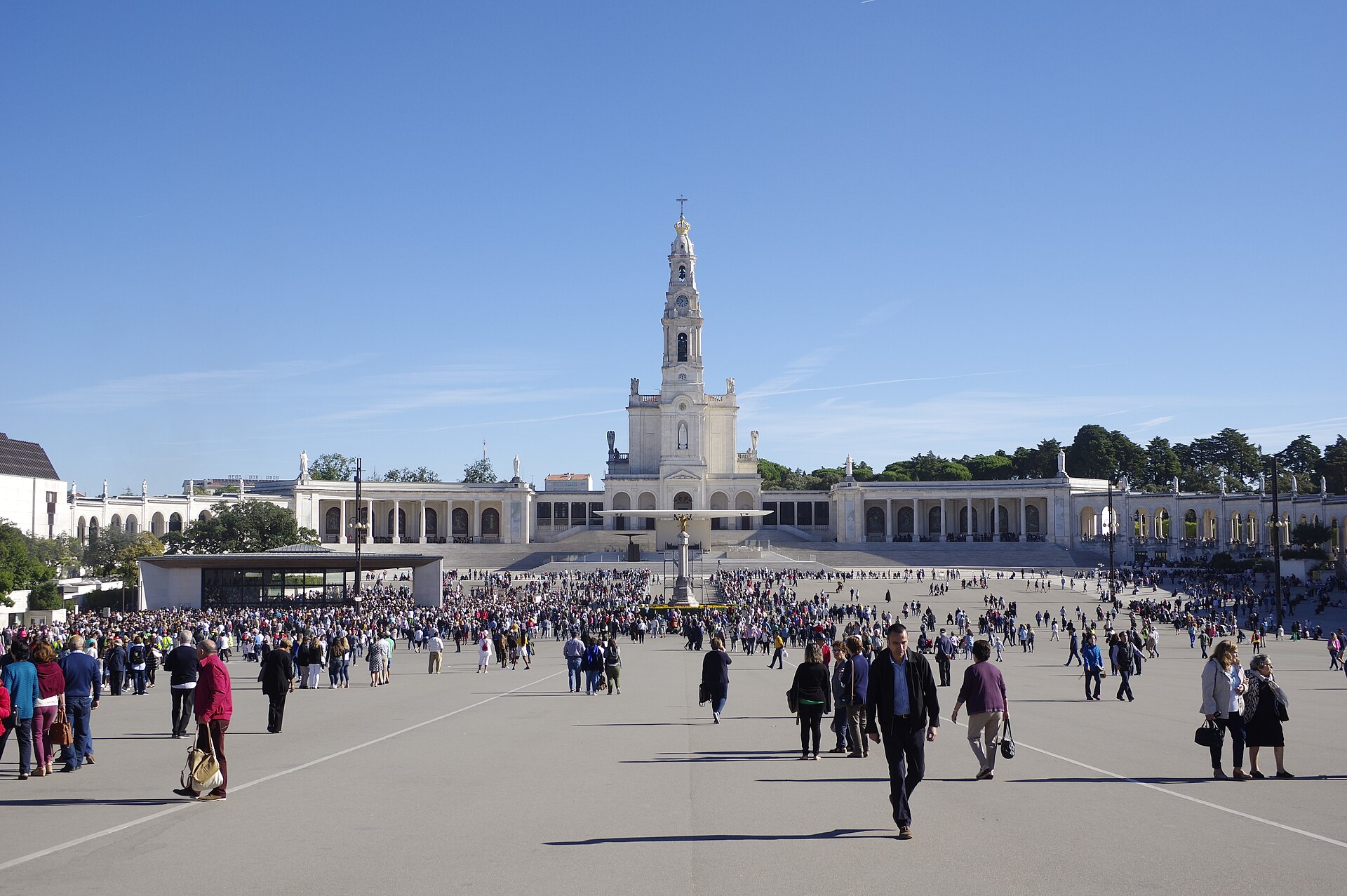
The Sanctuary of Fátima is a major Catholic pilgrimage site located in Cova da Iria, Portugal. It marks the location where three shepherd children—Lúcia dos Santos and her cousins Francisco and Jacinta Marto—reported a series of Marian apparitions between May and October 1917. The site has since evolved into one of the most significant centers of Marian devotion in the world, attracting millions of pilgrims annually.
The complex includes the Chapel of the Apparitions, built on the exact spot of the reported visions, and the Basilica of Our Lady of the Rosary, which houses the tombs of the three visionaries. In 2007, the modern Basilica of the Most Holy Trinity was inaugurated to accommodate the increasing number of pilgrims, reflecting the site's ongoing expansion and importance within the Catholic Church.
Key Facts
- Materials
- Limestone, Marble, Reinforced concrete
- Civilization
- Catholic Church
- Accessibility
- Fully accessible with paved plazas and ramps
- Date(s)
- 1919 - present
- Condition
- Active pilgrimage site
- Original Function
- Site of Marian apparitions
- Key Figures
- Lúcia dos Santos, Francisco Marto, Jacinta Marto, Pope John Paul II
The Apparitions
1917Between May 13 and October 13, 1917, three shepherd children reported seeing a 'Lady dressed in white' who delivered messages regarding prayer, penance, and world peace. The final event, known as the Miracle of the Sun, was reportedly witnessed by thousands of people.
Early Development
1919-1953The Chapel of the Apparitions was constructed in 1919. Following official recognition by the Catholic Church in 1930, construction began on the Basilica of Our Lady of the Rosary, which was consecrated in 1953 to serve the growing influx of devotees.
Modern Expansion
2007-presentTo address the needs of large-scale international gatherings, the Basilica of the Most Holy Trinity was completed in 2007. The site continues to undergo infrastructure improvements to manage millions of visitors during major feast days.
Cultural Significance
Fátima serves as a cornerstone of Portuguese national identity and global Catholic spirituality. The 'Message of Fátima'—emphasizing prayer for the conversion of sinners and world peace—has influenced 20th-century geopolitical discourse, particularly regarding the Cold War and the fall of the Soviet Union, as interpreted by the Vatican.
Interpretive Notes
Scholarly debates and areas of uncertainty
Academic discourse often focuses on the sociological and psychological aspects of the 1917 events, including the 'Miracle of the Sun.' Scholars debate the intersection of mass hysteria, religious fervor, and the political climate of Portugal during the First Republic, while the Church maintains the validity of the apparitions as a matter of faith.
Visiting Information
Entry Rules
Open daily. Entry to the basilicas and the sanctuary grounds is free. Modest dress is required inside the basilicas. Pilgrims often traverse the sanctuary plaza on their knees as an act of penance.
Best Times to Visit
May 13 and October 13 are the most significant dates, drawing massive crowds. For a quieter experience, visit during weekdays in the shoulder seasons of spring or autumn.
Photography
Photography is permitted in the outdoor areas and the plaza. Flash photography is strictly prohibited inside the basilicas and during liturgical services.
Preservation Notes
Maintain silence within the basilicas. Respect the prayerful atmosphere of the Chapel of the Apparitions. Do not disturb pilgrims performing acts of devotion.
Nearby POIs
3 shownKey Facts
- Materials
- Limestone, Marble, Reinforced concrete
- Civilization
- Catholic Church
- Accessibility
- Fully accessible with paved plazas and ramps
- Date(s)
- 1919 - present
- Condition
- Active pilgrimage site
- Original Function
- Site of Marian apparitions
- Key Figures
- Lúcia dos Santos, Francisco Marto, Jacinta Marto, Pope John Paul II