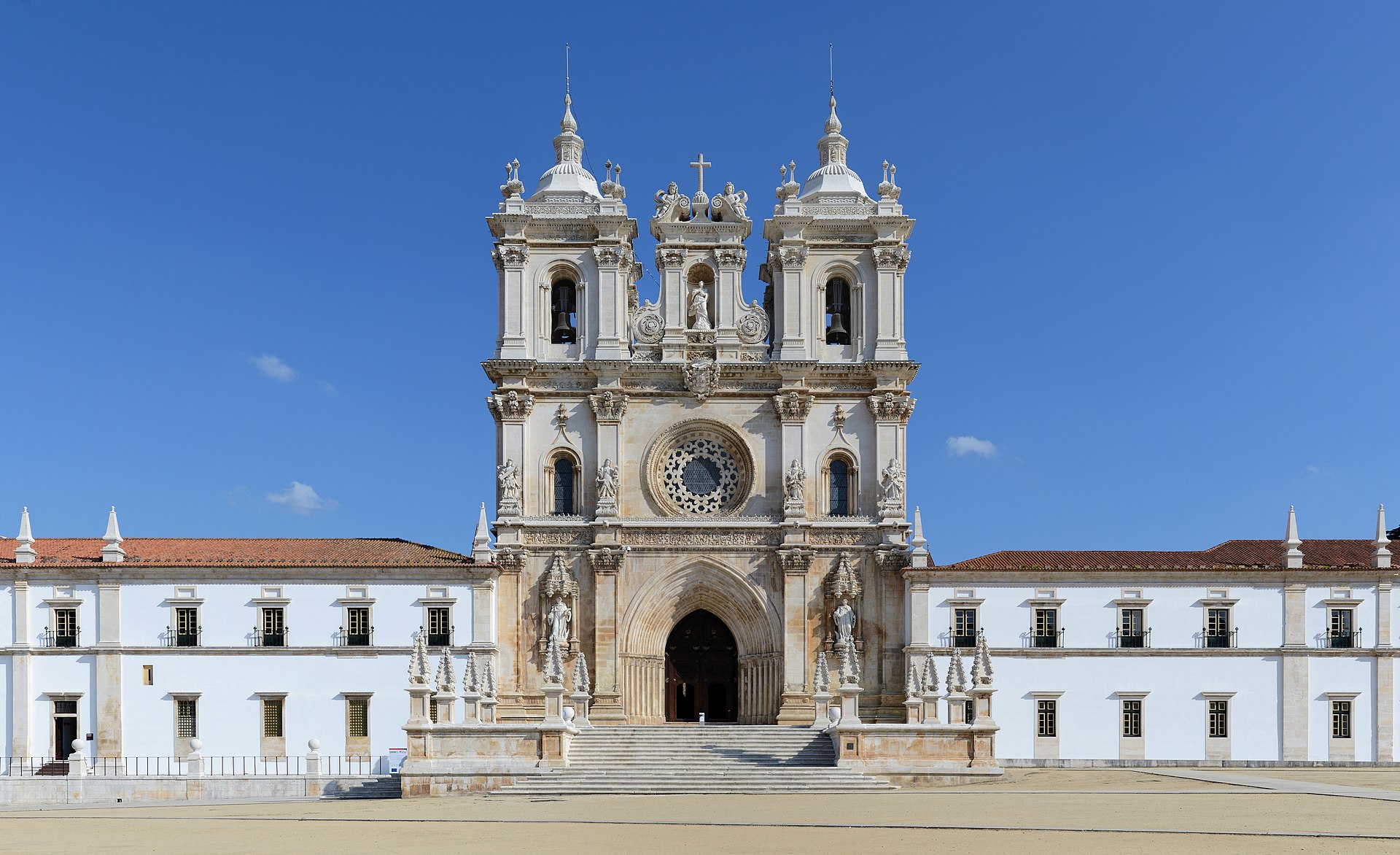
The Alcobaça Monastery, founded in 1153 by the first Portuguese king, Afonso Henriques, stands as one of the most significant Cistercian foundations in Europe. It was established to commemorate the victory over the Moors at Santarém and served as a vital center for agricultural development, education, and royal patronage throughout the Middle Ages.
The complex is renowned for its austere Gothic architecture, which reflects the Cistercian commitment to simplicity and spiritual focus. It houses the elaborate 14th-century tombs of King Pedro I and Inês de Castro, whose tragic love story remains a cornerstone of Portuguese cultural history. The monastery was expanded over centuries, incorporating Manueline and Baroque elements, and remains a primary example of medieval monastic planning.
Key Facts
- Materials
- Limestone
- Civilization
- Portuguese
- Accessibility
- Wheelchair accessible in most ground-level areas
- Date(s)
- 1178-1252
- Condition
- Well-preserved, museum and heritage site
- Original Function
- Cistercian Abbey
- Key Figures
- Afonso Henriques, Pedro I of Portugal, Inês de Castro
Foundation and Early Growth
12th CenturyKing Afonso Henriques donated the land to Bernard of Clairvaux's Cistercian Order to solidify the Christian presence in the region. The monks introduced advanced agricultural techniques, transforming the surrounding valley into a productive monastic estate.
Gothic Construction
1178-1252The main church was built in the Cistercian Gothic style, characterized by its immense scale and lack of decorative ornamentation, adhering to the order's strict aesthetic principles of the time.
Royal Pantheon
14th CenturyThe monastery became the final resting place for several Portuguese monarchs. The most famous additions are the twin tombs of Pedro I and Inês de Castro, masterpieces of Gothic sculpture placed facing each other.
Expansion and Modernization
16th-18th CenturyLater centuries saw the addition of the Manueline sacristy and extensive Baroque renovations, including the ornate facade and the construction of the Kings' Hall, which features tile panels depicting the history of the monastery.
Secularization and Preservation
1834-PresentFollowing the dissolution of religious orders in Portugal in 1834, the monastery was secularized. It was later designated a UNESCO World Heritage site in 1989, ensuring its protection and ongoing restoration.
Cultural Significance
The Alcobaça Monastery is a symbol of the Cistercian influence on the formation of the Portuguese state. Beyond its architectural value, it is deeply embedded in the national consciousness through the legend of Pedro and Inês, representing the intersection of royal history and romantic tragedy.
It serves as a primary site for understanding the evolution of Portuguese monastic life, from the austere medieval period to the decorative excesses of the Baroque era, and remains a focal point for historical research into Cistercian economic and social structures.
Interpretive Notes
Scholarly debates and areas of uncertainty
Debate persists regarding the extent of the original Cistercian architectural purity versus the later additions. Some scholars argue that the Baroque facade compromises the integrity of the Gothic structure, while others view the layering of styles as a vital record of the monastery's continuous historical evolution.
Visiting Information
Entry Rules
Open daily. Tickets are required for entry to the monastery and the royal tombs. Modest dress is recommended as a sign of respect for the site's history.
Best Times to Visit
Weekdays during the morning hours to avoid weekend tourist groups. The site is particularly quiet during the winter months.
Photography
Personal photography is permitted without flash or tripods. Commercial photography requires prior authorization from the DGPC.
Preservation Notes
Visitors are requested not to touch the limestone carvings or the royal tombs. Please remain on designated paths to protect the historic flooring.
Nearby POIs
3 shownSources & Further Reading
- [1]The Cistercian Monastery of Alcobaça — José Custódio Vieira da Silva. IPPAR (2002)
- [2]
Key Facts
- Materials
- Limestone
- Civilization
- Portuguese
- Accessibility
- Wheelchair accessible in most ground-level areas
- Date(s)
- 1178-1252
- Condition
- Well-preserved, museum and heritage site
- Original Function
- Cistercian Abbey
- Key Figures
- Afonso Henriques, Pedro I of Portugal, Inês de Castro