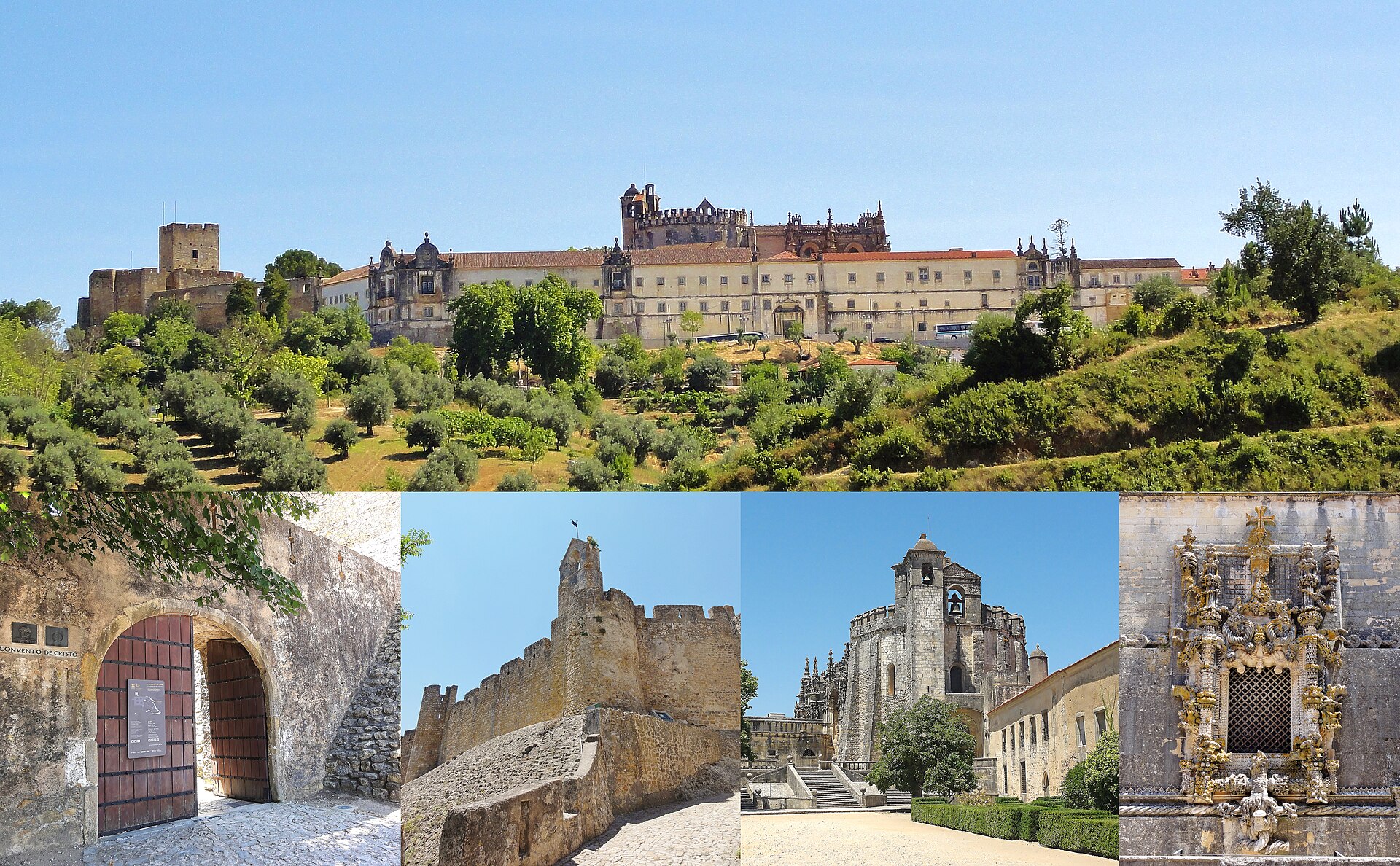
The Convent of Christ in Tomar is a sprawling monastic complex that originated as a 12th-century Templar stronghold. Founded in 1160 by Gualdim Pais, the Grand Master of the Knights Templar in Portugal, the site served as a strategic defensive fortification during the Reconquista. Following the suppression of the Templars in the early 14th century, the order was reconstituted in Portugal as the Order of Christ, which maintained its headquarters here.
The architecture of the convent reflects centuries of expansion and stylistic evolution, most notably the ornate Manueline chapter house window, which symbolizes Portugal's Age of Discovery. The complex includes the original Templar charola (rotunda), several cloisters, and the conventual dependencies, all of which illustrate the transition from medieval military architecture to the decorative exuberance of the Portuguese Renaissance.
Key Facts
- Materials
- Limestone, Granite
- Civilization
- Portuguese
- Accessibility
- Partially accessible; some areas involve stairs and uneven stone flooring
- Date(s)
- 1160 - 17th century
- Condition
- Well-preserved, museum and heritage site
- Original Function
- Templar fortress and monastery
- Key Figures
- Gualdim Pais, Infante Dom Henrique, King Manuel I
Templar Foundation
1160-1314The site was established as the headquarters of the Knights Templar in Portugal. The central rotunda, or charola, was built in the late 12th century, modeled after the Church of the Holy Sepulchre in Jerusalem.
Order of Christ
1314-15th centuryAfter the dissolution of the Templars, King Dinis founded the Order of Christ to preserve the assets of the former order. The convent became the spiritual and administrative center for the Portuguese maritime expansion.
Manueline Expansion
16th centuryUnder the patronage of King Manuel I, the convent underwent significant expansion. The famous chapter house window was added, featuring intricate maritime motifs that celebrate the Portuguese voyages of discovery.
Modern Era
19th century - presentFollowing the extinction of religious orders in Portugal in 1834, the convent was secularized. It was designated a UNESCO World Heritage site in 1983 and currently serves as a major cultural monument.
Cultural Significance
The Convent of Christ is a profound symbol of the Portuguese identity, bridging the nation's military history during the Reconquista with its global influence during the Age of Discovery. It remains a focal point for understanding the intersection of religious devotion and imperial ambition in the Iberian Peninsula.
Interpretive Notes
Scholarly debates and areas of uncertainty
There is ongoing academic discussion regarding the extent of Templar influence on the specific architectural layout of the charola compared to other contemporary European rotunda churches. Additionally, the symbolic interpretation of the Manueline window's carvings continues to be a subject of iconographic research.
Visiting Information
Entry Rules
Open daily. Tickets are required for entry. Visitors are expected to dress respectfully as the site includes areas of historical religious significance.
Best Times to Visit
Early morning or late afternoon to avoid tour bus crowds. Spring and autumn offer the most comfortable temperatures for exploring the extensive outdoor cloisters.
Photography
Personal photography is permitted throughout the site. Tripods and professional equipment require prior authorization.
Preservation Notes
The site is subject to ongoing conservation efforts. Visitors are requested to stay on marked paths and avoid touching the delicate stone carvings and historic surfaces.
Nearby POIs
3 shownSources & Further Reading
- [1]
- [2]The Templars in Portugal — Mário Jorge Barroca. University of Porto Press (2015)
Key Facts
- Materials
- Limestone, Granite
- Civilization
- Portuguese
- Accessibility
- Partially accessible; some areas involve stairs and uneven stone flooring
- Date(s)
- 1160 - 17th century
- Condition
- Well-preserved, museum and heritage site
- Original Function
- Templar fortress and monastery
- Key Figures
- Gualdim Pais, Infante Dom Henrique, King Manuel I