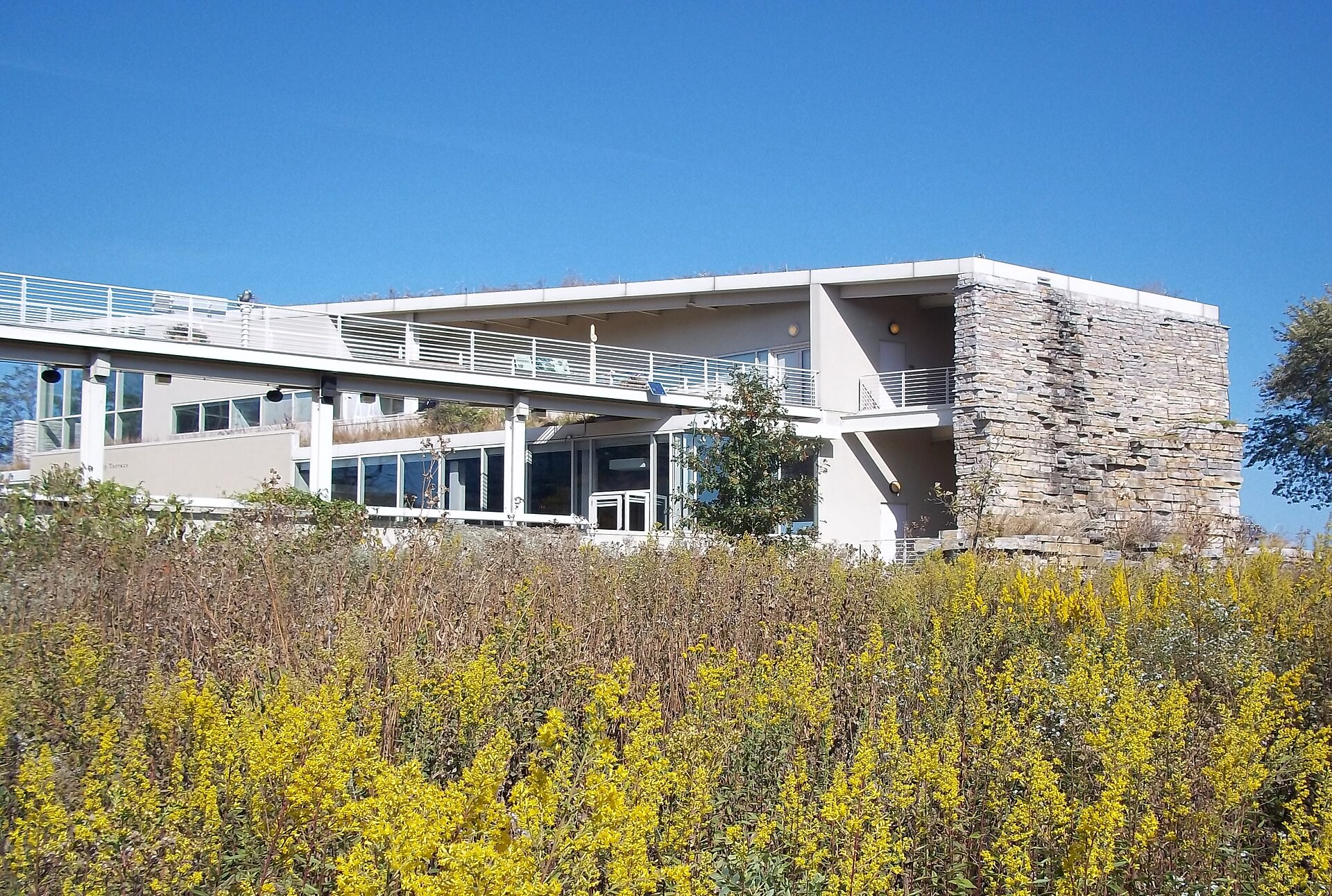
The Peggy Notebaert Nature Museum is a natural history museum located in Lincoln Park, Chicago. Operated by the Chicago Academy of Sciences, it serves as a center for environmental education and research, focusing specifically on the ecology and natural history of the Midwest region.
The museum building, designed by Perkins and Will, opened in 1999 as the first museum-in-the-parks facility in Chicago. It features interactive exhibits, a butterfly haven, and extensive collections documenting the biological diversity of the Chicago area.
Key Facts
- Materials
- Glass, Steel, Concrete
- Civilization
- United States
- Accessibility
- Fully wheelchair accessible
- Date(s)
- 1999
- Condition
- Active
- Original Function
- Natural history museum and educational center
- Key Figures
- Peggy Notebaert
Founding of the Academy
1857The Chicago Academy of Sciences was founded as one of the first scientific organizations in the city, dedicated to the study of natural history and the preservation of specimens from the Great Lakes region.
Museum Development
1990sFollowing years of operating in various locations, the Academy initiated the construction of a dedicated facility in Lincoln Park to house its collections and expand public educational programming.
Opening and Modern Era
1999-PresentThe museum opened its doors in 1999, establishing itself as a key institution for ecological research and public engagement regarding the natural environment of the Chicago metropolitan area.
Cultural Significance
The museum plays a vital role in regional environmental literacy, connecting urban residents with the natural history of the Illinois prairie and wetland ecosystems. It serves as a hub for citizen science projects and conservation efforts aimed at protecting local biodiversity.
Visiting Information
Entry Rules
Open daily with standard admission fees. Tickets can be purchased online or at the door. No specific dress code is required.
Best Times to Visit
Weekday mornings are generally quieter. The Judy Istock Butterfly Haven is most active during mid-day hours.
Photography
Personal photography is permitted. Commercial photography requires prior authorization from museum administration.
Preservation Notes
Visitors are asked to refrain from touching live exhibits and to follow posted guidelines within the butterfly conservatory to ensure the safety of the specimens.
Nearby POIs
10 shown- Museum Of Contemporary Art Chicago3.5 km
- Driehaus Museum3.7 km
- Cloud Gate5 km
- Art Institute of Chicago5.4 km
- Field Museum of Natural History6.9 km
- Adler Planetarium7.1 km
- National Museum of Mexican Art8.5 km
- DuSable Black History Museum and Education Center15.2 km
- Institute for the Study of Ancient Cultures15.6 km
- Griffin Museum of Science and Industry15.7 km
Sources & Further Reading
- [1]
- [2]The Peggy Notebaert Nature Museum: Architecture and Ecology — Perkins and Will. Architectural Record (2000)
Key Facts
- Materials
- Glass, Steel, Concrete
- Civilization
- United States
- Accessibility
- Fully wheelchair accessible
- Date(s)
- 1999
- Condition
- Active
- Original Function
- Natural history museum and educational center
- Key Figures
- Peggy Notebaert
Nearby POIs
10 shown- Museum Of Contemporary Art Chicago3.5 km
- Driehaus Museum3.7 km
- Cloud Gate5 km
- Art Institute of Chicago5.4 km
- Field Museum of Natural History6.9 km
- Adler Planetarium7.1 km
- National Museum of Mexican Art8.5 km
- DuSable Black History Museum and Education Center15.2 km
- Institute for the Study of Ancient Cultures15.6 km
- Griffin Museum of Science and Industry15.7 km