Chicago,United States of America
DuSable Black History Museum and Education Center
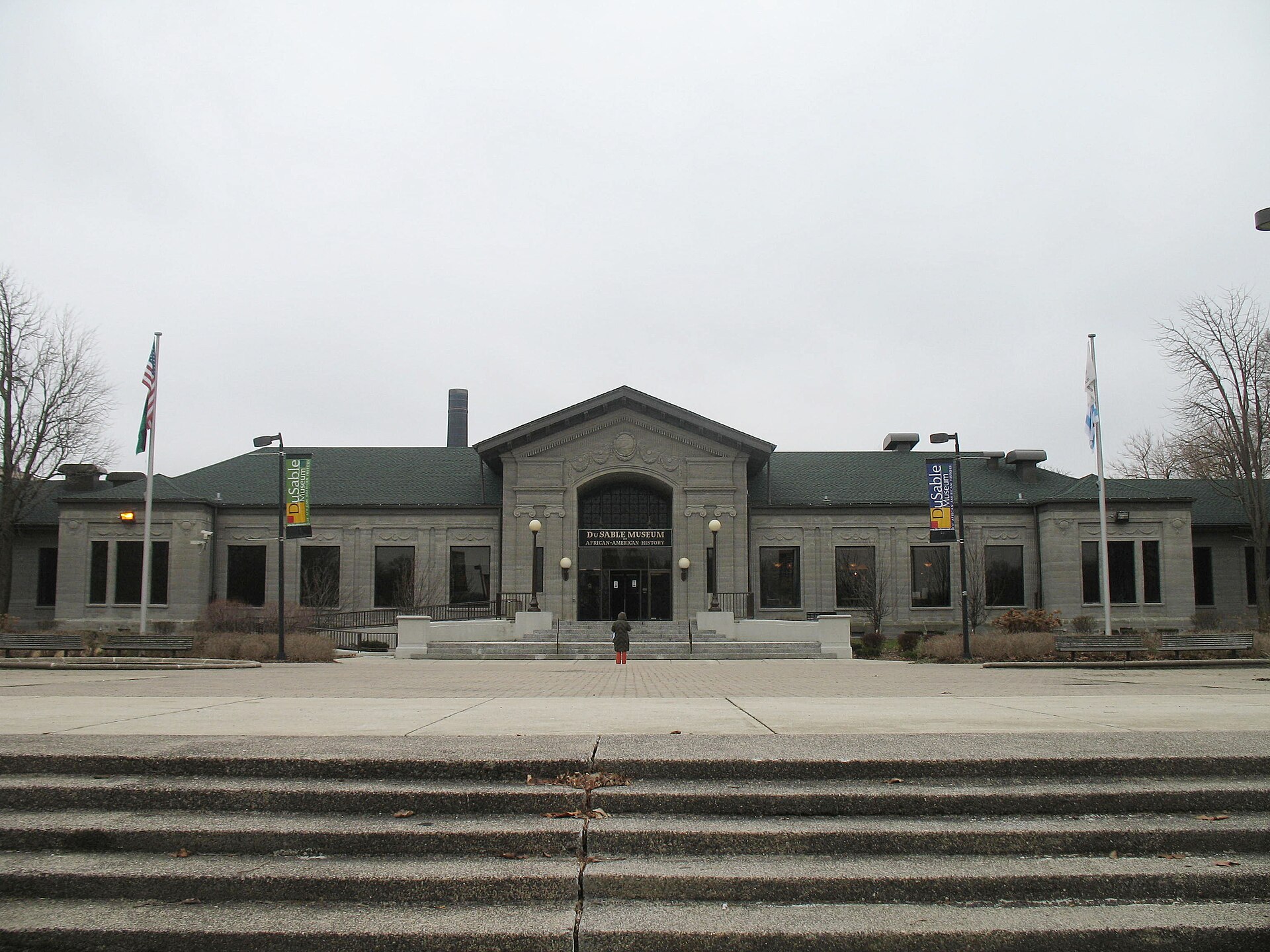
The DuSable Black History Museum and Education Center is a non-profit museum located in Chicago, Illinois, dedicated to the collection, documentation, preservation, and study of the history and culture of Africans and Americans of African descent. Founded in 1961 by Dr. Margaret Taylor-Burroughs and her husband Charles Burroughs, it was originally established as the Ebony Museum of Negro History and Art in the couple's home.
In 1973, the museum moved to its current location in Washington Park, a building designed by D.H. Burnham & Co. that previously served as the administration building for the 1893 World's Columbian Exposition. The institution was renamed in honor of Jean Baptiste Point du Sable, the Haitian-born founder of Chicago. Today, it serves as a major repository for African American history, housing a collection of over 15,000 artifacts, artworks, and historical documents.
Key Facts
- Materials
- Stone, Brick
- Civilization
- United States
- Accessibility
- Fully wheelchair accessible
- Date(s)
- 1893
- Condition
- Active museum and educational center
- Original Function
- Administration building for the World's Columbian Exposition
- Key Figures
- Margaret Taylor-Burroughs, Jean Baptiste Point du Sable
Founding and Early Years
1961Dr. Margaret Taylor-Burroughs, an artist and educator, founded the museum in her home to address the lack of representation of Black history in mainstream institutions. It was one of the first museums in the United States dedicated to African American history.
Relocation to Washington Park
1973The museum relocated to the historic administration building of the 1893 World's Columbian Exposition in Washington Park. This move allowed for significant expansion of its collections and public programming.
Expansion and Recognition
2000s - PresentThe museum has undergone several expansions and renovations to modernize its facilities. In 2022, it was designated as a National Historic Landmark, recognizing its significant role in the preservation of American history.
Cultural Significance
The DuSable Museum is a cornerstone of Chicago's cultural landscape and a vital national institution for the study of the African American experience. It serves as a bridge between historical scholarship and community engagement, providing a space for the exploration of the contributions of Black individuals to the development of the United States.
Interpretive Notes
Scholarly debates and areas of uncertainty
Discussions regarding the museum often center on the challenges of balancing its role as a community-based educational center with the rigorous demands of professional archival and curatorial standards for its extensive collection.
Visiting Information
Entry Rules
Open Tuesday through Sunday. Tickets can be purchased online or at the door. Admission is free for Illinois residents on certain days; check the official website for current schedules and special event policies.
Best Times to Visit
Weekday mornings are generally quieter. The museum hosts significant programming during Black History Month in February and Juneteenth in June.
Photography
Personal photography is permitted in most galleries without flash. Tripods and commercial photography require prior authorization from the administration.
Preservation Notes
Visitors are requested not to touch artifacts or display cases. Food and drink are prohibited within the gallery spaces.
Nearby POIs
10 shown- Institute for the Study of Ancient Cultures0.8 km
- Griffin Museum of Science and Industry2 km
- Adler Planetarium8.3 km
- Field Museum of Natural History8.3 km
- National Museum of Mexican Art9 km
- Art Institute of Chicago9.8 km
- Cloud Gate10.2 km
- Driehaus Museum11.5 km
- Museum Of Contemporary Art Chicago11.8 km
- Peggy Notebaert Nature Museum15.2 km
Key Facts
- Materials
- Stone, Brick
- Civilization
- United States
- Accessibility
- Fully wheelchair accessible
- Date(s)
- 1893
- Condition
- Active museum and educational center
- Original Function
- Administration building for the World's Columbian Exposition
- Key Figures
- Margaret Taylor-Burroughs, Jean Baptiste Point du Sable
Nearby POIs
10 shown- Institute for the Study of Ancient Cultures0.8 km
- Griffin Museum of Science and Industry2 km
- Adler Planetarium8.3 km
- Field Museum of Natural History8.3 km
- National Museum of Mexican Art9 km
- Art Institute of Chicago9.8 km
- Cloud Gate10.2 km
- Driehaus Museum11.5 km
- Museum Of Contemporary Art Chicago11.8 km
- Peggy Notebaert Nature Museum15.2 km