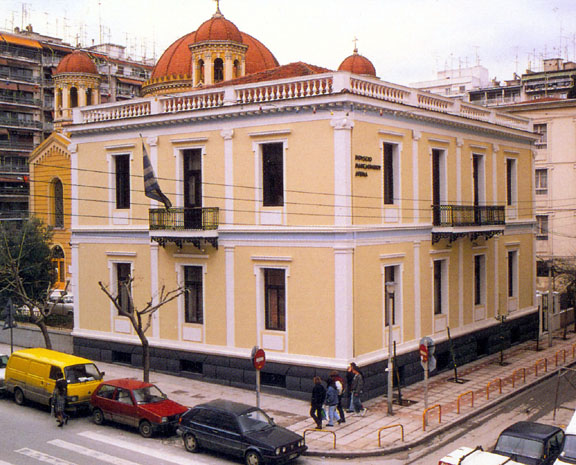
The Museum for the Macedonian Struggle is located in the historic center of Thessaloniki, housed in the building that served as the Greek Consulate from 1893 to 1912. During the Macedonian Struggle (1904–1908), the building functioned as the secret headquarters for the Greek efforts in the region, directed by the consul Lambros Koromilas.
Today, the museum preserves the history of the conflict through an extensive collection of over 1,350 artifacts. The exhibits are organized into seven themed rooms, featuring period photographs, weaponry, military uniforms, and personal documents that illustrate the social and political complexities of the Macedonian Struggle and the subsequent Balkan Wars.
Key Facts
- Materials
- Stone, Brick, Wood
- Civilization
- Modern Greek
- Accessibility
- Ground floor accessible; upper floors may have limitations
- Date(s)
- 1893
- Condition
- Well-preserved, active museum
- Original Function
- Greek Consulate
- Key Figures
- Lambros Koromilas, Pavlos Melas
Consular Origins
1893-1903The building was constructed to house the Greek Consulate in Thessaloniki. It quickly became a focal point for Greek diplomatic and intelligence activities in the Ottoman-controlled region of Macedonia.
The Macedonian Struggle
1904-1908Under the leadership of Consul Lambros Koromilas, the building served as the clandestine headquarters for the Greek armed bands operating in Macedonia. It coordinated logistics, communications, and support for the fighters.
Museum Establishment
1981-PresentThe building was converted into a museum dedicated to the history of the Macedonian Struggle. It was officially inaugurated in 1981 to preserve the memory of the conflict and provide a scholarly space for historical research.
Cultural Significance
The museum serves as a critical repository for the history of Northern Greece, documenting the transition of the region from Ottoman rule to the modern Greek state. It is a central site for understanding the national identity of the Macedonian region and the historical narratives surrounding the early 20th-century Balkan conflicts.
Interpretive Notes
Scholarly debates and areas of uncertainty
The interpretation of the Macedonian Struggle remains a subject of nuanced historical analysis, particularly regarding the role of foreign powers and the complex ethnic dynamics of the region during the late Ottoman period. Scholars continue to examine the museum's narrative framing of these events within the broader context of Balkan nationalism.
Visiting Information
Entry Rules
Open Tuesday through Saturday. Admission fees apply. Visitors are expected to maintain a quiet demeanor appropriate for a historical site.
Best Times to Visit
Weekday mornings to avoid weekend school groups and tourist crowds.
Photography
Photography is generally permitted for personal use without flash. Professional photography requires prior authorization.
Preservation Notes
The building is a protected historical monument. Visitors are requested to refrain from touching the artifacts and to follow all posted signage regarding exhibit handling.
Nearby POIs
11 shown- Hagia Sophia Church of Holy Wisdom0.4 km
- Bey Hamam0.6 km
- White Tower of Thessaloniki0.6 km
- Church of Panagia Chalkeon0.7 km
- Arch of Galerius and Rotunda0.7 km
- Roman Forum of Thessaloniki0.8 km
- Hagios Demetrios0.9 km
- Archaeological Museum of Thessaloniki1.1 km
- Museum of Byzantine Culture1.2 km
- Church of Saint Nicholas Orphanos1.3 km
- Church of Hosios David1.4 km
Sources & Further Reading
- [1]The Macedonian Struggle: A History — Douglas Dakin. Institute for Balkan Studies (1966)
- [2]Museum for the Macedonian Struggle: Official Guide — Museum Administration. Society for Macedonian Studies (2015)
Key Facts
- Materials
- Stone, Brick, Wood
- Civilization
- Modern Greek
- Accessibility
- Ground floor accessible; upper floors may have limitations
- Date(s)
- 1893
- Condition
- Well-preserved, active museum
- Original Function
- Greek Consulate
- Key Figures
- Lambros Koromilas, Pavlos Melas
Nearby POIs
11 shown- Hagia Sophia Church of Holy Wisdom0.4 km
- Bey Hamam0.6 km
- White Tower of Thessaloniki0.6 km
- Church of Panagia Chalkeon0.7 km
- Arch of Galerius and Rotunda0.7 km
- Roman Forum of Thessaloniki0.8 km
- Hagios Demetrios0.9 km
- Archaeological Museum of Thessaloniki1.1 km
- Museum of Byzantine Culture1.2 km
- Church of Saint Nicholas Orphanos1.3 km
- Church of Hosios David1.4 km