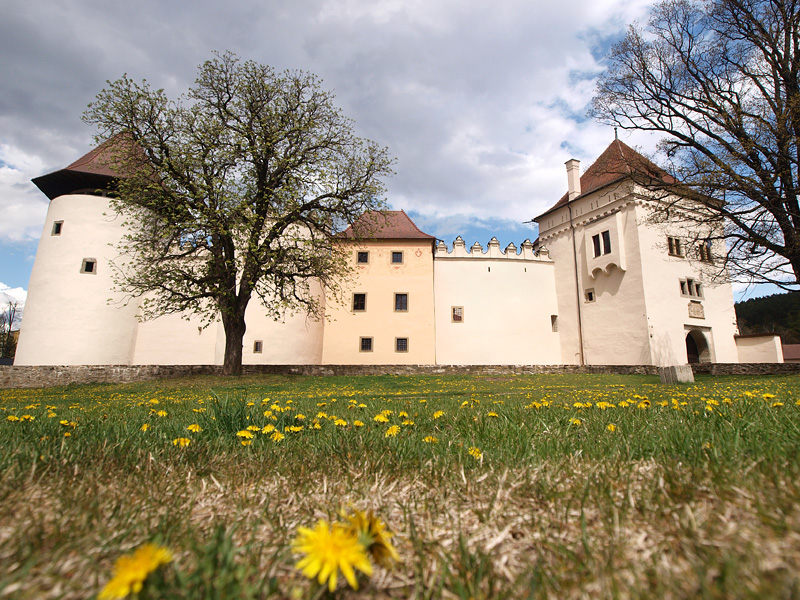
Kežmarok Castle is a prominent fortification located in the town of Kežmarok, Slovakia. Originally established as a Gothic fortress in the 15th century, it was significantly transformed into a Renaissance residence by the Thököly family, who held the estate for several generations. The structure is characterized by its distinctive circular bastions and defensive walls that reflect the military architecture of the period.
Today, the castle serves as the home of the Kežmarok Museum, which preserves the regional history of the Spiš area. The site includes an early Baroque chapel, noted for its intricate stucco decorations, and provides insight into the aristocratic lifestyle and defensive strategies of the Hungarian nobility during the 16th and 17th centuries.
Key Facts
- Materials
- Stone, Brick, Plaster
- Civilization
- Kingdom of Hungary
- Accessibility
- Partial accessibility; some areas involve stairs
- Date(s)
- 1463
- Condition
- Restored and active as a museum
- Original Function
- Fortress
- Key Figures
- Imre Thököly, Štefan Thököly
Foundations
15th CenturyThe castle was founded in 1463 by the Zápolya family as a defensive structure to protect the town of Kežmarok, which was a significant trade center in the Spiš region.
Renaissance Transformation
16th-17th CenturyUnder the ownership of the Thököly family, the fortress was reconstructed into a comfortable Renaissance-style residence. The defensive bastions were reinforced, and the interior was updated to reflect the status of the noble family.
Modern Era
20th Century - PresentFollowing centuries of varying use, the castle underwent extensive restoration in the 20th century. It was converted into a regional museum, focusing on the history of the town and the castle itself.
Cultural Significance
Kežmarok Castle stands as a symbol of the historical importance of the Spiš region and the influence of the Thököly family in Central European politics. It serves as a vital repository for local heritage, documenting the transition from medieval defensive architecture to the refined aesthetic of the Renaissance and Baroque periods.
Interpretive Notes
Scholarly debates and areas of uncertainty
There is ongoing discussion among architectural historians regarding the extent of the original Gothic layout versus the modifications made during the Renaissance expansion, as many early records were lost during the various conflicts that affected the region.
Visiting Information
Entry Rules
Open Tuesday to Sunday. Guided tours are required to access the interior chambers and the chapel. Tickets can be purchased at the entrance.
Best Times to Visit
Late spring and early autumn offer the best conditions for exploring the castle grounds and the surrounding historic town center.
Photography
Personal photography is permitted in most areas, but flash and tripods are prohibited inside the museum galleries.
Preservation Notes
Visitors are requested to stay within marked areas and avoid touching the historical stucco work in the chapel.
Nearby POIs
4 shownSources & Further Reading
- [1]Kežmarok: The History of the Town and Castle — Ivan Chalupecký. Vydavateľstvo Region Poprad (2005)
- [2]Castles of Slovakia: A Historical Guide — Daniel Kollár. DAJAMA (2012)
Key Facts
- Materials
- Stone, Brick, Plaster
- Civilization
- Kingdom of Hungary
- Accessibility
- Partial accessibility; some areas involve stairs
- Date(s)
- 1463
- Condition
- Restored and active as a museum
- Original Function
- Fortress
- Key Figures
- Imre Thököly, Štefan Thököly