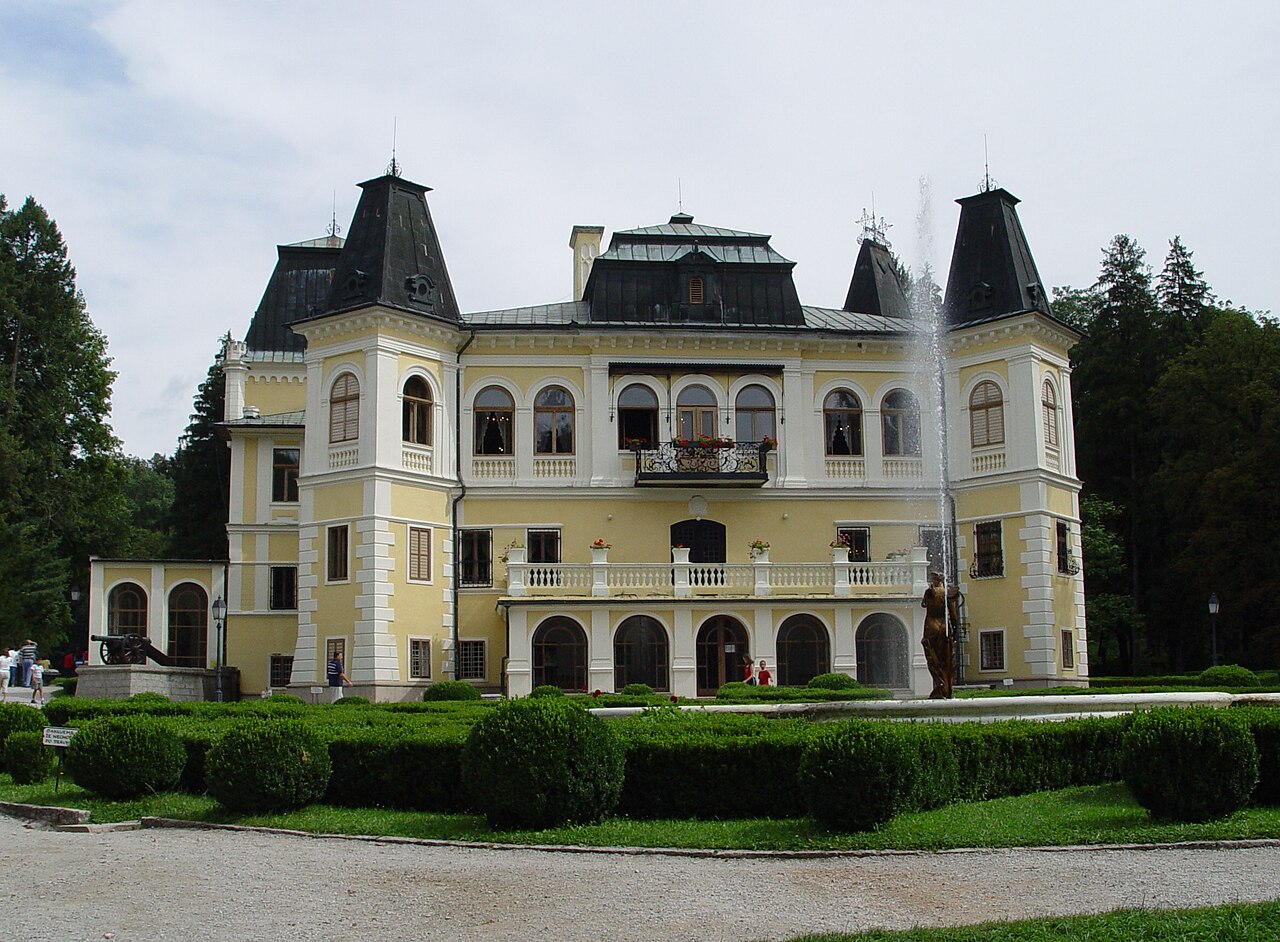
Castle Betliar is a historic manor house located in the village of Betliar, Slovakia. Originally built as a Renaissance fortress in the 15th century, it was significantly reconstructed and expanded by the Andrássy family over several centuries, eventually evolving into a comfortable residential seat by the 19th century.
The manor is renowned for its extensive English-style park, which covers approximately 80 hectares and features exotic flora, fountains, and architectural follies. The interior remains largely intact, preserving the original furnishings, art collections, and one of the largest aristocratic libraries in Slovakia, containing over 15,000 volumes of historical literature.
Key Facts
- Materials
- Stone, Brick, Wood
- Civilization
- Hungarian nobility (Andrássy family)
- Accessibility
- Ground floor accessible, upper floors limited
- Date(s)
- 15th century (original), 19th century (final form)
- Condition
- Well-preserved museum
- Original Function
- Fortified manor
- Key Figures
- Andrássy family
Origins and Fortification
15th centuryThe site began as a small, fortified manor house designed to protect the local mining interests and the surrounding estate. Its strategic location in the valley made it a key defensive point for the local nobility.
Andrássy Expansion
18th - 19th centuryThe Andrássy family transformed the defensive structure into a luxurious residence. During the 19th century, the building underwent major architectural modifications to reflect the romanticist style, including the addition of the library and the expansion of the surrounding parklands.
Museum Transformation
20th century - presentFollowing the nationalization of aristocratic estates, the manor was preserved as a museum. It is currently managed by the Slovak National Museum, which maintains the original interior decor and the extensive historical library.
Cultural Significance
Castle Betliar serves as a primary example of the lifestyle and cultural patronage of the Hungarian aristocracy in the Upper Hungary region. The library and the preserved collections provide significant insight into the intellectual and artistic life of the 19th-century elite in Central Europe.
Interpretive Notes
Scholarly debates and areas of uncertainty
Debates exist regarding the exact extent of the original 15th-century fortifications, as subsequent renovations have obscured much of the early masonry. Scholars also continue to catalog and analyze the provenance of the vast library collection.
Visiting Information
Entry Rules
Open Tuesday to Sunday. Guided tours are required for interior access. Tickets can be purchased at the entrance.
Best Times to Visit
Spring and summer are ideal for exploring the extensive park grounds. The museum is less crowded during weekday mornings in the shoulder season.
Photography
Photography is permitted in the park; interior photography requires a specific permit or is restricted to protect the artifacts.
Preservation Notes
The manor is a protected national cultural monument. Visitors must follow marked paths and refrain from touching the historical furniture and book collections.
Nearby POIs
4 shownSources & Further Reading
- [1]Slovak National Museum: Betliar Manor House — Slovak National Museum. SNM Official Portal (2023)View
- [2]The Andrássy Family and their Estates — Július Bartl. Slovak Academic Press (2002)
Key Facts
- Materials
- Stone, Brick, Wood
- Civilization
- Hungarian nobility (Andrássy family)
- Accessibility
- Ground floor accessible, upper floors limited
- Date(s)
- 15th century (original), 19th century (final form)
- Condition
- Well-preserved museum
- Original Function
- Fortified manor
- Key Figures
- Andrássy family