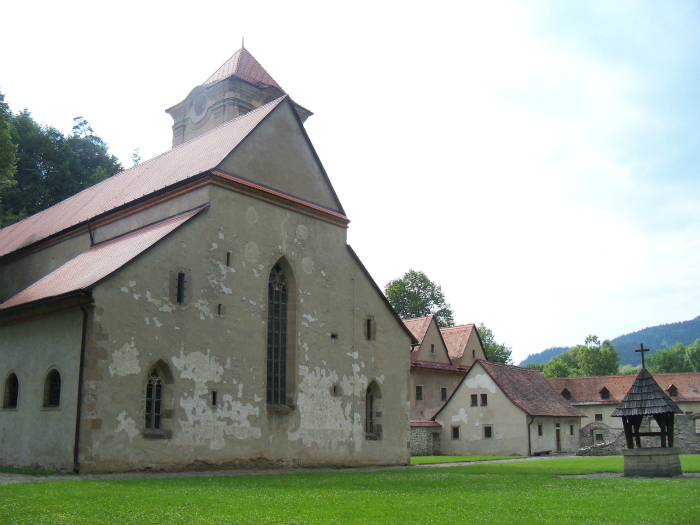
Červený Kláštor, or the Red Monastery, is a historic monastic complex situated in the Pieniny region of northern Slovakia. Founded in the 14th century, the site served as a Carthusian monastery before being transferred to the Camaldolese order in the 18th century. Its name is derived from the distinctive red-fired bricks used in its construction, which set it apart from other regional architecture of the period.
The monastery is most famously associated with the monk Cyprian, a polymath who resided there in the 18th century. During his tenure, he compiled an extensive herbarium containing 272 preserved plant specimens from the Pieniny Mountains, which remains a significant botanical and historical record. Today, the site functions as a museum dedicated to the monastic life and the scientific contributions of its former inhabitants.
Key Facts
- Materials
- Red brick, Stone, Wood
- Civilization
- Slovak/Central European
- Accessibility
- Ground level accessible, some uneven historic flooring
- Date(s)
- 1319
- Condition
- Restored and preserved as a museum
- Original Function
- Carthusian Monastery
- Key Figures
- Monk Cyprian
Founding and Carthusian Era
14th CenturyThe monastery was established in 1319 following a donation of land by Master Kakaš of Tarkö. The Carthusian order occupied the site for several centuries, adhering to their strict rules of silence and isolation, which shaped the architectural layout of the individual hermit cells.
Camaldolese Transformation
18th CenturyIn 1711, the monastery was taken over by the Camaldolese order. This period saw significant reconstruction in the Baroque style. It was during this era that the monk Cyprian conducted his extensive botanical research and compiled his famous herbarium.
Secularization and Modern Restoration
1782 - PresentThe monastery was abolished in 1782 under the reforms of Emperor Joseph II. The buildings fell into disrepair over the following centuries until major restoration efforts in the 20th century transformed the complex into a national cultural monument and museum.
Cultural Significance
Červený Kláštor is a symbol of the religious and intellectual history of the Pieniny region. It represents the intersection of monastic asceticism and early scientific inquiry in Central Europe. The legacy of Monk Cyprian, often referred to in local folklore as a 'flying monk,' remains a central pillar of the monastery's cultural identity and regional tourism.
Interpretive Notes
Scholarly debates and areas of uncertainty
There is ongoing academic discussion regarding the extent of the monastery's influence on regional medical practices during the 18th century, specifically concerning the practical application of the plants documented in Cyprian's herbarium versus their purely academic classification.
Visiting Information
Entry Rules
Open to the public daily during the tourist season. Tickets are required for museum entry. Guided tours are available and recommended for historical context.
Best Times to Visit
Late spring to early autumn for full access to the monastery grounds and surrounding Pieniny National Park trails.
Photography
Photography is permitted for personal use; commercial photography requires prior authorization from the museum administration.
Preservation Notes
The site is a protected cultural monument. Visitors are requested to refrain from touching the historic wall surfaces and to remain on designated paths within the cloister gardens.
Nearby POIs
2 shownSources & Further Reading
- [1]The History of the Red Monastery — Jozef Hradský. Slovak Academic Press (2015)
- [2]Monastic Orders in the Pieniny Region — Elena Mannová. Historical Institute of the Slovak Academy of Sciences (2019)
Key Facts
- Materials
- Red brick, Stone, Wood
- Civilization
- Slovak/Central European
- Accessibility
- Ground level accessible, some uneven historic flooring
- Date(s)
- 1319
- Condition
- Restored and preserved as a museum
- Original Function
- Carthusian Monastery
- Key Figures
- Monk Cyprian