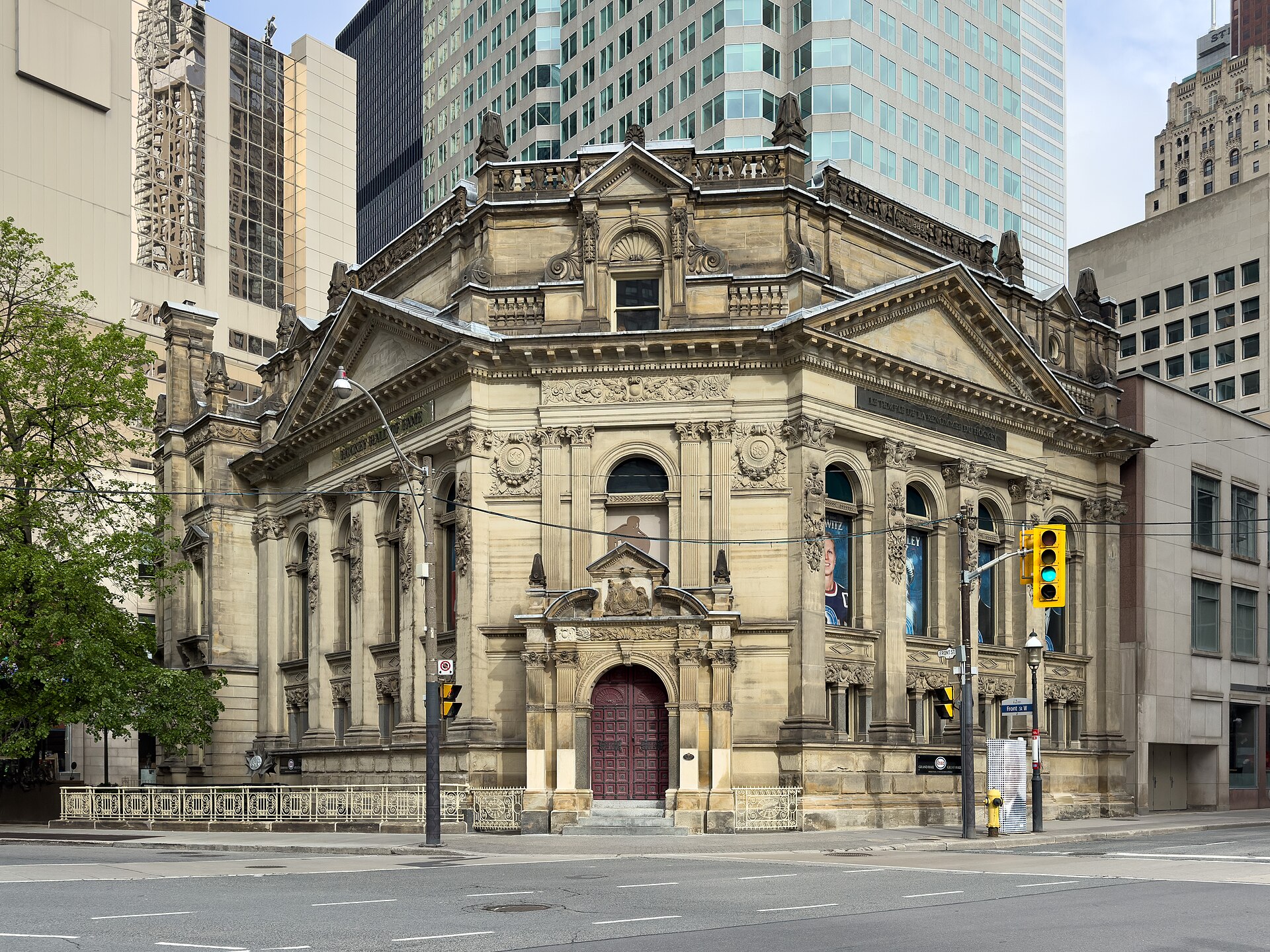
The Hockey Hall of Fame is a museum and hall of fame dedicated to the history of ice hockey. Located in Toronto, Ontario, it serves as the permanent home of the Stanley Cup and houses an extensive collection of hockey memorabilia, player statistics, and interactive exhibits. The facility is situated within the historic Bank of Montreal building, a designated heritage site featuring a grand marble interior and a stained-glass dome.
Established to honor the greatest players, coaches, and builders of the sport, the institution functions as both a shrine to hockey history and a center for public education. It attracts visitors from around the world to explore the evolution of the National Hockey League and the broader cultural impact of the sport on Canadian and international identity.
Key Facts
- Materials
- Marble, Glass, Steel
- Civilization
- Canadian
- Accessibility
- Fully wheelchair accessible
- Date(s)
- 1993 (current location)
- Condition
- Well-preserved, active museum
- Original Function
- Bank of Montreal branch (building)
- Key Figures
- James T. Sutherland, Lord Stanley of Preston
Founding and Early Years
1943The Hockey Hall of Fame was established in 1943 in Kingston, Ontario, through the efforts of James T. Sutherland. It was initially conceived as a way to honor the sport's pioneers and preserve its history.
Relocation to Toronto
1958-1961In 1958, the Hall of Fame moved to the Exhibition Place grounds in Toronto. The first permanent building was opened in 1961, providing a dedicated space for the growing collection of artifacts and the induction of new members.
Move to Brookfield Place
1993The institution moved to its current location at Brookfield Place in 1993. The site incorporates the historic 1885 Bank of Montreal building, blending modern museum facilities with 19th-century architecture.
Cultural Significance
The Hockey Hall of Fame is a cornerstone of Canadian cultural heritage, reflecting the nation's deep-seated connection to ice hockey. It serves as the primary repository for the sport's history, preserving the legacy of the Stanley Cup and the individuals who have shaped the game globally.
Interpretive Notes
Scholarly debates and areas of uncertainty
Discussions often center on the criteria for induction, specifically the balance between statistical achievements and the subjective impact of players on the game's development.
Visiting Information
Entry Rules
Open daily with paid admission. Tickets can be purchased online or at the door. Security screening is required for all visitors.
Best Times to Visit
Weekday mornings are generally less crowded than weekends or holidays.
Photography
Personal photography is permitted throughout the museum. Commercial photography requires prior authorization.
Preservation Notes
Visitors are requested not to touch the glass display cases or artifacts. Flash photography is discouraged near sensitive historical documents.
Nearby POIs
5 shownSources & Further Reading
- [1]
- [2]Hockey: A People's History — Michael McKinley. McClelland & Stewart (2006)
Key Facts
- Materials
- Marble, Glass, Steel
- Civilization
- Canadian
- Accessibility
- Fully wheelchair accessible
- Date(s)
- 1993 (current location)
- Condition
- Well-preserved, active museum
- Original Function
- Bank of Montreal branch (building)
- Key Figures
- James T. Sutherland, Lord Stanley of Preston