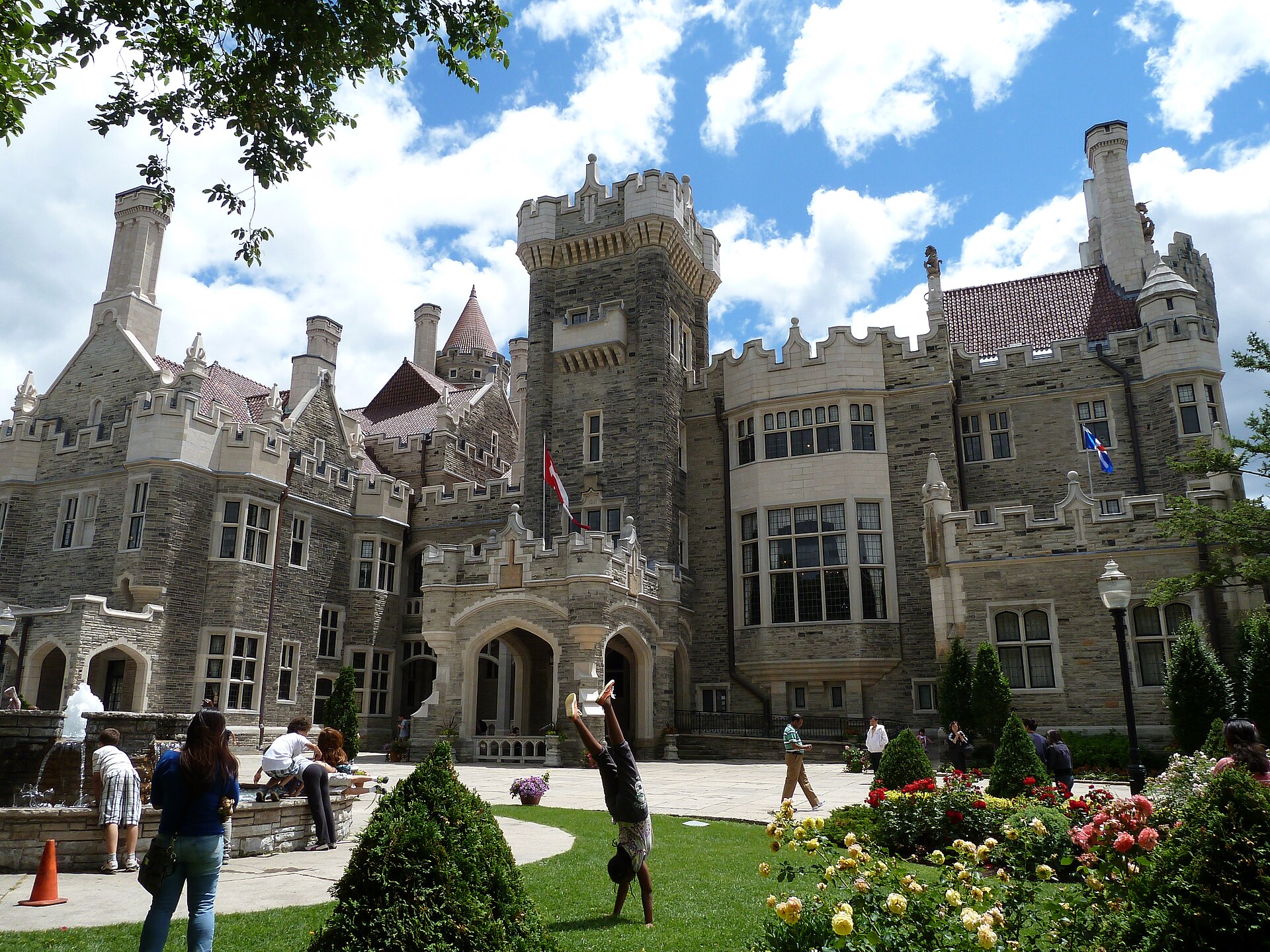
Casa Loma is a Gothic Revival style mansion and garden in midtown Toronto, Ontario, Canada, that serves as a historic house museum and landmark. It was constructed between 1911 and 1914 as a residence for financier Sir Henry Pellatt, designed by architect E.J. Lennox.
The structure features 98 rooms, including a grand hall, library, and conservatory, and was one of the largest private residences in Canada at the time of its completion. Following financial difficulties, Pellatt was forced to vacate the property in 1923, and it has since transitioned through various ownerships before becoming a public museum operated by the City of Toronto and later managed by Liberty Entertainment Group.
Key Facts
- Materials
- Sandstone, Concrete, Steel, Oak
- Civilization
- Canadian
- Accessibility
- Limited; main floor is accessible, upper floors and towers require stairs
- Date(s)
- 1911-1914
- Condition
- Well-preserved, active museum and event venue
- Original Function
- Private residence
- Key Figures
- Sir Henry Pellatt, E.J. Lennox
Conception and Construction
1911-1914Sir Henry Pellatt, a wealthy financier and military officer, commissioned architect E.J. Lennox to design a dream home on the Davenport Hill. The project cost approximately $3.5 million and employed 300 workers over three years.
Financial Decline and Departure
1914-1923The onset of World War I and subsequent economic downturns severely impacted Pellatt's finances. By 1923, mounting debts and rising property taxes forced him to auction his possessions and vacate the estate.
Public Ownership and Preservation
1933-PresentAfter sitting vacant for a decade, the City of Toronto seized the property for back taxes. It was briefly considered for demolition before being opened as a tourist attraction in 1937. It has since undergone extensive restoration and serves as a popular filming location and museum.
Cultural Significance
Casa Loma stands as a symbol of Toronto's early 20th-century economic ambition and the personal history of Sir Henry Pellatt, a central figure in the development of the Toronto Stock Exchange and the electrical industry in Ontario.
Today, the site is a significant cultural landmark, frequently utilized for film and television productions, which has cemented its status in popular culture as a quintessential 'castle' in a North American urban setting.
Interpretive Notes
Scholarly debates and areas of uncertainty
There is ongoing discussion regarding the balance between the site's role as a historic preservation project and its current commercial use as a high-end event venue, with some critics arguing that commercialization detracts from the authentic historical narrative of the Pellatt family.
Visiting Information
Entry Rules
Open daily from 9:30 AM to 5:00 PM. Tickets are required for entry and can be purchased online or at the gate. Last admission is at 4:00 PM.
Best Times to Visit
Weekday mornings to avoid weekend crowds. The gardens are best viewed during the summer months.
Photography
Personal photography is permitted. Professional or commercial photography requires prior authorization and a permit.
Preservation Notes
Visitors are requested not to touch artifacts or historical furnishings. Some areas of the house may be closed periodically for maintenance or private events.
Nearby POIs
5 shownSources & Further Reading
- [1]Casa Loma: The History of a Toronto Landmark — Jill Fairbrother. Dundurn Press (2005)
- [2]Sir Henry Pellatt: The King of Casa Loma — Carlie Oreskovich. Boston Mills Press (1982)
Key Facts
- Materials
- Sandstone, Concrete, Steel, Oak
- Civilization
- Canadian
- Accessibility
- Limited; main floor is accessible, upper floors and towers require stairs
- Date(s)
- 1911-1914
- Condition
- Well-preserved, active museum and event venue
- Original Function
- Private residence
- Key Figures
- Sir Henry Pellatt, E.J. Lennox