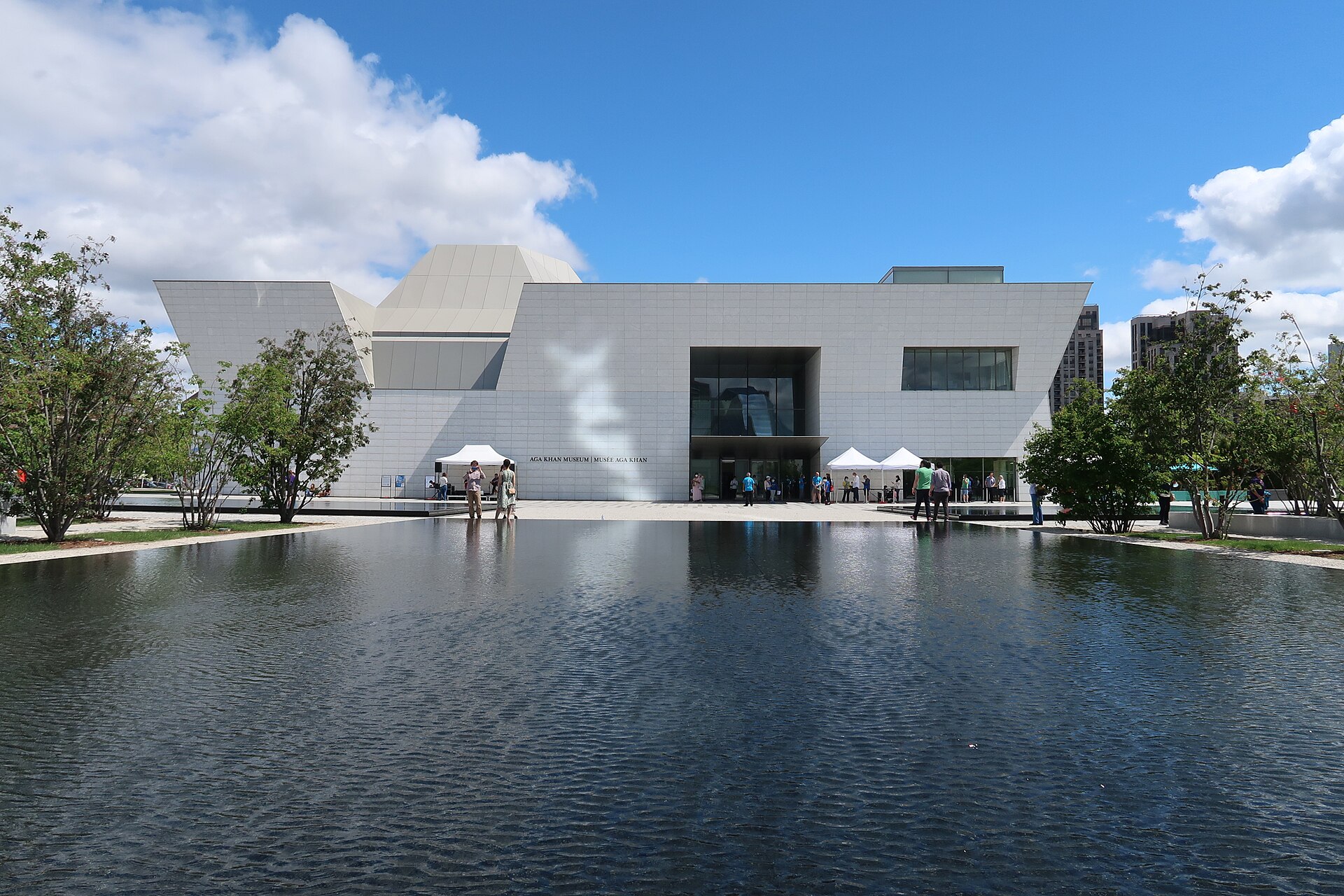
The Aga Khan Museum is a specialized institution in Toronto, Canada, dedicated to the acquisition, preservation, and display of artifacts relating to the artistic, intellectual, and scientific contributions of Muslim civilizations. Opened in 2014, the museum houses a permanent collection of over 1,200 rare objects, including ceramics, metalwork, textiles, and manuscripts spanning from the 8th to the 21st century.
The museum building was designed by Pritzker Prize-winning architect Fumihiko Maki. The structure is characterized by its white granite facade and a geometric design that plays with light and shadow, reflecting Islamic architectural traditions through a modern lens. It is situated within a 17-acre park designed by landscape architect Vladimir Djurovic.
Key Facts
- Materials
- Brazilian granite, Glass, Steel
- Civilization
- Global Islamic
- Accessibility
- Fully wheelchair accessible
- Date(s)
- 2010-2014
- Condition
- Active
- Original Function
- Museum of Islamic Art and Culture
- Key Figures
- Prince Karim Aga Khan IV, Fumihiko Maki
Founding and Vision
2000-2010The museum was established by the Aga Khan Trust for Culture, an agency of the Aga Khan Development Network. The goal was to foster a greater understanding of Islamic civilizations and their contributions to world heritage.
Architectural Design
2010-2014Architect Fumihiko Maki was commissioned to design a space that would embody the concepts of light and geometry. The building's orientation is aligned with Mecca, and the interior spaces are designed to facilitate a contemplative experience for visitors.
Inauguration
2014The museum officially opened to the public in September 2014. It serves as a cultural hub in Toronto, hosting not only the permanent collection but also performing arts, educational programs, and temporary exhibitions.
Cultural Significance
The Aga Khan Museum serves as a bridge between cultures, aiming to dispel misconceptions about Islamic history and art. By presenting the diversity of Muslim societies across time and geography, it promotes dialogue and pluralism within the Canadian and international context.
Interpretive Notes
Scholarly debates and areas of uncertainty
Discussions often center on the challenges of categorizing 'Islamic Art' as a monolithic entity, given the vast geographic and temporal range of the collection. Curators and scholars frequently debate how to balance traditional historical narratives with contemporary artistic expressions.
Visiting Information
Entry Rules
Open Tuesday through Sunday. Tickets can be purchased online or at the door. Visitors are encouraged to check the website for current exhibition schedules and special event closures.
Best Times to Visit
Weekday mornings are generally quieter. The museum grounds are particularly notable during the spring and summer months.
Photography
Non-commercial photography is permitted in the permanent collection galleries without flash or tripods. Specific temporary exhibitions may have restricted photography policies.
Preservation Notes
Maintain a respectful distance from all artifacts. Food and drink are strictly prohibited inside the galleries.
Nearby POIs
5 shownKey Facts
- Materials
- Brazilian granite, Glass, Steel
- Civilization
- Global Islamic
- Accessibility
- Fully wheelchair accessible
- Date(s)
- 2010-2014
- Condition
- Active
- Original Function
- Museum of Islamic Art and Culture
- Key Figures
- Prince Karim Aga Khan IV, Fumihiko Maki