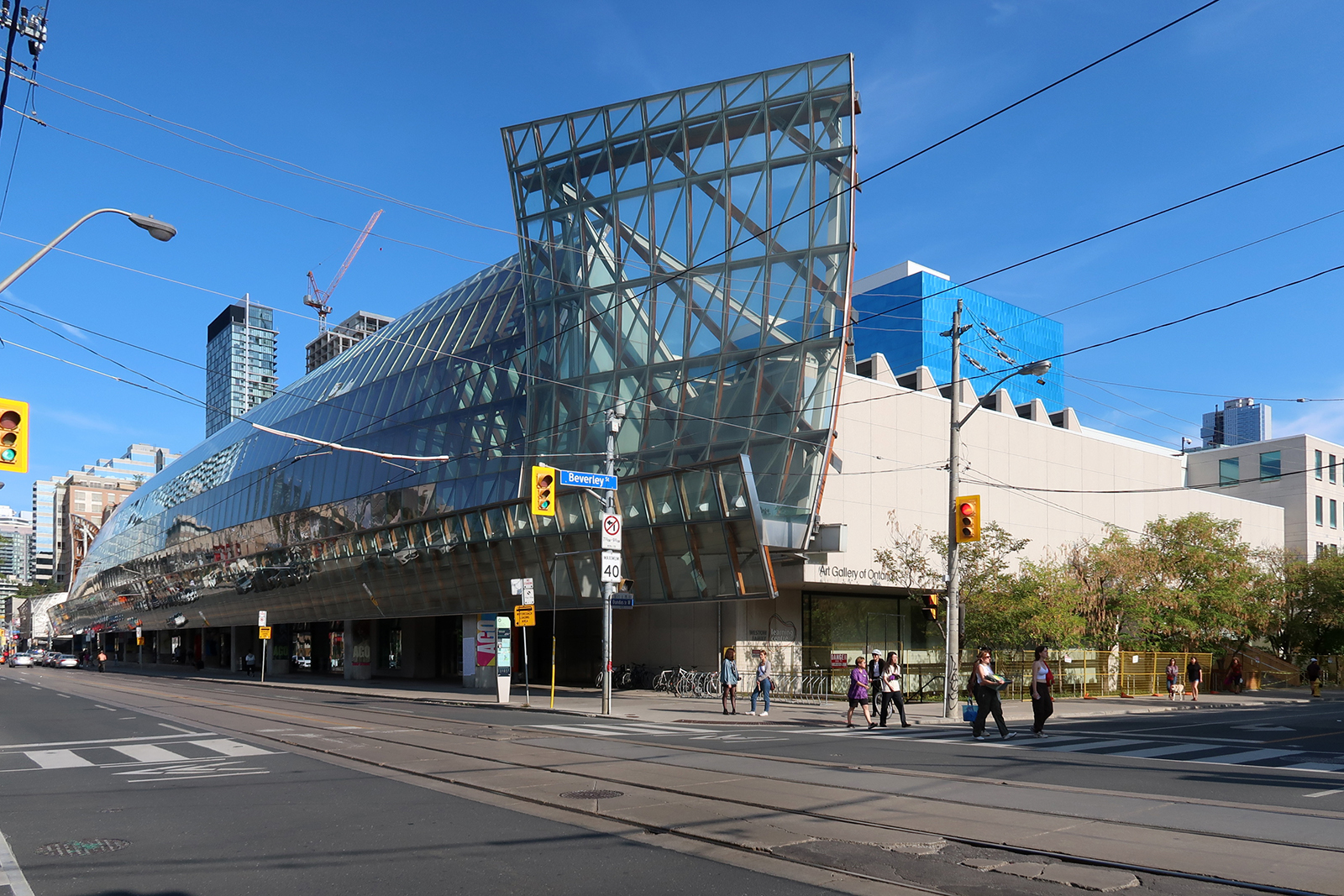
The Art Gallery of Ontario (AGO) is one of the largest art museums in North America, located in Toronto, Ontario. Its collection includes over 120,000 works spanning from the first century to the present day, featuring a diverse array of Canadian, First Nations, Inuit, African, European, and Oceanic art. The museum serves as a major cultural hub, housing significant collections of Canadian and Indigenous art alongside an extensive range of international masterpieces.
The current facility is notable for its architectural evolution, most recently transformed by architect Frank Gehry in 2008. The renovation introduced a dramatic glass and wood facade, known as the Galleria Italia, which serves as a signature element of the museum's presence on Dundas Street West.
Key Facts
- Materials
- Glass, Wood, Steel, Concrete
- Civilization
- Canadian
- Accessibility
- Fully wheelchair accessible
- Date(s)
- 1900 (founding), 2008 (Gehry expansion)
- Condition
- Active, well-maintained
- Original Function
- Art museum
- Key Figures
- Frank Gehry, Goldwin Smith, Ken Thomson
Founding and Early Years
1900-1920The gallery was founded in 1900 as the Art Museum of Toronto by a group of private citizens. It moved into the Grange, a historic Georgian manor, in 1911, which remains part of the current museum complex.
Expansion and Renaming
1966-1970sThe institution was renamed the Art Gallery of Ontario in 1966. During this period, the gallery underwent significant expansion to accommodate its growing collection and increasing public interest in the arts.
The Gehry Transformation
2008The museum underwent a major architectural redesign led by Toronto-born architect Frank Gehry. This project, titled 'Transformation AGO,' added the iconic glass-and-wood Galleria Italia and significantly increased exhibition space.
Cultural Significance
The AGO plays a central role in Canadian cultural life, acting as a steward for both historical Canadian art and contemporary global works. It is particularly recognized for its commitment to Indigenous art, integrating First Nations and Inuit perspectives into its permanent collection and programming to reflect the diverse history of the region.
Interpretive Notes
Scholarly debates and areas of uncertainty
Discussions within the institution often center on the decolonization of museum spaces and the ethical acquisition of historical artifacts. Curators and scholars debate the best methods for representing Indigenous histories alongside traditional Western art canons.
Visiting Information
Entry Rules
Open Wednesday through Sunday. Tickets can be purchased online or at the door. Visitors are encouraged to book time slots in advance during peak periods.
Best Times to Visit
Weekday mornings are generally quieter. The gallery often hosts special exhibitions that draw larger crowds on weekends.
Photography
Personal photography is permitted in most permanent collection galleries without flash or tripods. Specific temporary exhibitions may prohibit photography.
Preservation Notes
Maintain a respectful distance from all artworks. Food and drink are prohibited in the galleries to ensure the safety of the collection.
Nearby POIs
5 shownKey Facts
- Materials
- Glass, Wood, Steel, Concrete
- Civilization
- Canadian
- Accessibility
- Fully wheelchair accessible
- Date(s)
- 1900 (founding), 2008 (Gehry expansion)
- Condition
- Active, well-maintained
- Original Function
- Art museum
- Key Figures
- Frank Gehry, Goldwin Smith, Ken Thomson