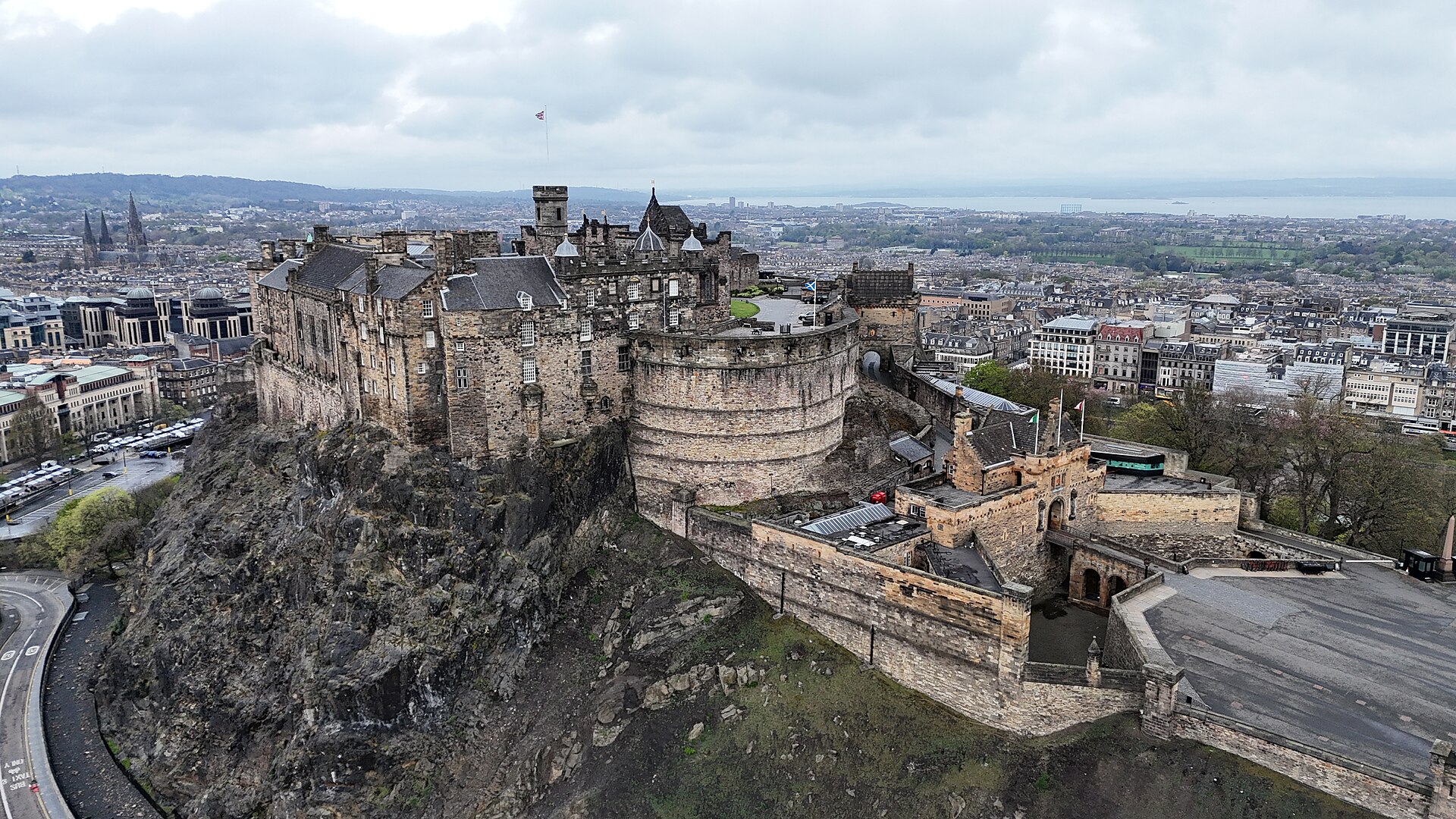
Edinburgh Castle is a historic fortress that dominates the skyline of Edinburgh from its position on the volcanic Castle Rock. Archaeological evidence suggests human occupation of the site since the Iron Age, though the current structure reflects centuries of military evolution, royal residence, and strategic fortification.
As the symbolic heart of Scotland, the castle has served as a royal palace, a military garrison, and a state prison. It houses the Honours of Scotland, the oldest crown jewels in Britain, and the Stone of Destiny, which has played a central role in the coronation ceremonies of Scottish and British monarchs for centuries.
Key Facts
- Materials
- Sandstone, Granite
- Civilization
- Scottish
- Accessibility
- Partial; steep inclines and cobblestones present challenges
- Date(s)
- 12th century - 21st century
- Condition
- Well-preserved, active museum and military site
- Original Function
- Royal fortress and residence
- Key Figures
- Queen Margaret, Mary, Queen of Scots, James VI and I
Early Foundations
12th centuryKing David I established the castle as a royal residence in the 12th century. St. Margaret's Chapel, the oldest surviving building in Edinburgh, was constructed during this period by David I in honor of his mother.
Wars of Independence
14th centuryThe castle was a primary objective during the Wars of Scottish Independence, changing hands multiple times between Scottish and English forces. In 1314, Thomas Randolph led a daring night attack to recapture the fortress for Robert the Bruce.
Royal Residence and Siege
16th centuryThe castle served as the primary royal palace for the Stewart monarchs. Mary, Queen of Scots, gave birth to the future James VI within the Royal Apartments in 1566. The fortress later endured the 'Lang Siege' during the Marian Civil War.
Military Garrison
17th - 19th centuryFollowing the Union of the Crowns, the castle transitioned from a royal residence to a military barracks and prison. It held prisoners from the Jacobite risings, the American Revolutionary War, and the Napoleonic Wars.
Modern Era
20th century - presentToday, the castle is managed by Historic Environment Scotland. It remains a major tourist destination and serves as the venue for the annual Royal Edinburgh Military Tattoo, while continuing to house active military museums.
Cultural Significance
Edinburgh Castle is the preeminent symbol of Scottish national identity. Its history is inextricably linked to the struggle for Scottish sovereignty, and it remains a focal point for national celebrations and commemorations.
The site's cultural importance is reinforced by its inclusion within the Old and New Towns of Edinburgh UNESCO World Heritage site. It serves as a living archive of Scottish history, housing the National War Museum and the Scottish National War Memorial.
Interpretive Notes
Scholarly debates and areas of uncertainty
The extent of the site's Iron Age occupation remains a subject of archaeological investigation, as the intensive building activity of the medieval and post-medieval periods has obscured much of the earlier stratigraphic record.
Visiting Information
Entry Rules
Open daily. Tickets must be booked in advance online to guarantee entry. Visitors should allow at least 2-3 hours for a full tour. Security checks are in place at the entrance.
Best Times to Visit
Early morning or late afternoon to avoid peak tourist crowds. The site is particularly significant during the Edinburgh Festival in August.
Photography
Personal photography is permitted in most areas. Photography is strictly prohibited inside the Crown Room where the Honours of Scotland are displayed.
Preservation Notes
The site is a scheduled ancient monument. Visitors are requested to stay on marked paths and refrain from climbing on historic masonry or defensive walls.
Nearby POIs
5 shownSources & Further Reading
- [1]Edinburgh Castle: The Official Souvenir Guide — Historic Environment Scotland. Historic Environment Scotland (2018)
- [2]The Castles of Scotland — Martin Coventry. Goblinshead (2006)
Key Facts
- Materials
- Sandstone, Granite
- Civilization
- Scottish
- Accessibility
- Partial; steep inclines and cobblestones present challenges
- Date(s)
- 12th century - 21st century
- Condition
- Well-preserved, active museum and military site
- Original Function
- Royal fortress and residence
- Key Figures
- Queen Margaret, Mary, Queen of Scots, James VI and I