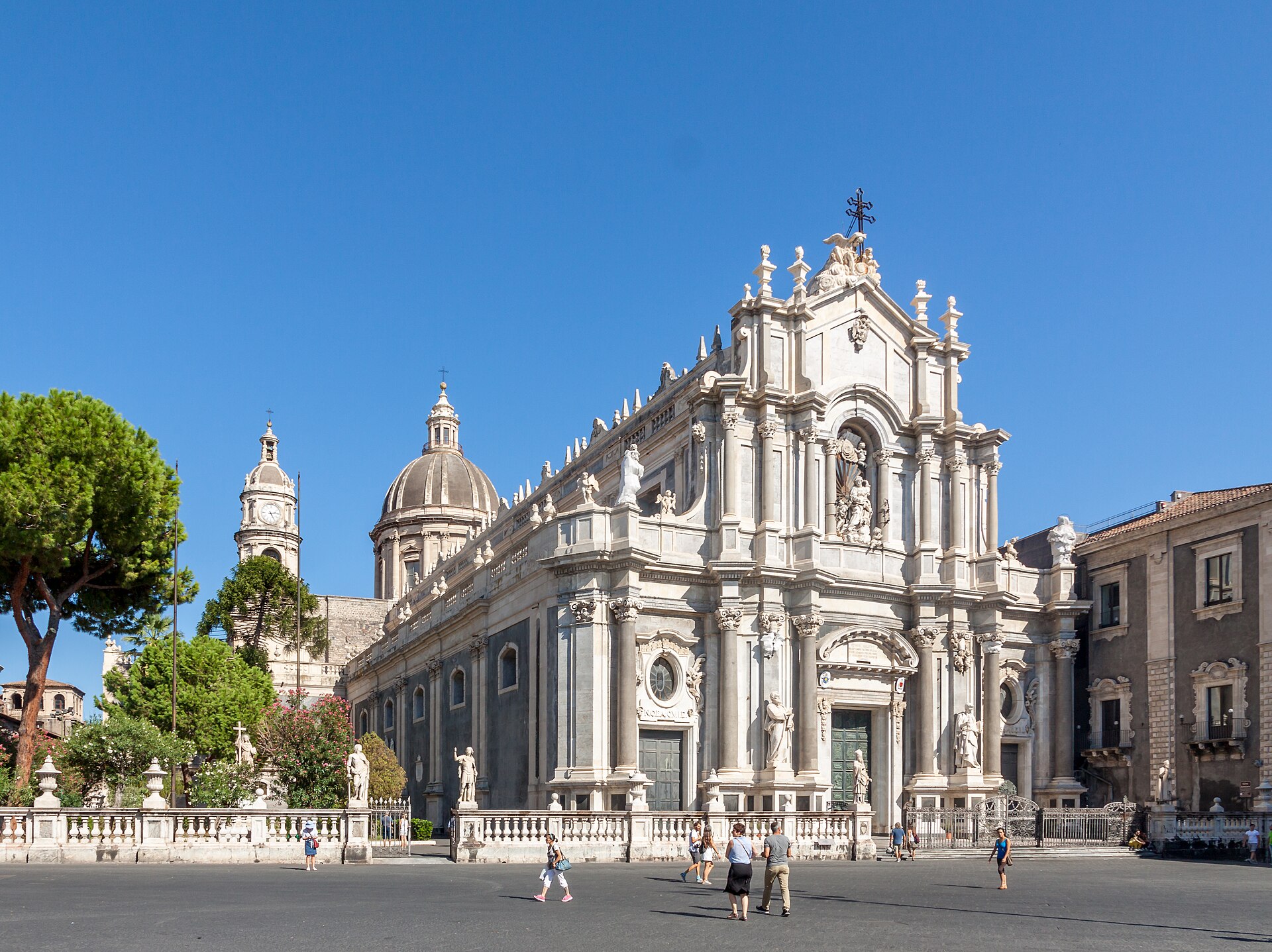
The Cathedral of Saint Agatha, commonly known as the Duomo di Catania, serves as the primary seat of the Archbishop of Catania. Originally founded in the 11th century on the ruins of the Roman Achillean Baths, the structure has undergone numerous reconstructions due to the devastating 1693 Sicily earthquake and multiple eruptions of Mount Etna.
The current edifice is a prominent example of Sicilian Baroque architecture, designed primarily by the architect Giovanni Battista Vaccarini in the early 18th century. Its facade is constructed from white Carrara marble and black lava stone, a characteristic combination reflecting the geological landscape of the region.
Key Facts
- Materials
- Carrara marble, Lava stone, Brick
- Civilization
- Sicilian
- Accessibility
- Ground level accessible, some interior steps
- Date(s)
- 1078-1094 (original), 1711-1768 (current facade)
- Condition
- Well-preserved, active religious site
- Original Function
- Cathedral
- Key Figures
- Saint Agatha, Giovanni Battista Vaccarini, Roger I of Sicily
Norman Foundations
11th CenturyThe cathedral was commissioned by Count Roger I of Sicily following the Norman conquest of the island. It was built over the remains of ancient Roman baths, incorporating salvaged materials from the site.
Destruction and Rebuilding
1693The 1693 Sicily earthquake caused the collapse of the majority of the Norman structure. The subsequent reconstruction effort provided the opportunity to redesign the cathedral in the prevailing Baroque style.
Baroque Transformation
18th CenturyArchitect Giovanni Battista Vaccarini led the reconstruction, creating the iconic facade and the monumental bell tower. The use of contrasting lava stone and marble became a hallmark of the city's post-earthquake aesthetic.
Cultural Significance
The cathedral is dedicated to Saint Agatha, the patron saint of Catania. It serves as the focal point for the Feast of Saint Agatha, one of the largest religious processions in the world, which takes place annually in February. The site is deeply embedded in the city's identity, representing both its religious devotion and its resilience against natural disasters.
Interpretive Notes
Scholarly debates and areas of uncertainty
There is ongoing academic discussion regarding the extent of the original Norman architectural elements that remain integrated within the current Baroque structure, particularly concerning the subterranean remains of the Roman baths.
Visiting Information
Entry Rules
Open daily to the public. Visitors are requested to maintain silence and dress modestly, covering shoulders and knees, as it is an active place of worship.
Best Times to Visit
Early morning or late afternoon to avoid peak tourist crowds and midday heat. The square is particularly significant during the February festival days.
Photography
Photography is permitted without flash. Tripods are prohibited inside the cathedral.
Preservation Notes
The structure requires constant maintenance due to the corrosive nature of volcanic ash and seismic activity in the region. Visitors should respect all cordoned-off areas.
Nearby POIs
3 shownSources & Further Reading
- [1]The Baroque Architecture of Sicily — Stephen Tobriner. University of California Press (1982)
- [2]Catania: A History of the City — Salvatore Maria Calogero. Edizioni del Sole (2015)
Key Facts
- Materials
- Carrara marble, Lava stone, Brick
- Civilization
- Sicilian
- Accessibility
- Ground level accessible, some interior steps
- Date(s)
- 1078-1094 (original), 1711-1768 (current facade)
- Condition
- Well-preserved, active religious site
- Original Function
- Cathedral
- Key Figures
- Saint Agatha, Giovanni Battista Vaccarini, Roger I of Sicily