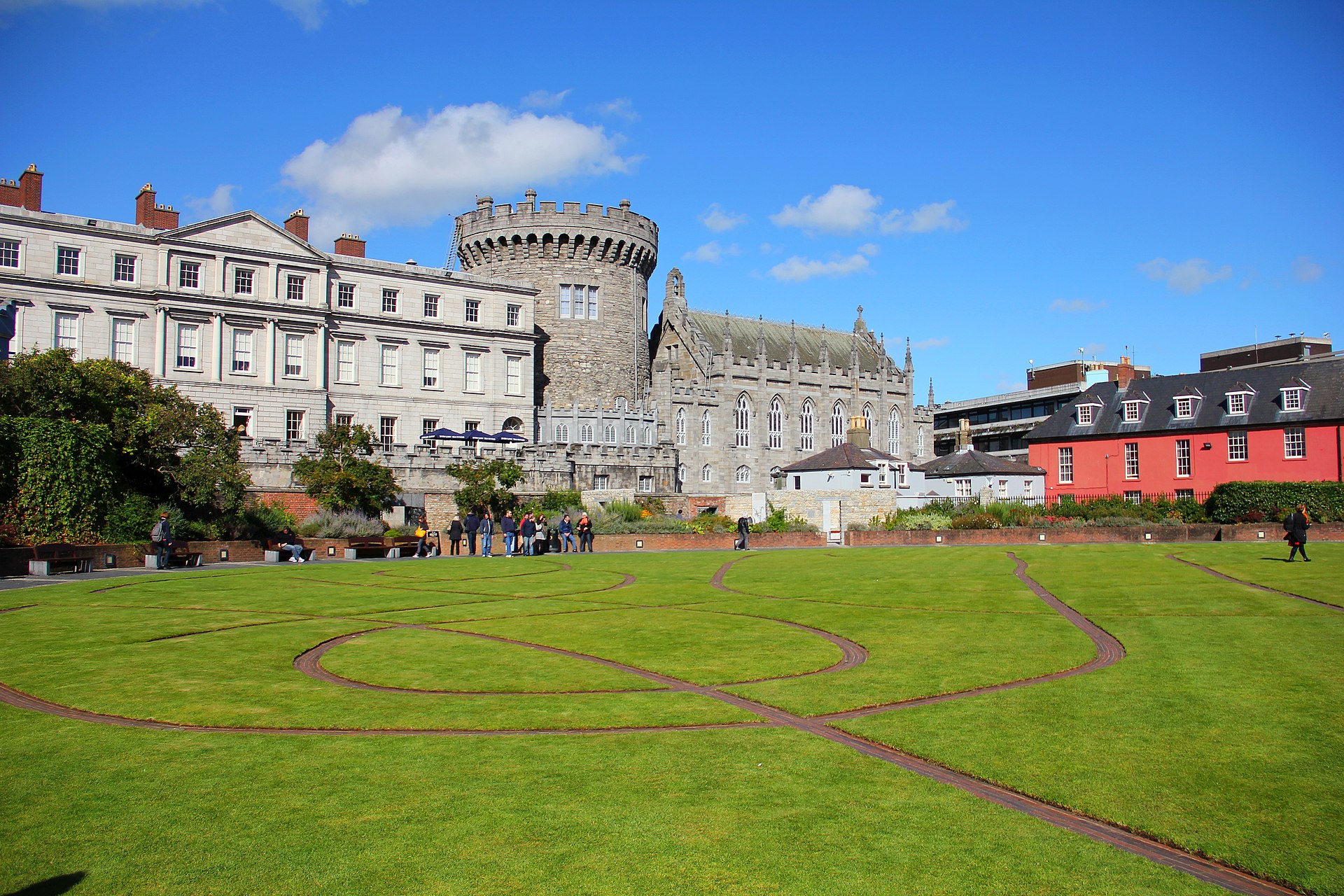
Dublin Castle was established in 1204 by order of King John of England as a major defensive fortification for the city of Dublin. Over the centuries, it evolved from a medieval fortress into the administrative heart of British rule in Ireland, serving as the seat of the Lord Lieutenant of Ireland until the Irish Free State was established in 1922.
The site complex features a blend of architectural styles, including the medieval Record Tower, the 18th-century State Apartments, and the Chapel Royal. Today, it serves as a major Irish government complex, hosting state functions, presidential inaugurations, and international conferences, while remaining a significant cultural landmark open to the public.
Key Facts
- Materials
- Limestone, Granite, Brick
- Civilization
- Anglo-Norman
- Accessibility
- Partially accessible; some historic areas have stairs
- Date(s)
- 1204 CE
- Condition
- Well-preserved, active government complex
- Original Function
- Fortress and administrative center
- Key Figures
- King John of England, Michael Collins, Lord Lieutenant of Ireland
Medieval Origins
13th CenturyFollowing the Norman invasion, King John ordered the construction of a castle to protect the city. The original structure was a stone fortress with a moat, serving as the center of Norman administration in Ireland.
Expansion and Governance
17th-18th CenturyThe castle underwent significant reconstruction during the Georgian period, replacing many of the older defensive structures with the grand State Apartments used for viceregal ceremonies and social events.
Transition to Independence
1922Following the Anglo-Irish Treaty, the castle was handed over to the Provisional Government of the Irish Free State. Michael Collins famously accepted the surrender of the castle from the last Lord Lieutenant.
Modern Era
20th Century - PresentThe castle has been repurposed as a venue for major state events, including the inauguration of Irish Presidents and European Union presidencies, while maintaining its status as a historical museum.
Cultural Significance
Dublin Castle represents the complex and often turbulent history of Anglo-Irish relations. For centuries, it was viewed as the symbol of colonial authority and the 'Castle administration.' Since 1922, its transformation into a site of Irish sovereignty has made it a central pillar of the modern Irish state's identity.
Interpretive Notes
Scholarly debates and areas of uncertainty
There is ongoing academic discussion regarding the extent of the original medieval footprint, as much of the early defensive wall was obscured or demolished during the 18th-century expansion. Excavations continue to reveal new data about the pre-Norman Viking settlement beneath the castle grounds.
Visiting Information
Entry Rules
Open daily for self-guided or guided tours. Access to the State Apartments may be restricted during official government business or state events. Check the official website for daily availability.
Best Times to Visit
Weekday mornings are generally quieter. The site is particularly busy during summer months and national holidays.
Photography
Photography is permitted in most areas, though flash and tripods are prohibited inside the State Apartments and museum galleries.
Preservation Notes
The site is a protected national monument. Visitors are requested to refrain from touching historic tapestries, furniture, and wall surfaces.
Nearby POIs
5 shownSources & Further Reading
- [1]Dublin Castle: Art and Architecture — Peter Harbison. Wordwell Books (2000)
- [2]The Castle of Dublin: A History — John McCullen. Irish Academic Press (2012)
Key Facts
- Materials
- Limestone, Granite, Brick
- Civilization
- Anglo-Norman
- Accessibility
- Partially accessible; some historic areas have stairs
- Date(s)
- 1204 CE
- Condition
- Well-preserved, active government complex
- Original Function
- Fortress and administrative center
- Key Figures
- King John of England, Michael Collins, Lord Lieutenant of Ireland