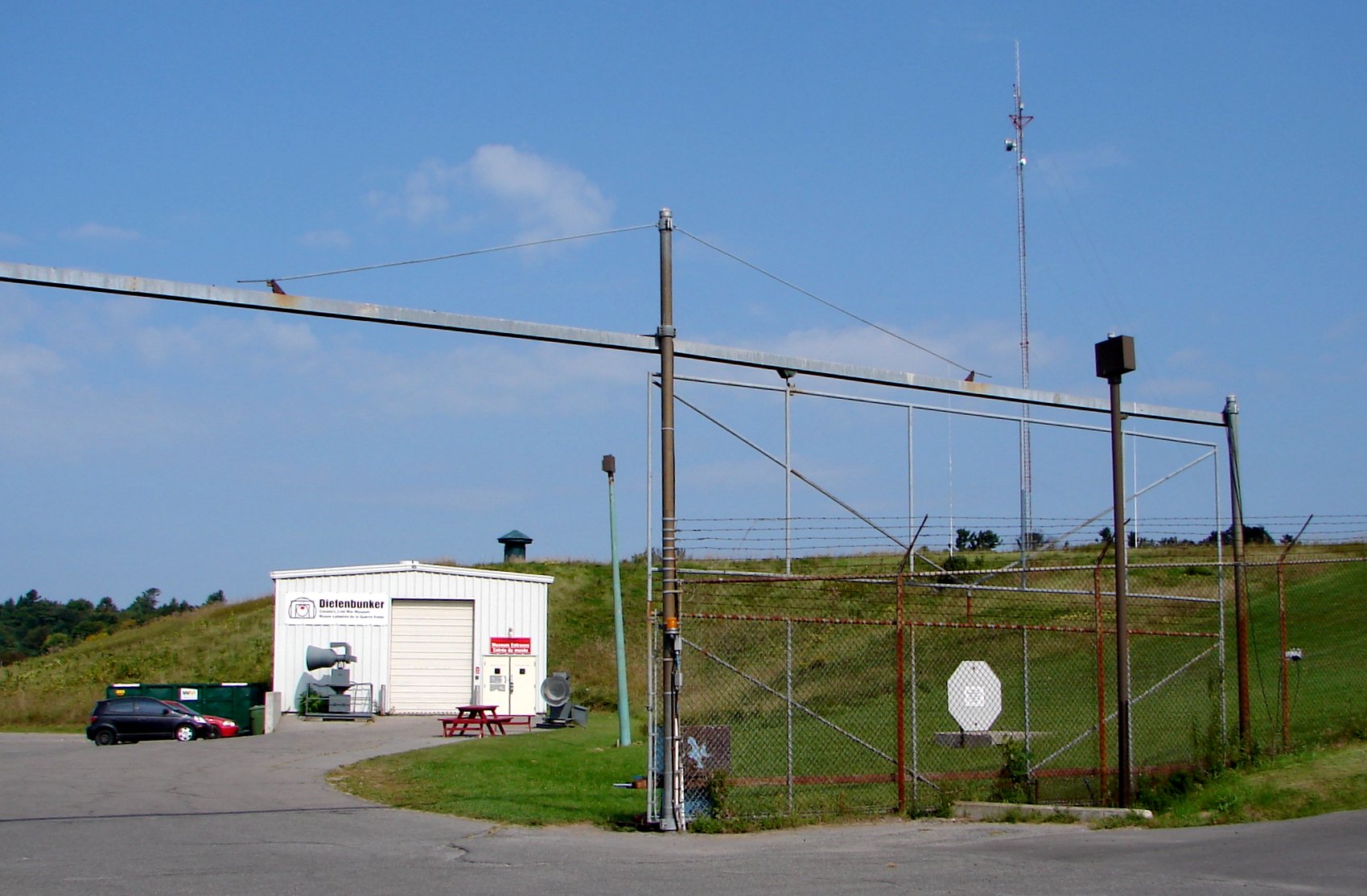
The Diefenbunker is a four-story, 100,000-square-foot underground bunker located in Carp, Ontario. Constructed between 1959 and 1961, it was designed as the central node of the Canadian government's emergency continuity plan during the height of the Cold War. The facility was intended to house key government officials, military leaders, and essential personnel in the event of a nuclear attack on Ottawa.
Decommissioned as a military facility in 1994, the site was subsequently preserved and opened to the public as a museum. It remains one of the most significant physical remnants of Canada's Cold War defense strategy, featuring original telecommunications equipment, blast-proof doors, and decontamination chambers that illustrate the era's civil defense preparations.
Key Facts
- Materials
- Reinforced concrete, Steel
- Civilization
- Canadian
- Accessibility
- Partially accessible; some levels require stairs
- Date(s)
- 1959-1961
- Condition
- Preserved as a museum
- Original Function
- Emergency Government Headquarters
- Key Figures
- John Diefenbaker
Conception and Construction
1959-1961Commissioned by Prime Minister John Diefenbaker, the bunker was built in secret to ensure the survival of the Canadian government. It was designed to withstand a five-megaton nuclear blast from a distance of 1.8 kilometers.
Operational Era
1961-1994For over three decades, the facility was maintained by the Canadian Forces as a high-readiness site. It was staffed by a small rotation of personnel and kept fully equipped to support government operations for up to 30 days.
Decommissioning and Museum Conversion
1994-presentFollowing the end of the Cold War, the bunker was deemed obsolete and closed. In 1998, it was designated a National Historic Site of Canada and opened as the Diefenbunker: Canada's Cold War Museum.
Cultural Significance
The Diefenbunker serves as a tangible symbol of the existential anxiety that defined the Cold War era in Canada. It represents the government's attempt to prepare for an unthinkable scenario and remains a focal point for public education regarding nuclear history and civil defense.
Interpretive Notes
Scholarly debates and areas of uncertainty
Historians debate the actual effectiveness of the bunker's design, with some arguing that the facility would have been insufficient to sustain government operations in the event of a direct nuclear exchange, given the limitations of fallout protection and long-term resource management.
Visiting Information
Entry Rules
Open to the public with paid admission. Guided tours are available and recommended for full access to restricted areas. Check the official website for seasonal operating hours.
Best Times to Visit
Weekdays during the off-season to avoid school group tours and weekend crowds.
Photography
Personal photography is permitted throughout the museum. Commercial photography requires prior authorization.
Preservation Notes
The site is a National Historic Site; visitors must adhere to all safety signage and remain within designated tour areas to protect the original equipment and structural integrity.
Nearby POIs
7 shownKey Facts
- Materials
- Reinforced concrete, Steel
- Civilization
- Canadian
- Accessibility
- Partially accessible; some levels require stairs
- Date(s)
- 1959-1961
- Condition
- Preserved as a museum
- Original Function
- Emergency Government Headquarters
- Key Figures
- John Diefenbaker