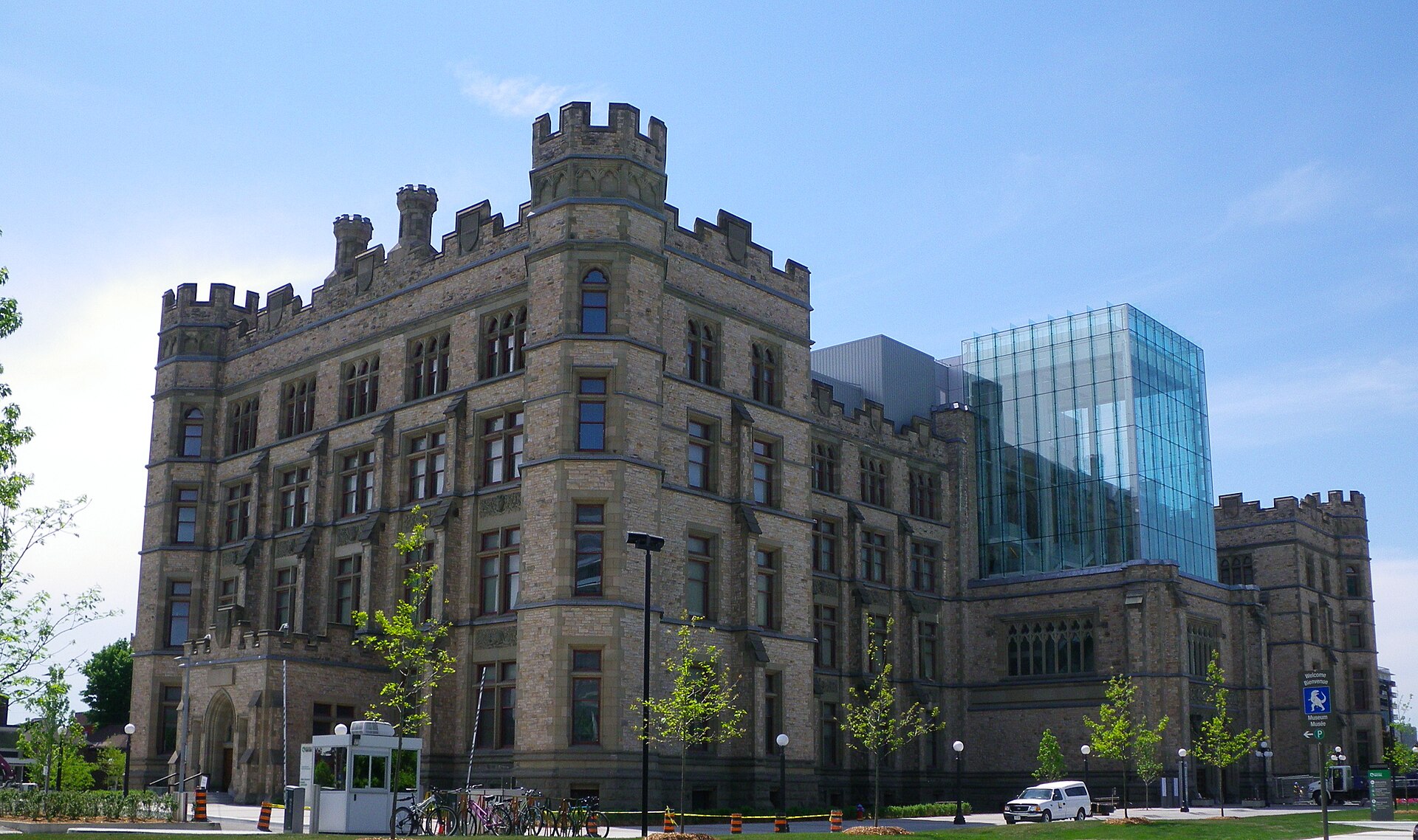
The Canadian Museum of Nature is a national natural history museum located in Ottawa, Ontario. Housed within the historic Victoria Memorial Museum Building, the institution serves as a repository for over 14.6 million specimens, encompassing extensive collections in botany, mineralogy, paleontology, and zoology. It functions as both a public exhibition space and a significant research facility dedicated to the study of the natural world.
The museum's current facility, a National Historic Site of Canada, underwent a major renovation completed in 2010. This project included the addition of the 'Queens' Lantern,' a glass tower that serves as the primary entrance, and the modernization of its permanent galleries to better showcase Canada's diverse natural heritage.
Key Facts
- Materials
- Sandstone, Steel, Glass
- Civilization
- Canadian
- Accessibility
- Fully wheelchair accessible
- Date(s)
- 1905-1912
- Condition
- Fully restored and operational
- Original Function
- National Museum of Canada
- Key Figures
- David Ewart, Sir Wilfrid Laurier
Origins and Construction
1905-1912The Victoria Memorial Museum Building was commissioned by the federal government to house the Geological Survey of Canada and the National Museum. Designed by architect David Ewart in a Tudor-Gothic style, the building was intended to be a grand monument to Canadian science.
Institutional Evolution
1920-1990Following the 1916 fire that destroyed the Centre Block of Parliament, the building temporarily housed the House of Commons and the Senate. Over the subsequent decades, the museum's mandate evolved, eventually leading to the establishment of the Canadian Museum of Nature as a separate Crown corporation in 1990.
Modernization and Renewal
2004-2010The museum underwent a comprehensive $216 million renovation. This project restored the historic masonry, upgraded seismic safety, and added the iconic glass lantern structure, which transformed the building's circulation and public accessibility.
Cultural Significance
The museum serves as a primary hub for natural history education in Canada, playing a critical role in public engagement with environmental science and biodiversity. Its location in the national capital underscores its status as a central institution for the preservation of Canada's scientific and natural legacy.
Interpretive Notes
Scholarly debates and areas of uncertainty
Discussions within the institution often center on the balance between maintaining the historic integrity of the 1912 architecture and the modern requirements for climate-controlled storage of sensitive biological and geological specimens.
Visiting Information
Entry Rules
Open Tuesday through Sunday. Tickets can be purchased online or at the box office. General admission fees apply, with free entry during specific weekly time slots.
Best Times to Visit
Weekday mornings are generally quieter. The museum is a popular destination for school groups during the academic year.
Photography
Personal photography is permitted in most galleries. Flash and tripods are prohibited in specific exhibition areas.
Preservation Notes
Visitors are requested not to touch specimens or display cases. Food and drink are restricted to designated areas.
Nearby POIs
7 shownKey Facts
- Materials
- Sandstone, Steel, Glass
- Civilization
- Canadian
- Accessibility
- Fully wheelchair accessible
- Date(s)
- 1905-1912
- Condition
- Fully restored and operational
- Original Function
- National Museum of Canada
- Key Figures
- David Ewart, Sir Wilfrid Laurier