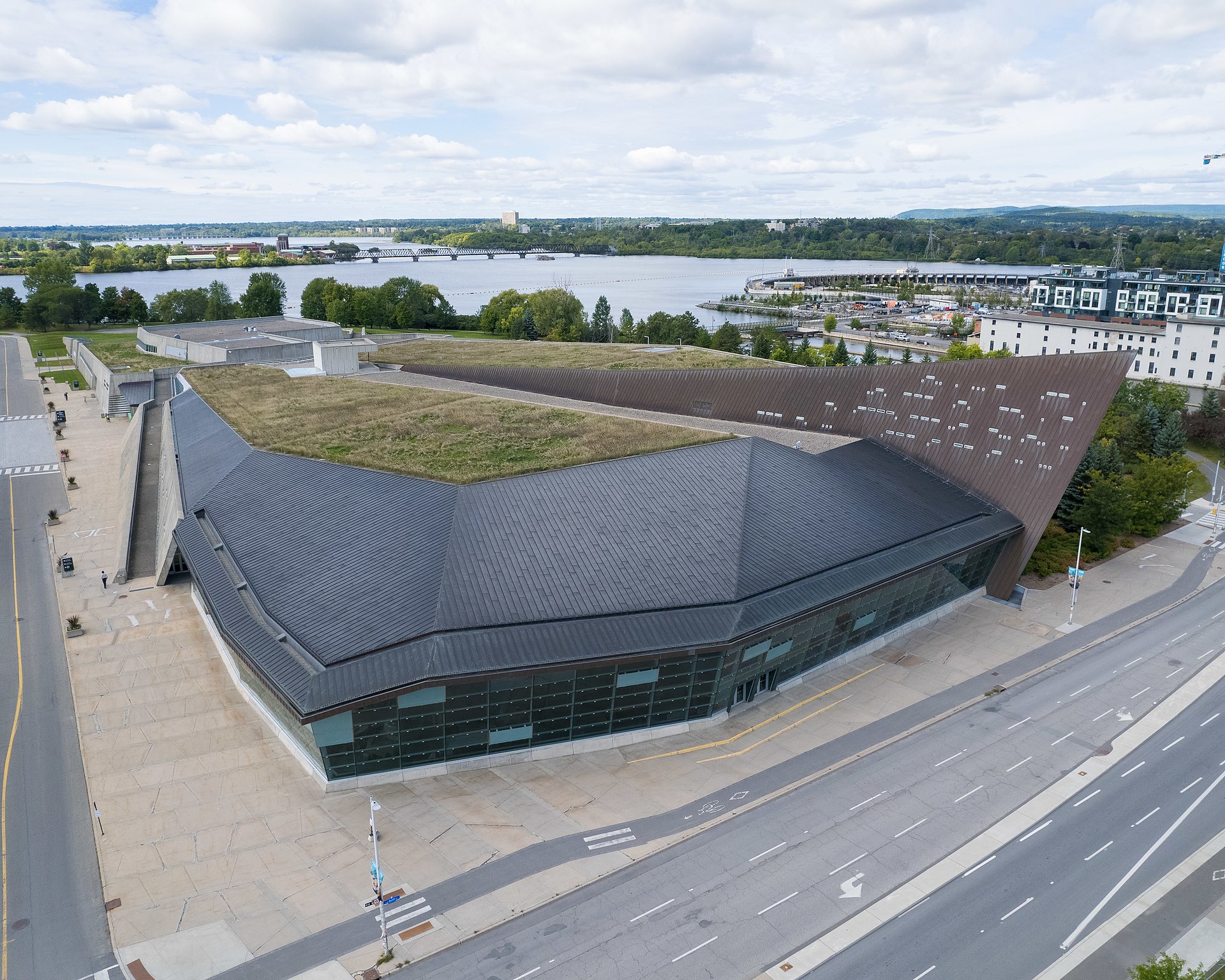
The Canadian War Museum is Canada's national museum of military history, located in Ottawa. It serves as a center for research and public education on the country's military past, from early conflicts on Canadian soil to contemporary peacekeeping and combat missions. The facility is renowned for its architectural design, which integrates the building into the surrounding landscape of the Ottawa River.
The museum houses a vast collection of over 500,000 artifacts, including rare military vehicles, artillery, uniforms, and personal memorabilia. Its permanent galleries are organized chronologically, providing a comprehensive narrative of how war has shaped Canada and the lives of its citizens, while the LeBreton Gallery showcases large-scale military hardware.
Key Facts
- Materials
- Copper, Concrete, Glass, Steel
- Civilization
- Canadian
- Accessibility
- Fully wheelchair accessible
- Date(s)
- 2005
- Condition
- Active
- Original Function
- National Military Museum
- Key Figures
- Raymond Moriyama
Founding and Early Years
1880-1942The museum originated from a collection of military artifacts gathered by the Dominion Archives in 1880. It officially opened as the Canadian War Museum in 1942, initially located on Sussex Drive to house items collected during the First World War.
Expansion and Relocation
1967-2005Following decades of growth, the museum moved to the Vimy House facility in 1967. By the late 1990s, the need for a larger, modern facility led to the design and construction of the current building at LeBreton Flats, which opened to the public in May 2005.
Modern Era
2005-PresentThe museum continues to expand its collection and digital archives. It remains a focal point for national remembrance, hosting major exhibitions and serving as a site for commemorative ceremonies.
Cultural Significance
The museum plays a critical role in Canadian national identity, framing military history not merely as a record of combat, but as a reflection of the nation's evolving social values and international commitments. It serves as a site of collective memory for veterans and their families.
Architecturally, the building is designed to evoke the Canadian landscape, with its sloping green roof and copper cladding intended to weather over time, symbolizing the passage of history and the resilience of the nation.
Interpretive Notes
Scholarly debates and areas of uncertainty
There has been ongoing academic discussion regarding the 'Best-Laid Plans' exhibition, which examined the strategic bombing of Germany during WWII. The debate centered on how the museum should balance the presentation of military necessity against the humanitarian impact of civilian casualties.
Visiting Information
Entry Rules
Open daily. Tickets can be purchased online or at the box office. Security screening is in effect for all visitors.
Best Times to Visit
Weekdays during the school year offer the quietest experience. Remembrance Day (November 11) is significant but extremely crowded.
Photography
Personal photography is permitted without flash or tripods. Commercial photography requires prior authorization.
Preservation Notes
Artifacts are sensitive to light and humidity; please refrain from touching displays. Flash photography is prohibited to protect light-sensitive materials.
Nearby POIs
7 shownSources & Further Reading
- [1]The Canadian War Museum: A History — Dean F. Oliver. Canadian War Museum Press (2005)
- [2]Architecture of the Canadian War Museum — Raymond Moriyama. Canadian Architect (2006)
Key Facts
- Materials
- Copper, Concrete, Glass, Steel
- Civilization
- Canadian
- Accessibility
- Fully wheelchair accessible
- Date(s)
- 2005
- Condition
- Active
- Original Function
- National Military Museum
- Key Figures
- Raymond Moriyama