
Country Wiki
Andorra
Andorra is a small, landlocked principality located in the eastern Pyrenees mountains between France and Spain. Known for its rugged terrain, ski resorts, and duty-free economy, the country is characterized by high-altitude valleys and a strong connection to both Catalan and broader European cultural traditions. Established as a co-principality in the medieval period, Andorra has maintained a unique political system with two co-princes—the President of France and the Bishop of Urgell. Today, it is a parliamentary democracy with a high standard of living, driven largely by tourism and financial services.
Origins and Medieval Foundations
c. 8th century–1278Tradition holds that Andorra was granted a charter by Charlemagne in recognition of its resistance to Moorish forces. Over time, local control was contested between French and Spanish feudal lords, leading to the establishment of a shared sovereignty arrangement.
Formation of the Co-Principality
1278–1800sThe Pareage agreements of 1278 and 1288 established Andorra as a co-principality jointly governed by the Count of Foix (later the French head of state) and the Bishop of Urgell. This system ensured relative stability and autonomy despite the country's small size and strategic location.
Modernization and Political Reform
19th century–1993Andorra remained largely isolated until the 20th century, with limited infrastructure and economic development. Gradual modernization occurred through increased tourism and trade. In 1993, Andorra adopted its first written constitution, transforming it into a parliamentary democracy while retaining the co-princes as ceremonial heads of state.
Contemporary Andorra
1993–presentSince adopting its constitution, Andorra has integrated more closely with the international community, joining the United Nations in 1993. Its economy has grown through tourism, banking, and retail, while maintaining a distinct cultural identity rooted in Catalan language and traditions.
Major Cities
4 listed
Notable POIs
5 listed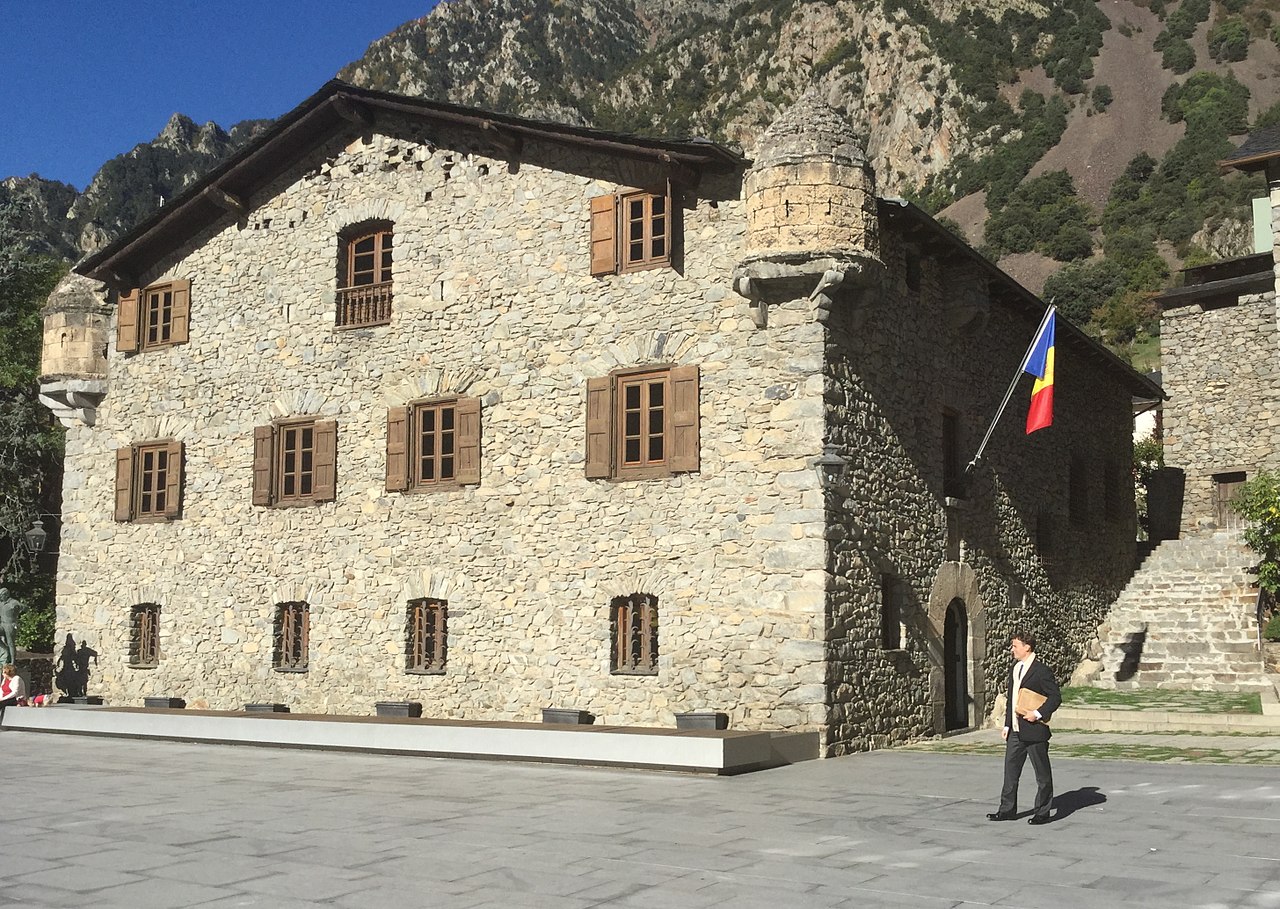
Casa de la Vall
POIHistorical house built in 1580 as a manor and tower defense by the Busquets family, featuring a Council Chamber, chapel, and closet of the seven keys storing historical documents, including the Manual Digest and Politar Andorrà.

Esglesia de Sant Esteve
POIRomanesque-style cathedral and seat of the Bishop of Urgell, patron of Andorra since 1133, featuring historic events like Bishop Felix's adoptionist revolt and the overthrowing of bishops by aristocratic families between 981 and 1122.

Church of Saint John of Caselles
POI11th-12th century church featuring a 16th-century altarpiece of exceptional quality depicting scenes from the life and martyrdom of Saint John the apostle.

Museu Casa Rull
POIHistoric house museum dating to 1732, rebuilt after a late 19th-century fire, now showcasing Andorran heritage and culture.

Ruta del Ferro
POIMedieval town preserving a vast historic center linked to Andorra's culture, home to the Sorteny National Park and a UNESCO Biosphere Reserve since 2020.
Sources & Further Reading
- [1]The Andorran Economy — Joan Peruga. Government of Andorra (2015)
- [2]
- [3]A History of Andorra — Montserrat Guibernau. Routledge (2004)