
Andorra la Vella
Andorra la Vella is the capital of Andorra, a small landlocked principality in the eastern Pyrenees mountains between France and Spain. Situated at an elevation of over 1,000 meters, it is the highest capital city in Europe. Historically a modest mountain settlement, it developed around trade routes connecting Iberian and French regions. Today, Andorra la Vella serves as the political, economic, and commercial center of the country. Its economy is driven by tourism, retail (particularly duty-free shopping), and financial services. The city combines a historic core with modern commercial districts, reflecting its transformation into a regional hub.
Early Settlement and Medieval Period
Prehistory–15th centuryThe area of Andorra la Vella has been inhabited since prehistoric times, though it remained a small rural settlement for much of its early history. During the medieval period, it formed part of the Andorran valleys governed jointly by the Bishop of Urgell and the Count of Foix under a feudal arrangement established in the 13th century.
Formation of the Co-Principality
13th–19th centuriesThe Pareage agreements of 1278 and 1288 established the co-principality system that still defines Andorra’s governance. Andorra la Vella functioned as a local administrative center, though it remained small and relatively isolated due to its mountainous terrain.
Modernization and Economic Growth
20th centurySignificant changes began in the 20th century as infrastructure improved and Andorra opened to tourism and international trade. Andorra la Vella expanded rapidly, transitioning from a rural town into a commercial center, particularly after World War II.
Contemporary Capital
Late 20th century–presentFollowing the adoption of Andorra’s constitution in 1993, Andorra la Vella became the formal capital of a sovereign parliamentary co-principality. Today it is the country’s political, financial, and cultural center, with continued growth in tourism, retail, and services.
Notable POIs in Andorra la Vella
2 listed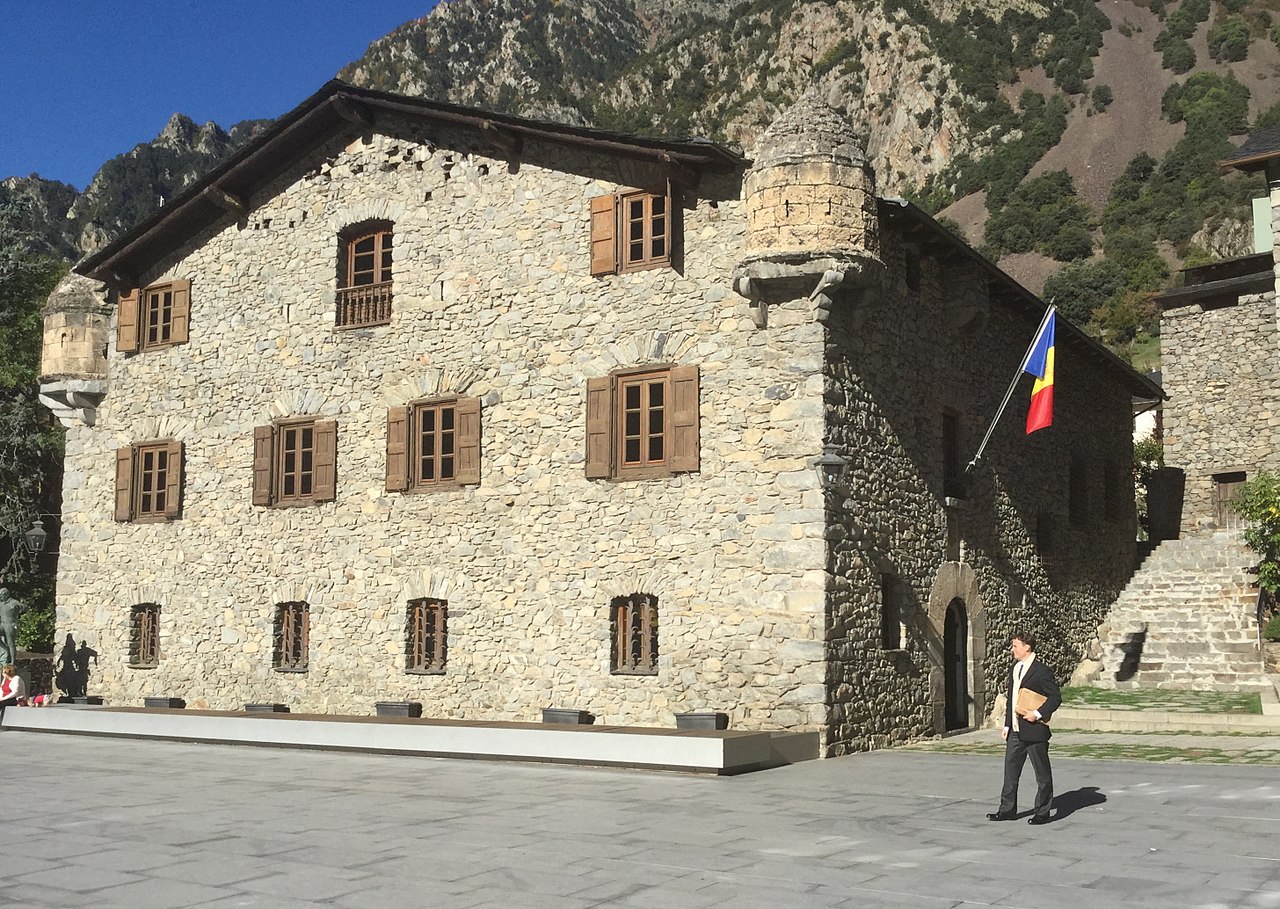
Casa de la Vall
POIHistorical house built in 1580 as a manor and tower defense by the Busquets family, featuring a Council Chamber, chapel, and closet of the seven keys storing historical documents, including the Manual Digest and Politar Andorrà.

Esglesia de Sant Esteve
POIRomanesque-style cathedral and seat of the Bishop of Urgell, patron of Andorra since 1133, featuring historic events like Bishop Felix's adoptionist revolt and the overthrowing of bishops by aristocratic families between 981 and 1122.
Sources & Further Reading
- [1]The Andorran Co-Principality: Origins and Development — Marc Pons. Journal of Pyrenean Studies (2005)
- [2]Andorra: A Study in Mountain Development — Bruno S. Frey. Tourism Economics (1997)
- [3]Government of Andorra – Official StatisticsView