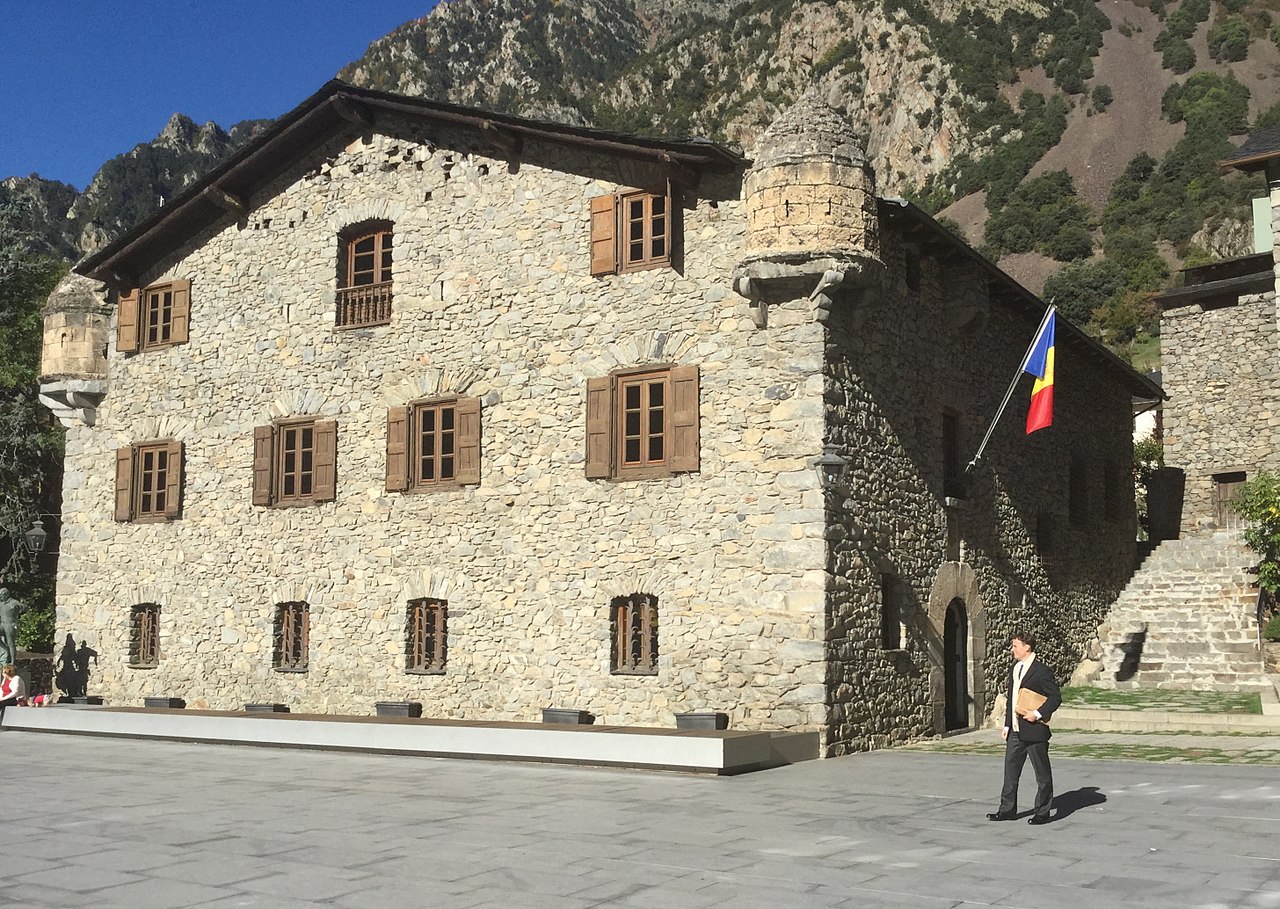
Casa de la Vall is a historic manor house located in the old quarter of Andorra la Vella. Constructed in 1580 by the Busquets family, the building served as a private residence and a defensive tower before being acquired by the Consell de la Terra in 1702 to serve as the seat of the Andorran parliament.
The structure is notable for its austere stone architecture and its role as the administrative heart of the country for over three centuries. It houses the Council Chamber, a private chapel dedicated to Saint Ermengol, and the 'Closet of the Seven Keys,' a secure archive that historically protected the nation's most important legal documents, including the Manual Digest and the Politar Andorrà.
Key Facts
- Materials
- Stone, Slate
- Civilization
- Andorran
- Accessibility
- Limited due to historic architecture
- Date(s)
- 1580
- Condition
- Well-preserved, used for ceremonial and historical purposes
- Original Function
- Manor house and defensive tower
- Key Figures
- Busquets family
Construction and Origins
1580The house was built as a fortified manor by the Busquets family, a prominent local family of the time. Its design incorporated defensive features typical of the period, reflecting the strategic importance of the location.
Parliamentary Seat
1702The Consell de la Terra purchased the building to serve as the official headquarters for the General Council of Andorra. It functioned as the primary seat of government until the inauguration of the new parliament building in 2011.
Modern Preservation
2011-PresentFollowing the relocation of parliamentary activities, Casa de la Vall was preserved as a historical monument and museum. It continues to host official state ceremonies and serves as a symbol of Andorran sovereignty.
Cultural Significance
Casa de la Vall is the most significant historical building in Andorra, representing the continuity of the country's unique political system. The 'Closet of the Seven Keys' symbolizes the shared responsibility of the seven parishes in governing the nation, as each key was held by a representative of a different parish.
Interpretive Notes
Scholarly debates and areas of uncertainty
There is ongoing discussion regarding the extent of the original 16th-century defensive structures versus later modifications made during the 18th-century conversion into a parliamentary seat.
Visiting Information
Entry Rules
Access is restricted to guided tours. Visitors must book in advance through the official cultural heritage portal. Modest attire is expected.
Best Times to Visit
Weekday mornings are recommended to avoid tour group congestion. The site is particularly significant during national holidays when ceremonial events may occur.
Photography
Photography is permitted in most areas, but flash and tripods are prohibited inside the historic chambers.
Preservation Notes
The interior contains fragile historical documents and period furniture. Visitors are required to follow marked paths and refrain from touching any artifacts or wall surfaces.
Nearby POIs
4 shownSources & Further Reading
- [1]
- [2]The History of Andorra — Jordi Planellas. Editorial Andorra (2013)
Key Facts
- Materials
- Stone, Slate
- Civilization
- Andorran
- Accessibility
- Limited due to historic architecture
- Date(s)
- 1580
- Condition
- Well-preserved, used for ceremonial and historical purposes
- Original Function
- Manor house and defensive tower
- Key Figures
- Busquets family