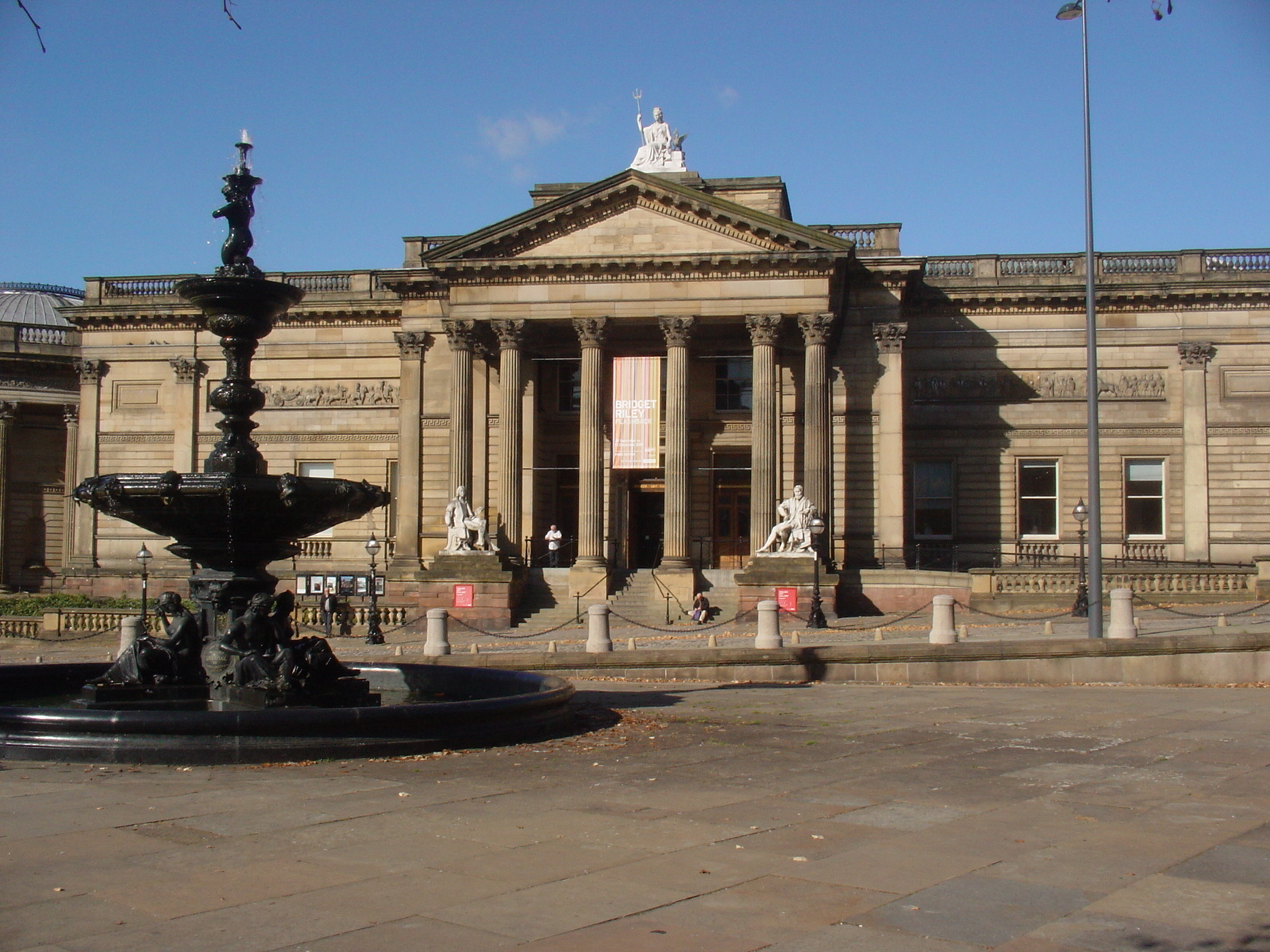
The Walker Art Gallery is a prominent public art museum in Liverpool, England, housing one of the largest and most significant collections of fine art in the United Kingdom outside of London. Founded in 1877 and named after Sir Andrew Barclay Walker, a former Mayor of Liverpool and local brewer, the institution was established to provide free access to art for the city's industrial population.
The building itself is a notable example of Neoclassical architecture, featuring a grand Corinthian portico that reflects the civic pride of 19th-century Liverpool. Its extensive collection spans from the 13th century to the present day, encompassing European Old Masters, a world-renowned collection of Pre-Raphaelite works, and significant contemporary pieces.
Key Facts
- Materials
- Stone, Brick, Glass
- Civilization
- British
- Accessibility
- Fully wheelchair accessible with lift access to all floors
- Date(s)
- 1877
- Condition
- Well-preserved and active
- Original Function
- Public Art Gallery
- Key Figures
- Sir Andrew Barclay Walker, Cornelius Sherlock, H.H. Vale
Foundation and Opening
1873-1877The gallery was commissioned by the Liverpool City Council and funded largely by Sir Andrew Barclay Walker. Designed by architects Cornelius Sherlock and H.H. Vale, the building was constructed on the site of a former reservoir and opened to the public in 1877.
Expansion and Collection Growth
1884-1933The gallery underwent significant expansions in 1884 and 1933 to accommodate its rapidly growing collection. During this time, it cemented its reputation by acquiring major works by artists such as Rossetti, Millais, and Holman Hunt.
Wartime and Modernization
1939-PresentDuring World War II, the gallery was closed and its collection evacuated for safety. Following the war, it underwent extensive renovations to modernize facilities. Today, it continues to serve as a major cultural hub, hosting international exhibitions and maintaining a robust educational program.
Cultural Significance
The Walker Art Gallery serves as a cornerstone of Liverpool's cultural identity, symbolizing the city's historical wealth and its commitment to public education. It is widely regarded as the 'National Gallery of the North,' playing a vital role in regional heritage and the promotion of British art history.
Beyond its permanent collection, the gallery is a key venue for the John Moores Painting Prize, the UK's most prestigious painting competition, which has been hosted there since 1957. This ongoing tradition highlights the institution's commitment to supporting contemporary artists and fostering artistic innovation.
Interpretive Notes
Scholarly debates and areas of uncertainty
Debates surrounding the gallery often focus on the provenance of specific historical acquisitions and the ongoing challenge of balancing the preservation of traditional European collections with the need for diverse, contemporary representation in a post-industrial urban context.
Visiting Information
Entry Rules
Open daily. Admission is free, though charges may apply for special temporary exhibitions. Visitors are encouraged to check the official website for current opening hours and exhibition schedules.
Best Times to Visit
Weekday mornings are generally quieter. The gallery is a popular destination during the Liverpool Biennial, which often features associated programming.
Photography
Personal photography is permitted for non-commercial use in most galleries. Flash and tripods are prohibited. Specific temporary exhibitions may have stricter 'no photography' policies.
Preservation Notes
Do not touch the artworks or frames. Maintain a respectful distance from exhibits. Large bags and umbrellas must be left in the cloakroom.
Nearby POIs
11 shownSources & Further Reading
- [1]The Walker Art Gallery: A History — Edward Morris. National Museums Liverpool (2002)
- [2]Art in the North: The Walker's Collection — Julian Treuherz. Liverpool University Press (2010)
Key Facts
- Materials
- Stone, Brick, Glass
- Civilization
- British
- Accessibility
- Fully wheelchair accessible with lift access to all floors
- Date(s)
- 1877
- Condition
- Well-preserved and active
- Original Function
- Public Art Gallery
- Key Figures
- Sir Andrew Barclay Walker, Cornelius Sherlock, H.H. Vale