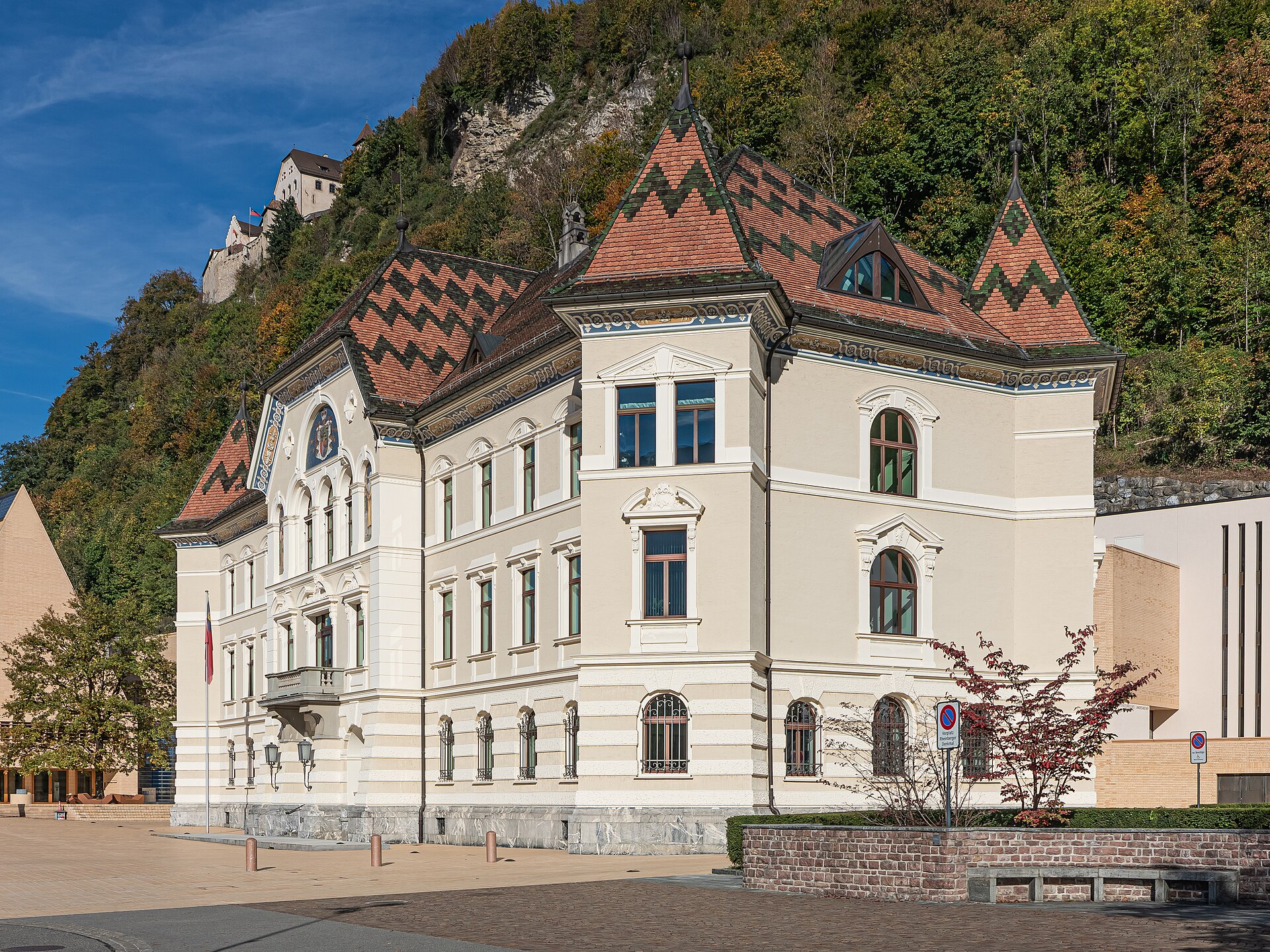
Vaduz Government Building
The Government Building in Vaduz serves as the administrative heart of the Principality of Liechtenstein. Designed by the architect Gustav Ritter von Neumann and constructed between 1903 and 1905, the structure functions as the official seat of the government and the meeting place for the Landtag, the national parliament.
The building is noted for its architectural style, which incorporates late-Gothic and Renaissance-revival elements, reflecting the historical aesthetic preferences of the early 20th century. It remains a central landmark in the capital, symbolizing the political continuity and sovereignty of the Principality.
Key Facts
- Materials
- Stone, Masonry
- Civilization
- Liechtenstein
- Accessibility
- Limited to official business and guided tours
- Date(s)
- 1903-1905
- Condition
- Active, well-maintained
- Original Function
- Administrative seat and parliament
- Key Figures
- Gustav Ritter von Neumann
Planning and Construction
1903-1905The building was commissioned to provide a permanent, dignified home for the government administration and the Landtag. Architect Gustav Ritter von Neumann was selected to design the structure, which was completed in 1905.
Political Evolution
20th CenturyThroughout the 20th century, the building served as the primary venue for legislative debates and executive decision-making, witnessing the modernization of the Liechtenstein state and its constitutional developments.
Modern Status
21st CenturyThe building continues to function as the seat of government. While the Landtag moved to a new parliament building nearby in 2008, the historic structure remains a vital administrative hub and a protected cultural monument.
Cultural Significance
The Government Building is a symbol of Liechtenstein's statehood and political autonomy. Its architecture serves as a bridge between the country's historical heritage and its modern administrative identity, standing as a focal point for civic life in Vaduz.
Visiting Information
Entry Rules
The building is primarily an administrative facility. Public access is restricted to specific areas or guided tours; visitors should inquire with the government information office regarding current access policies.
Best Times to Visit
Weekdays during business hours for exterior viewing; check local tourism office for potential tour availability.
Photography
Exterior photography is permitted. Interior photography is generally prohibited unless authorized by government officials.
Preservation Notes
The building is a protected historical monument. Visitors are expected to respect the quiet working environment of the administrative offices.
Nearby POIs
6 shownSources & Further Reading
- [1]Liechtenstein: The Principality — Government of Liechtenstein. Official Portal of the Principality of Liechtenstein (2023)View
- [2]Architektur in Liechtenstein — Liechtenstein Society for the Protection of Monuments. Historical Society of the Principality of Liechtenstein (2015)
Key Facts
- Materials
- Stone, Masonry
- Civilization
- Liechtenstein
- Accessibility
- Limited to official business and guided tours
- Date(s)
- 1903-1905
- Condition
- Active, well-maintained
- Original Function
- Administrative seat and parliament
- Key Figures
- Gustav Ritter von Neumann