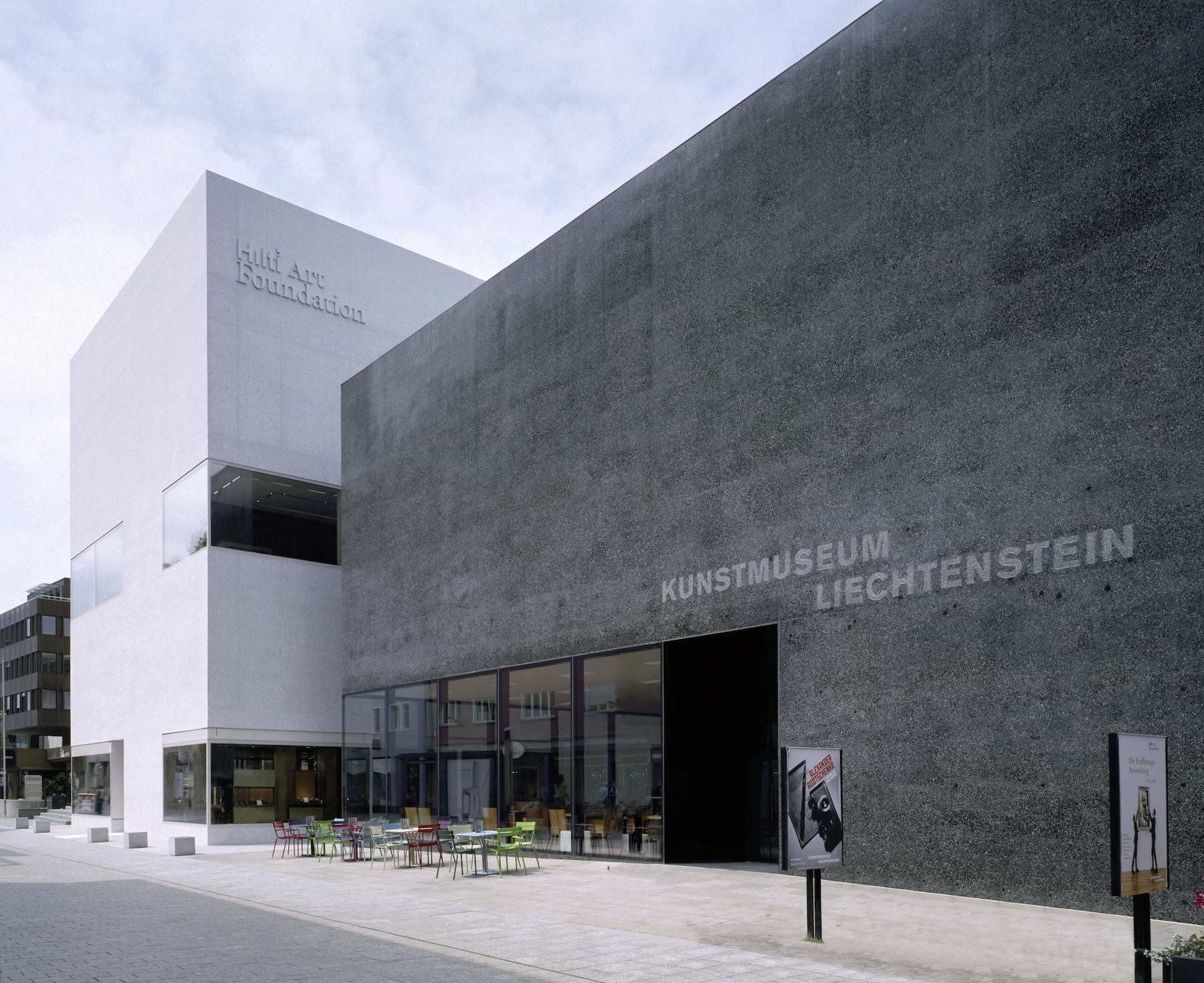
The Kunstmuseum Liechtenstein, located in the heart of Vaduz, serves as the state museum for modern and contemporary art. Designed by the Swiss architectural firm Morger & Degelo and Christian Kerez, the building was inaugurated in 2000. Its distinctive exterior is composed of black basalt stone and river pebbles, creating a minimalist, monolithic aesthetic that contrasts with the surrounding Alpine landscape.
The museum houses the national art collection of the Principality of Liechtenstein and hosts rotating international exhibitions. The interior is characterized by precision-ground concrete surfaces and a layout designed to maximize natural light, providing a neutral environment that emphasizes the displayed artworks. It functions as both a cultural institution and a significant example of contemporary Swiss-Liechtenstein architecture.
Key Facts
- Materials
- Black basalt, River pebbles, Concrete, Glass
- Civilization
- Modern Liechtenstein
- Accessibility
- Fully wheelchair accessible
- Date(s)
- 1998-2000
- Condition
- Excellent, fully operational
- Original Function
- State museum for modern and contemporary art
- Key Figures
- Meinrad Morger, Heinrich Degelo, Christian Kerez
Origins and Planning
1990sThe project was initiated to provide a permanent home for the national art collection and to establish a dedicated space for contemporary art in Vaduz. A competition was held in the 1990s, won by the architectural team of Morger, Degelo, and Kerez.
Construction and Opening
2000Construction was completed in 2000. The building was a gift from a group of private donors to the Principality of Liechtenstein, marking a significant milestone in the country's cultural infrastructure.
Expansion and Integration
2015In 2015, the museum integrated the Hilti Art Foundation, which moved into a new adjacent building designed by the same architectural team, further expanding the museum's exhibition capacity and collection scope.
Cultural Significance
The Kunstmuseum is the primary cultural anchor of Vaduz, representing Liechtenstein's commitment to contemporary art on the international stage. It serves as a bridge between the country's traditional heritage and its modern identity, acting as a hub for cultural exchange and education within the region.
Interpretive Notes
Scholarly debates and areas of uncertainty
Architectural discourse often centers on the building's 'black box' aesthetic and its relationship to the surrounding urban fabric of Vaduz. Critics debate whether the stark, minimalist exterior successfully integrates with the traditional Alpine architecture of the town or if it serves as a deliberate, provocative contrast.
Visiting Information
Entry Rules
Open Tuesday through Sunday. Admission fees apply for adults, with concessions available for students and groups. Visitors are expected to refrain from touching artworks and to follow standard museum conduct.
Best Times to Visit
Weekday mornings offer the quietest experience. The museum is particularly popular during the summer tourist season and during major exhibition openings.
Photography
Non-commercial photography without flash is permitted in most galleries, though specific temporary exhibitions may prohibit photography entirely. Tripods are not allowed.
Preservation Notes
The museum maintains strict climate control to preserve sensitive contemporary works. Visitors are requested to leave large bags in the provided lockers.
Nearby POIs
6 shownSources & Further Reading
- [1]Kunstmuseum Liechtenstein: Architecture and Collection — Friedemann Malsch. Hatje Cantz (2000)
- [2]Morger & Degelo: The Kunstmuseum Liechtenstein — Hubertus Adam. Birkhäuser (2001)
Key Facts
- Materials
- Black basalt, River pebbles, Concrete, Glass
- Civilization
- Modern Liechtenstein
- Accessibility
- Fully wheelchair accessible
- Date(s)
- 1998-2000
- Condition
- Excellent, fully operational
- Original Function
- State museum for modern and contemporary art
- Key Figures
- Meinrad Morger, Heinrich Degelo, Christian Kerez