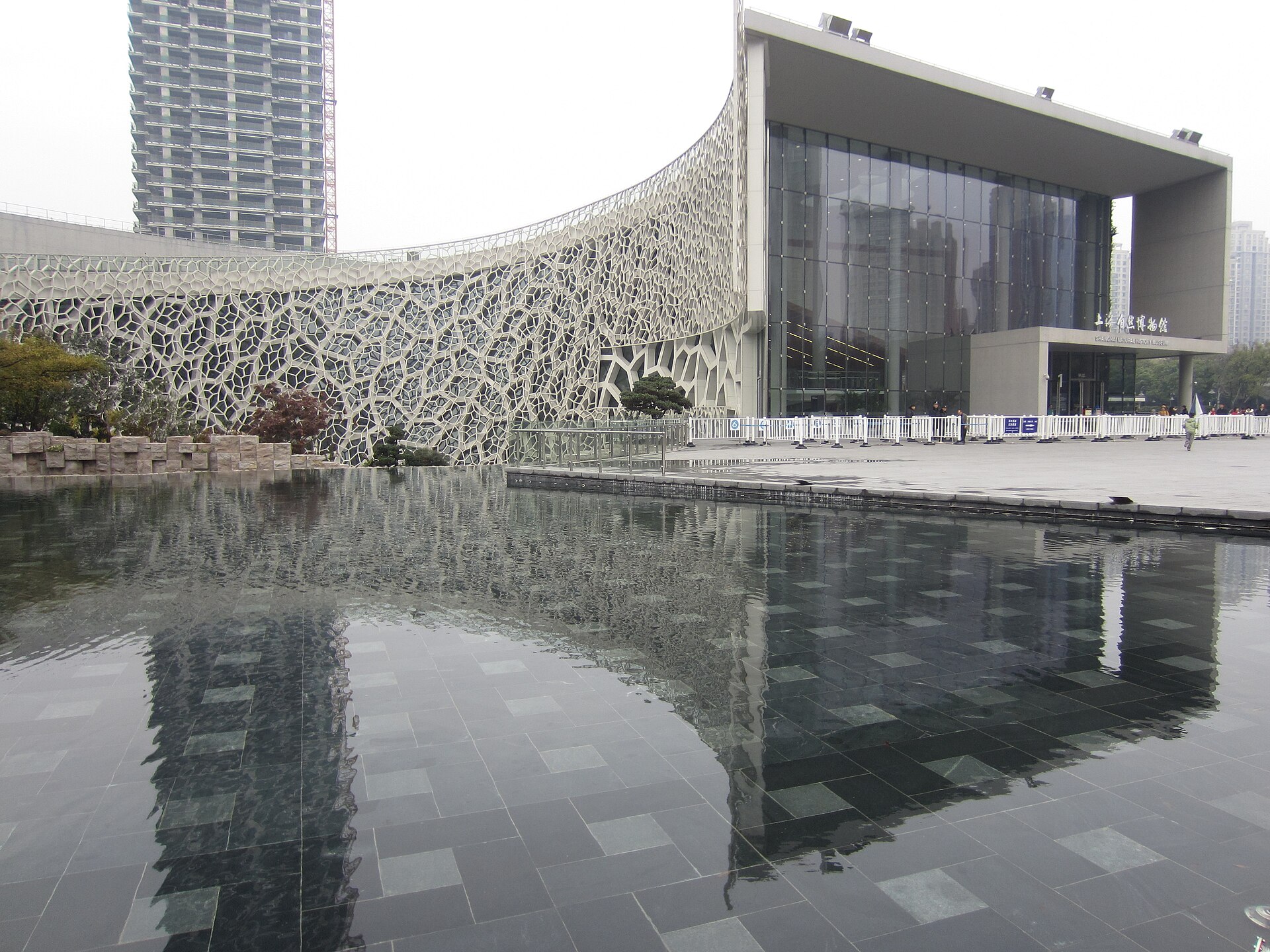
The Shanghai Natural History Museum is one of the largest museums of natural sciences in China, housing an extensive collection of over 240,000 specimens. The institution serves as a major center for biological and geological research, featuring significant holdings that include 62,000 animal specimens, 135,000 plant specimens, and a substantial collection of mineral and Stone Age artifacts.
The museum's current facility, located in Jing'an Sculpture Park, opened in 2015. Designed by Perkins+Will, the building's architecture is inspired by the nautilus shell, integrating organic forms with sustainable design principles to house its diverse exhibits, which range from prehistoric fossils to contemporary biodiversity displays.
Key Facts
- Materials
- Glass, Steel, Concrete, Copper
- Civilization
- Modern China
- Accessibility
- Fully wheelchair accessible
- Date(s)
- 2015
- Condition
- Active
- Original Function
- Natural History Museum
- Key Figures
- Ralph Johnson
Founding and Early Years
1956The museum was originally established in 1956, occupying the former Shanghai Cotton Exchange building. It served as the primary repository for natural history collections in the region for several decades.
Relocation and Modernization
2015To accommodate the growing collection and provide modern exhibition spaces, the museum moved to its current purpose-built facility in Jing'an Sculpture Park. The new building was designed to emphasize the relationship between nature and human architecture.
Cultural Significance
The museum plays a vital role in public education and scientific literacy in Shanghai. By showcasing the natural history of China and the world, it fosters an appreciation for biodiversity and environmental conservation among the public, serving as a landmark of modern cultural infrastructure in the city.
Interpretive Notes
Scholarly debates and areas of uncertainty
Discussions regarding the museum often center on the balance between traditional specimen-based curation and the use of interactive, digital media in modern museum design. Scholars debate the efficacy of the 'nautilus' architectural form in providing optimal lighting and climate control for sensitive biological specimens.
Visiting Information
Entry Rules
Open Tuesday through Sunday. Tickets must be purchased online in advance. Visitors are subject to security screening upon entry.
Best Times to Visit
Weekday mornings are recommended to avoid large crowds of school groups and weekend visitors.
Photography
Personal photography is permitted without flash or tripods. Commercial photography requires prior authorization.
Preservation Notes
Maintain a respectful distance from all displays. Flash photography is strictly prohibited to prevent light damage to sensitive organic specimens.
Nearby POIs
3 shownSources & Further Reading
- [1]
- [2]Natural History Museums in China: Evolution and Challenges — Zhang, L.. Journal of Museum Studies (2018)
Key Facts
- Materials
- Glass, Steel, Concrete, Copper
- Civilization
- Modern China
- Accessibility
- Fully wheelchair accessible
- Date(s)
- 2015
- Condition
- Active
- Original Function
- Natural History Museum
- Key Figures
- Ralph Johnson