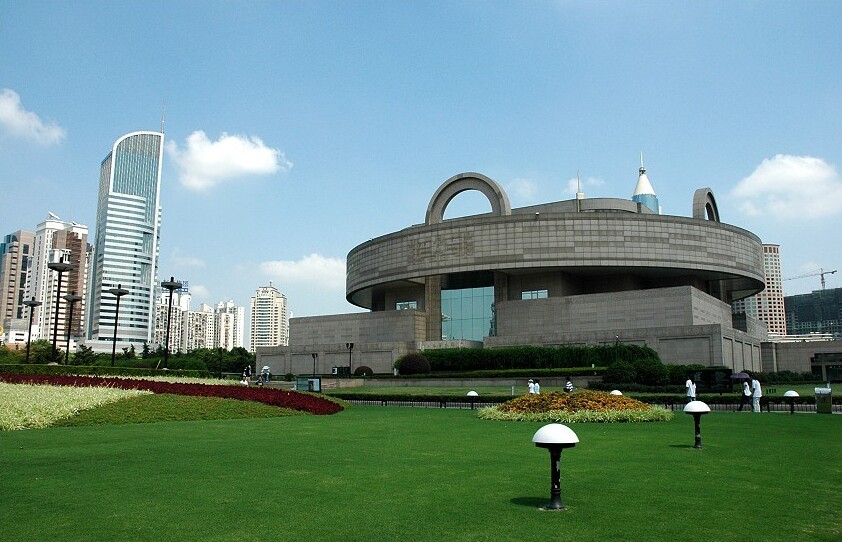
The Shanghai Museum is a major public institution dedicated to ancient Chinese art, located in the People's Square in the Huangpu District. The current building, designed by architect Xing Tonghe and opened in 1996, features a distinctive architectural form inspired by the traditional Chinese bronze vessel known as a 'ding', symbolizing stability and cultural continuity.
The museum houses a collection of over 120,000 artifacts, including significant holdings of ancient bronzes, ceramics, calligraphy, and paintings. Its galleries are organized by medium, providing a comprehensive overview of Chinese artistic development from the Neolithic period through the Qing Dynasty.
Key Facts
- Materials
- Granite, Glass, Steel
- Civilization
- Chinese
- Accessibility
- Fully wheelchair accessible
- Date(s)
- 1996
- Condition
- Excellent, active
- Original Function
- Public art and history museum
- Key Figures
- Xing Tonghe, Ma Chengyuan
Founding and Early Years
1952The Shanghai Museum was originally established in 1952, utilizing the former clubhouse of the Shanghai Racecourse. It served as a repository for cultural relics recovered during the early years of the People's Republic.
Expansion and Relocation
1996To accommodate its growing collection and modernize display standards, the museum moved to its current purpose-built facility in People's Square. The new building was designed to integrate traditional symbolism with modern museum technology.
Contemporary Development
21st CenturyThe museum has continued to expand its international reach through collaborative exhibitions and digital initiatives. In 2024, the museum opened a new branch in Pudong, further increasing its capacity to display its extensive collection.
Cultural Significance
The Shanghai Museum is a cornerstone of Chinese cultural heritage, serving as a primary site for the preservation and study of classical Chinese aesthetics. It plays a vital role in national identity by contextualizing the historical trajectory of Chinese craftsmanship and intellectual life for both domestic and international audiences.
Interpretive Notes
Scholarly debates and areas of uncertainty
Debates often center on the provenance of specific artifacts acquired during the mid-20th century and the ongoing discourse regarding the repatriation of cultural objects held in international collections.
Visiting Information
Entry Rules
Open Tuesday to Sunday. Admission is free, but visitors must book a time slot in advance via the official website or WeChat mini-program. Security screening is mandatory upon entry.
Best Times to Visit
Weekday mornings are recommended to avoid large weekend crowds. The museum is closed on Mondays, except for national holidays.
Photography
Non-commercial photography is permitted without flash or tripods. Some temporary exhibitions may prohibit photography entirely.
Preservation Notes
Maintain a respectful distance from display cases. Flash photography is strictly prohibited to prevent light damage to sensitive materials like silk paintings and calligraphy.
Nearby POIs
3 shownSources & Further Reading
- [1]The Shanghai Museum: A Guide to the Collections — Ma Chengyuan. Shanghai People's Fine Arts Publishing House (2006)
- [2]Museums in China: Power, Politics and Identities — Marzia Varutti. Routledge (2014)
Key Facts
- Materials
- Granite, Glass, Steel
- Civilization
- Chinese
- Accessibility
- Fully wheelchair accessible
- Date(s)
- 1996
- Condition
- Excellent, active
- Original Function
- Public art and history museum
- Key Figures
- Xing Tonghe, Ma Chengyuan