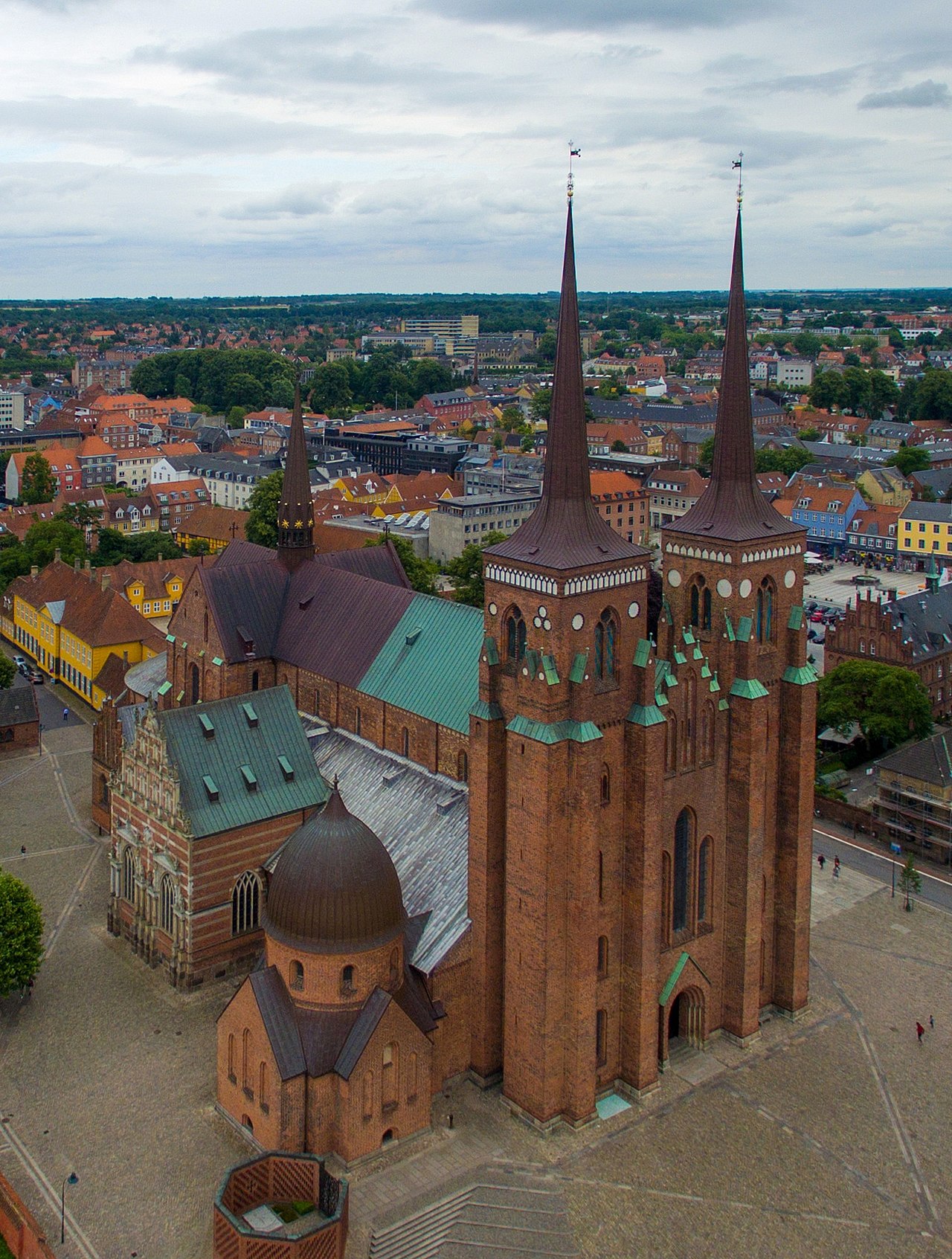
Roskilde Cathedral, located in the city of Roskilde on the island of Zealand, serves as the primary burial site for Danish monarchs. Construction of the current brick structure began in the 12th century under Bishop Absalon, incorporating both Romanesque and Gothic architectural elements. It is widely recognized as the first major brick-built cathedral in Scandinavia, a design choice that influenced ecclesiastical architecture throughout the Baltic region.
Over the centuries, the cathedral has been expanded with numerous burial chapels, each reflecting the stylistic preferences of the reigning monarchs. These additions create a unique architectural timeline, ranging from medieval Gothic to Renaissance and Baroque styles. The cathedral remains an active place of worship and a significant site for Danish national history.
Key Facts
- Materials
- Brick, Limestone, Copper
- Civilization
- Danish
- Accessibility
- Ground floor accessible; some chapels have limited access
- Date(s)
- 1170–1280 CE
- Condition
- Well-preserved, active church
- Original Function
- Cathedral and royal mausoleum
- Key Figures
- Bishop Absalon, King Harald Bluetooth, Queen Margrethe I
Foundations and Early Construction
12th CenturyThe site was originally home to a wooden church built by Harald Bluetooth in the 10th century. The current stone and brick cathedral was initiated by Bishop Absalon in the 1170s, marking a transition to the Brick Gothic style.
Gothic Expansion
13th-15th CenturyThe cathedral reached its primary form during the 13th century. The addition of the spires and the expansion of the nave solidified its status as a landmark of Northern European ecclesiastical architecture.
Royal Mausoleum Development
15th-19th CenturyAs the official burial church for the Danish royal family, various monarchs commissioned elaborate chapels. These additions introduced Renaissance and Baroque aesthetics to the exterior and interior, creating a layered architectural history.
Modern Preservation
20th Century - PresentIn 1995, the cathedral was inscribed as a UNESCO World Heritage site. Ongoing conservation efforts focus on maintaining the structural integrity of the brickwork and the preservation of the royal sarcophagi.
Cultural Significance
Roskilde Cathedral is the definitive symbol of the Danish monarchy's historical continuity. It houses the remains of 39 kings and queens of Denmark, serving as a tangible link between the modern state and its medieval origins. The cathedral's architectural evolution is considered a primary reference for the spread of Brick Gothic architecture in Northern Europe.
Interpretive Notes
Scholarly debates and areas of uncertainty
There is ongoing academic discussion regarding the extent of the influence of French Gothic architecture on the cathedral's original design, specifically comparing its structural rib vaulting to contemporary examples in the Île-de-France region.
Visiting Information
Entry Rules
Open to the public daily. Entry is ticketed for tourists, while church services remain free. Visitors are expected to maintain silence and respect the sanctity of the burial chapels.
Best Times to Visit
Weekdays during the morning hours to avoid large tour groups. Summer months offer the best light for viewing the interior details, though the site is less crowded in the shoulder seasons.
Photography
Photography is permitted for personal use without flash. Tripods and professional equipment require prior authorization from the cathedral administration.
Preservation Notes
Visitors must remain within designated visitor paths. Touching the royal sarcophagi or historical wall paintings is strictly prohibited.
Nearby POIs
11 shown- ARKEN Museum of Contemporary Art19.8 km
- Grundtvigs Kirke29.7 km
- H. C. Andersens House30.1 km
- Ny Carlsberg Glyptotek31.1 km
- National Museum of Denmark31.3 km
- Rundetaarn31.5 km
- Danish Architecture Center31.6 km
- Christiansborg Palace31.7 km
- Rosenborg Castle31.7 km
- Kongelige Bibliotek31.7 km
- SMK Statens Museum for Kunst31.8 km
Key Facts
- Materials
- Brick, Limestone, Copper
- Civilization
- Danish
- Accessibility
- Ground floor accessible; some chapels have limited access
- Date(s)
- 1170–1280 CE
- Condition
- Well-preserved, active church
- Original Function
- Cathedral and royal mausoleum
- Key Figures
- Bishop Absalon, King Harald Bluetooth, Queen Margrethe I
Nearby POIs
11 shown- ARKEN Museum of Contemporary Art19.8 km
- Grundtvigs Kirke29.7 km
- H. C. Andersens House30.1 km
- Ny Carlsberg Glyptotek31.1 km
- National Museum of Denmark31.3 km
- Rundetaarn31.5 km
- Danish Architecture Center31.6 km
- Christiansborg Palace31.7 km
- Rosenborg Castle31.7 km
- Kongelige Bibliotek31.7 km
- SMK Statens Museum for Kunst31.8 km