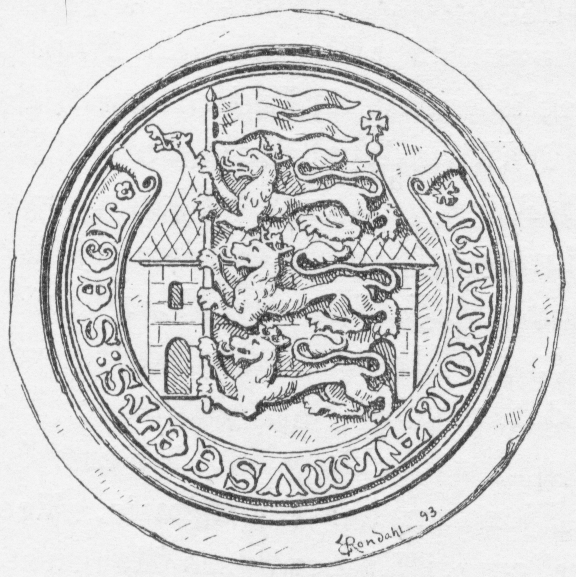
National Museum of Denmark
The National Museum of Denmark (Nationalmuseet) is the country's largest museum of cultural history, housed primarily in the Prince's Palace in Copenhagen. The institution serves as a central repository for Danish cultural heritage, spanning from the prehistoric era through the Viking Age and the Middle Ages to the present day.
Beyond its focus on national history, the museum maintains extensive ethnographic collections that document global cultures, with a particular emphasis on Arctic research and the history of Greenland. The museum operates as a research-based institution, integrating archaeological findings with anthropological studies to provide a comprehensive view of human development and societal change.
Key Facts
- Materials
- Brick, Sandstone, Stucco
- Civilization
- Danish
- Accessibility
- Fully wheelchair accessible
- Date(s)
- 1743-1744 (Prince's Palace)
- Condition
- Active museum
- Original Function
- Royal residence
- Key Figures
- Christian Jürgensen Thomsen, Jens Jacob Asmussen Worsaae
Establishment of the Prince's Palace
18th CenturyThe core of the museum is housed in the Prince's Palace, originally built as a residence for Crown Prince Frederik (later Frederik V) by architect Niels Eigtved. The building served various royal and administrative purposes before being designated as a museum space.
Founding of the National Collection
19th CenturyThe museum's foundations were laid in 1807 with the establishment of the Royal Commission for the Preservation of Antiquities. Christian Jürgensen Thomsen, the museum's first director, famously organized the collection into the Three-Age System (Stone, Bronze, and Iron Ages), a foundational concept in modern archaeology.
Expansion and Modernization
20th Century - PresentThroughout the 20th century, the museum expanded its scope to include extensive ethnographic and numismatic collections. Major renovations in the 1990s and 2000s modernized the exhibition spaces, integrating digital technology and improved climate control for the preservation of delicate organic artifacts.
Cultural Significance
The National Museum is the primary institution for the definition of Danish national identity. By housing iconic artifacts such as the Trundholm Sun Chariot and the Egtved Girl, it provides the physical evidence for the historical narratives that shape modern Danish consciousness.
Its role in documenting the history of Greenland and the former Danish West Indies also makes it a critical site for contemporary discussions regarding post-colonial identity and the relationship between Denmark and its former territories.
Interpretive Notes
Scholarly debates and areas of uncertainty
The museum is frequently involved in debates regarding the repatriation of cultural artifacts, particularly those originating from Greenland and the Faroe Islands. Scholars and activists continue to discuss the ethics of displaying indigenous objects within a national museum framework.
Visiting Information
Entry Rules
Open Tuesday through Sunday. Tickets can be purchased online or at the entrance. The museum is closed on Mondays.
Best Times to Visit
Weekday mornings are generally quieter. The museum is a popular destination during winter months due to its extensive indoor facilities.
Photography
Personal photography is permitted for non-commercial use. Flash and tripods are prohibited in exhibition galleries.
Preservation Notes
Do not touch artifacts or display cases. Some areas may have specific lighting restrictions to protect light-sensitive textiles and organic materials.
Nearby POIs
11 shownKey Facts
- Materials
- Brick, Sandstone, Stucco
- Civilization
- Danish
- Accessibility
- Fully wheelchair accessible
- Date(s)
- 1743-1744 (Prince's Palace)
- Condition
- Active museum
- Original Function
- Royal residence
- Key Figures
- Christian Jürgensen Thomsen, Jens Jacob Asmussen Worsaae