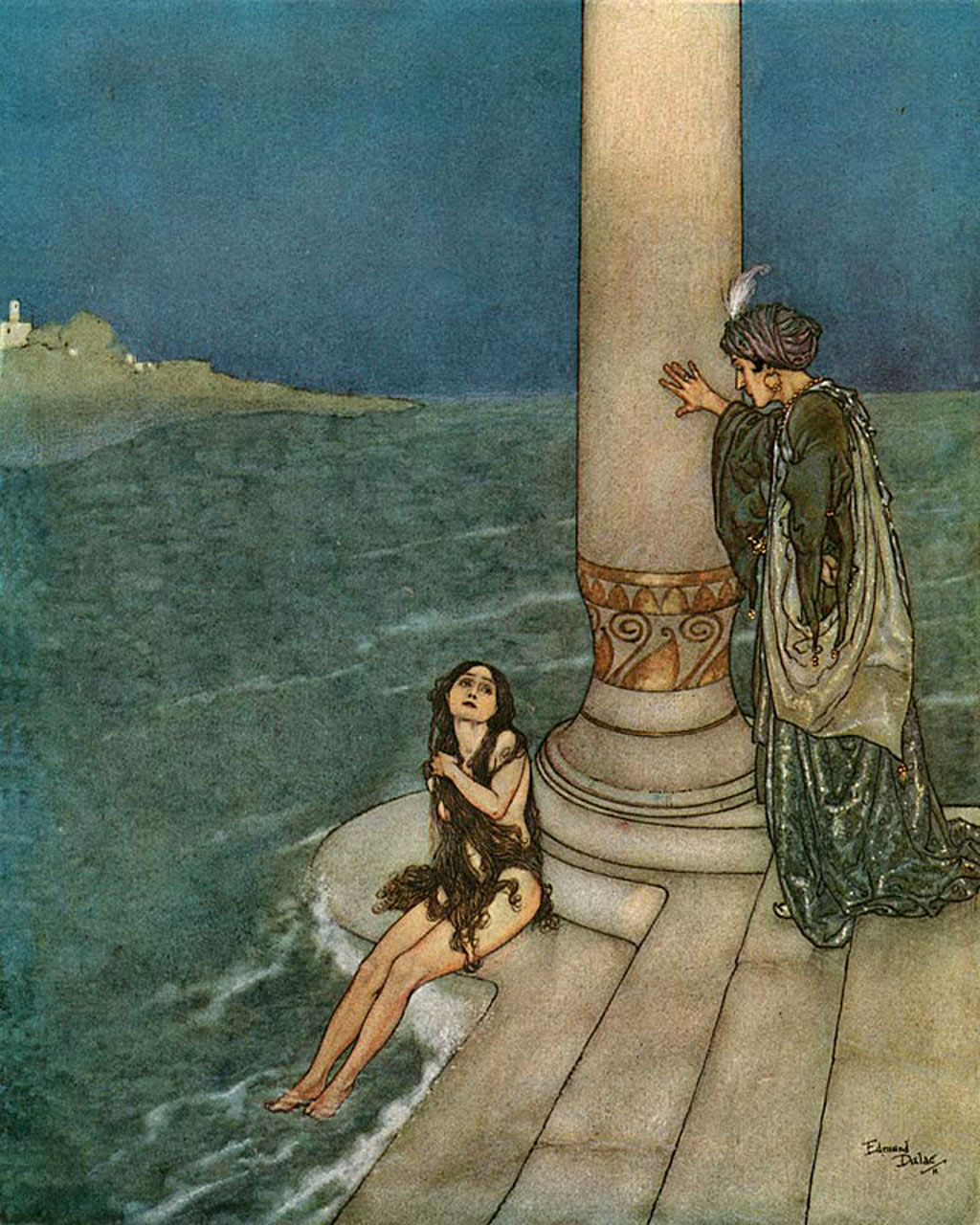
The Little Mermaid is a bronze statue depicting a mermaid becoming human, located on the Langelinie promenade in Copenhagen, Denmark. Commissioned in 1909 by Carl Jacobsen, son of the founder of Carlsberg, the statue was inspired by the 1837 fairy tale of the same name by Hans Christian Andersen. It was sculpted by Edvard Eriksen and unveiled on August 23, 1913.
The statue is mounted on a granite boulder at the water's edge. Over the decades, it has become an iconic symbol of Copenhagen and a major tourist destination. Despite its relatively small size, the sculpture has frequently been the target of political vandalism, including decapitation and paint-splashing, which has necessitated multiple repairs and restorations.
Key Facts
- Materials
- Bronze, Granite
- Civilization
- Danish
- Accessibility
- Accessible via public walkway
- Date(s)
- 1913
- Condition
- Well-maintained, subject to periodic vandalism
- Original Function
- Public art monument
- Key Figures
- Hans Christian Andersen, Edvard Eriksen, Carl Jacobsen
Commission and Creation
1909-1913Carl Jacobsen became fascinated by a ballet based on the fairy tale at the Royal Danish Theatre. He commissioned sculptor Edvard Eriksen to create a statue, with Eriksen's wife, Eline Eriksen, serving as the model for the figure's body.
Unveiling and Reception
1913The statue was officially unveiled on August 23, 1913. It was donated to the City of Copenhagen by Jacobsen and placed at its current location on the Langelinie promenade, where it has remained ever since.
Vandalism and Restoration
1964-presentThe statue has been a frequent target of political activists and vandals. It has been decapitated multiple times, had its arm sawn off, and been covered in paint. Each instance has been followed by professional restoration to return the bronze to its original state.
Cultural Significance
The Little Mermaid serves as the primary cultural icon of Copenhagen. It bridges the gap between Danish literary heritage and modern tourism, representing the legacy of Hans Christian Andersen. The statue's vulnerability to vandalism has also turned it into a recurring canvas for social and political protest in Denmark.
Interpretive Notes
Scholarly debates and areas of uncertainty
There is occasional debate regarding the artistic merit of the statue compared to its status as a tourist attraction, with some critics viewing it as overly sentimental or kitsch, while others defend its historical and cultural importance to the city's identity.
Visiting Information
Entry Rules
The site is a public monument located on a waterfront promenade. It is accessible 24 hours a day, seven days a week, free of charge.
Best Times to Visit
Early morning or late evening to avoid large cruise ship tour groups that frequent the Langelinie area during midday.
Photography
None. Public space photography is permitted.
Preservation Notes
The statue is monitored by local authorities. Visitors are prohibited from climbing on the statue or the granite boulder.
Nearby POIs
11 shownSources & Further Reading
- [1]The Little Mermaid: A History of the Statue — Copenhagen City Archives. Københavns Stadsarkiv (2013)View
- [2]Edvard Eriksen and the Little Mermaid — Anne Bergstein. Danish Cultural Heritage Journal (2018)
Key Facts
- Materials
- Bronze, Granite
- Civilization
- Danish
- Accessibility
- Accessible via public walkway
- Date(s)
- 1913
- Condition
- Well-maintained, subject to periodic vandalism
- Original Function
- Public art monument
- Key Figures
- Hans Christian Andersen, Edvard Eriksen, Carl Jacobsen