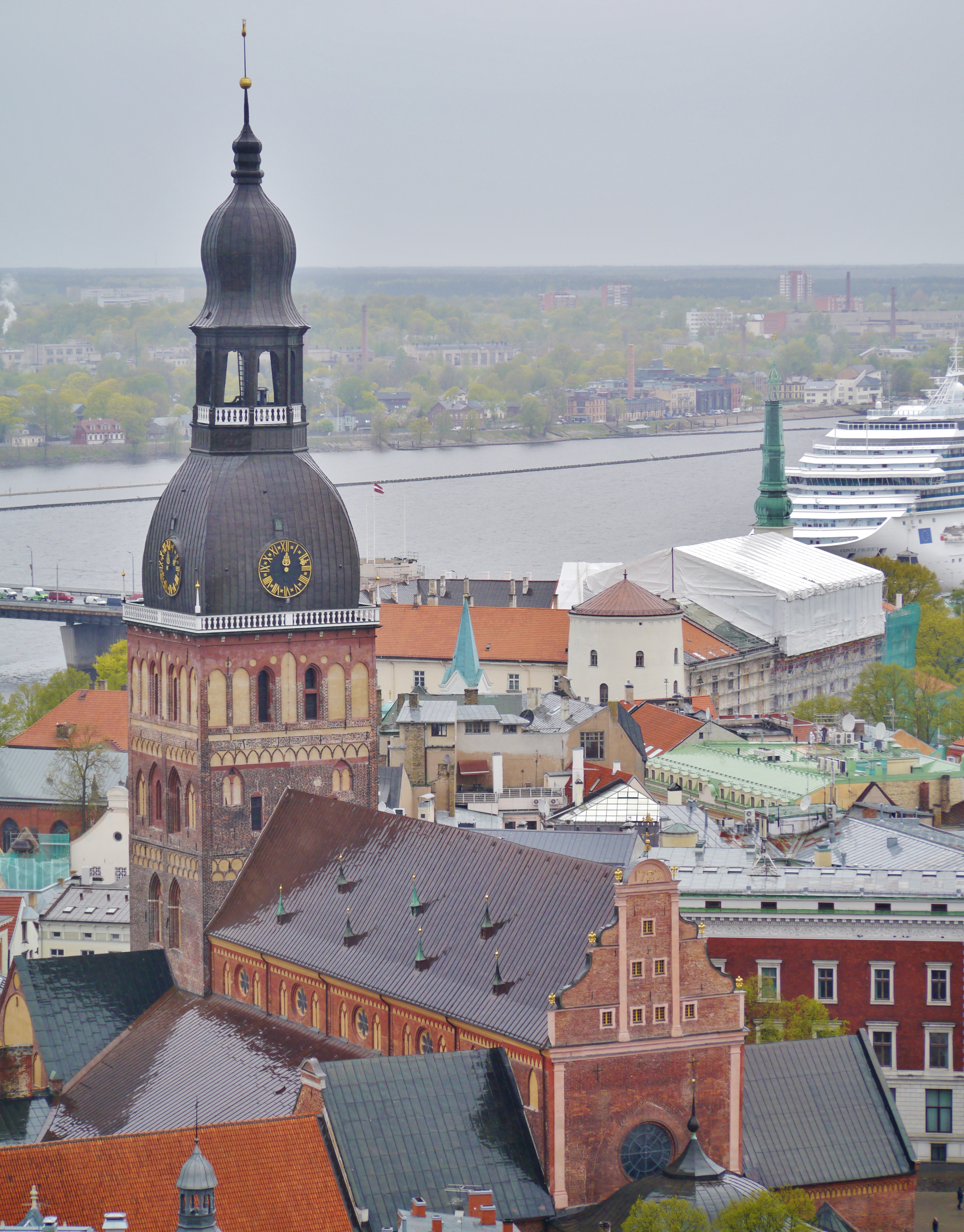
Riga Cathedral, known as the Cathedral of Saint Mary the Virgin, serves as the seat of the Archbishop of Riga and is the largest medieval church in the Baltic states. Founded in 1211 by Bishop Albert of Riga, the structure has undergone numerous expansions and modifications over eight centuries, resulting in a complex architectural synthesis of Romanesque, Gothic, and Baroque elements.
The cathedral is renowned for its massive pipe organ, installed in the late 19th century, which was once the largest in the world. Its distinctive spire, which has been rebuilt multiple times due to fire and structural decay, remains a defining feature of the Riga skyline and a symbol of the city's historical and religious evolution.
Key Facts
- Materials
- Brick, Limestone, Copper
- Civilization
- Livonian / Latvian
- Accessibility
- Ground floor accessible; limited access to upper levels
- Date(s)
- 1211 - 19th century
- Condition
- Active religious site and concert venue
- Original Function
- Cathedral and episcopal seat
- Key Figures
- Bishop Albert of Riga
Foundation and Early Years
1211The foundation stone was laid by Bishop Albert of Riga in 1211. The initial structure was built in the Romanesque style, reflecting the influence of North German brick architecture common in the Hanseatic League cities.
Gothic and Baroque Expansions
14th - 18th centuryDuring the 14th and 15th centuries, the cathedral was expanded into a basilica, incorporating Gothic features such as high vaults and pointed arches. Following various fires and the Reformation, the structure was further modified, with the addition of a Baroque spire in the 18th century.
Modern Era and Restoration
19th century - presentThe late 19th century saw significant restoration work, including the installation of the Walcker organ in 1884. During the Soviet era, the cathedral was repurposed as a concert hall, but it was returned to the Evangelical Lutheran Church of Latvia following the restoration of independence in 1991.
Cultural Significance
Riga Cathedral is a central pillar of Latvian cultural and religious identity. It serves not only as a place of worship but as a premier venue for classical music, particularly organ recitals, which draw international audiences. The building's survival through centuries of conflict and political transition mirrors the resilience of the city itself.
As part of the Historic Centre of Riga, the cathedral is protected under UNESCO World Heritage status. Its architecture documents the transition of the Baltic region from paganism to Christianity and its subsequent integration into the broader European cultural sphere.
Interpretive Notes
Scholarly debates and areas of uncertainty
There is ongoing academic discussion regarding the extent of the original Romanesque layout versus the later Gothic additions, as much of the medieval documentation was lost in fires. Additionally, scholars debate the preservation priorities between maintaining the cathedral's function as an active church versus its role as a secular concert hall.
Visiting Information
Entry Rules
Open daily for visitors and worshipers. Tickets are required for entry to the museum and for concert attendance. Modest dress is expected as it is an active place of worship.
Best Times to Visit
Morning hours are best to avoid the crowds associated with daily organ concerts. Summer months offer the best light for viewing the interior stained glass.
Photography
Photography is permitted for personal use without flash. Tripods and professional equipment require prior authorization from the cathedral administration.
Preservation Notes
The structure is subject to ongoing maintenance due to the high humidity of the Baltic climate. Visitors are requested to remain within designated areas and avoid touching historical artifacts or the organ casing.
Nearby POIs
11 shown- Three Brothers0.1 km
- Our Lady of Sorrows Church0.2 km
- Museum of the Occupation of Latvia0.3 km
- House of the Black Heads0.3 km
- Riga Castle0.3 km
- St. Peter's Church0.4 km
- St. John's Church0.4 km
- Freedom Monument0.6 km
- Riga Nativity of Christ Orthodox Cathedral0.9 km
- Latvian National Museum of Art0.9 km
- Riga Art Nouveau Center1.2 km
Sources & Further Reading
- [1]
- [2]The Hanseatic Architecture of the Baltic — Thomas M. Schmidt. Baltic Heritage Press (2019)
Key Facts
- Materials
- Brick, Limestone, Copper
- Civilization
- Livonian / Latvian
- Accessibility
- Ground floor accessible; limited access to upper levels
- Date(s)
- 1211 - 19th century
- Condition
- Active religious site and concert venue
- Original Function
- Cathedral and episcopal seat
- Key Figures
- Bishop Albert of Riga
Nearby POIs
11 shown- Three Brothers0.1 km
- Our Lady of Sorrows Church0.2 km
- Museum of the Occupation of Latvia0.3 km
- House of the Black Heads0.3 km
- Riga Castle0.3 km
- St. Peter's Church0.4 km
- St. John's Church0.4 km
- Freedom Monument0.6 km
- Riga Nativity of Christ Orthodox Cathedral0.9 km
- Latvian National Museum of Art0.9 km
- Riga Art Nouveau Center1.2 km