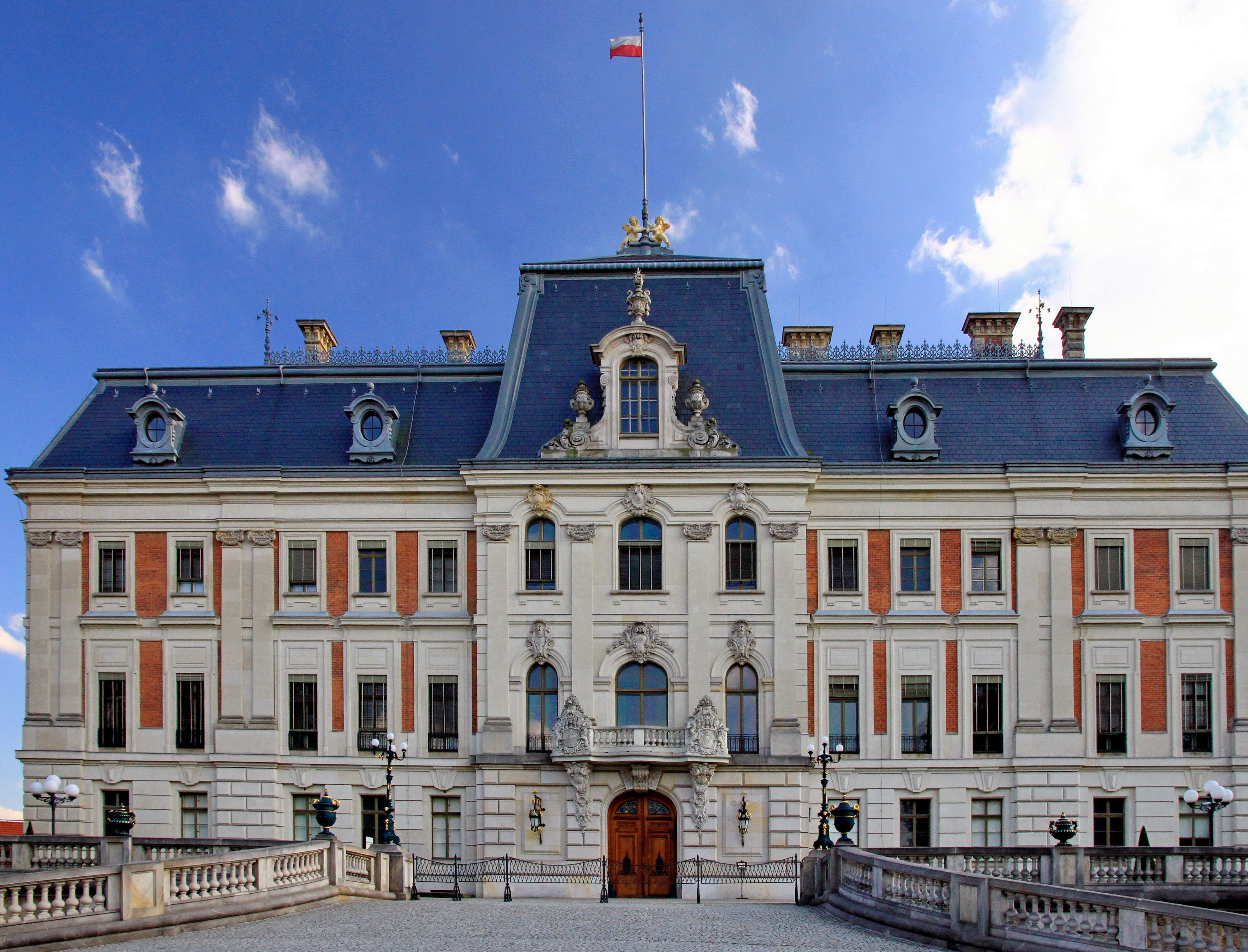
Pszczyna Castle is a historic residence located in the town of Pszczyna, Poland. Originally established as a defensive fortification in the 13th century, the site underwent significant transformations over the centuries, evolving into a grand aristocratic palace. It served as the long-term seat of the Promnitz family and later the Hochberg dynasty, who were among the most influential noble families in the region.
The current structure largely reflects its 19th-century Neoclassical and Baroque-revival renovations. Unlike many other Polish historical sites, the castle's interiors remained largely untouched during the Second World War, allowing it to preserve a significant portion of its original furnishings, decor, and layout. Today, it operates as the Castle Museum in Pszczyna, showcasing the lifestyle of European aristocracy.
Key Facts
- Materials
- Brick, Stone, Plaster
- Civilization
- Polish/German nobility
- Accessibility
- Partially accessible; some historic areas have stairs
- Date(s)
- 13th century (origins), 17th-19th century (current form)
- Condition
- Well-preserved, active museum
- Original Function
- Defensive castle
- Key Figures
- Hans Heinrich XI von Hochberg, Daisy, Princess of Pless
Medieval Origins
13th centuryThe site began as a wooden defensive structure, later replaced by a stone castle. It served as a strategic point on the trade route between Krakow and Wroclaw.
The Promnitz Era
16th-18th centuryThe castle was transformed into a Baroque palace under the Promnitz family. This period saw the expansion of the residential wings and the establishment of the surrounding parkland.
The Hochberg Residency
19th centuryUnder the Hochberg family, the palace underwent extensive remodeling to match the tastes of the era, incorporating Neoclassical elements and modernizing the interior comforts.
Museum Transformation
1946-presentFollowing the end of World War II, the castle was converted into a museum. Because the original furnishings were preserved, it is considered one of the most authentic historical interior museums in Poland.
Cultural Significance
Pszczyna Castle is a vital cultural landmark in Upper Silesia, representing the complex history of the region's noble families. It is particularly significant for its intact collection of 18th and 19th-century interiors, which provide a rare, authentic glimpse into the domestic life of the European aristocracy.
The castle is also deeply associated with the memory of Daisy, Princess of Pless, a prominent socialite and philanthropist whose legacy remains a central theme in the local cultural identity and tourism of the town.
Interpretive Notes
Scholarly debates and areas of uncertainty
There is ongoing academic discussion regarding the extent of the 19th-century architectural modifications and how they impacted the visibility of the earlier Baroque structural layers. Some architectural historians argue that the later renovations obscured significant Renaissance-era foundations.
Visiting Information
Entry Rules
The museum is open daily except for Mondays. Tickets are required for entry. Visitors are expected to follow museum etiquette, including the use of protective shoe covers provided at the entrance to preserve the historic floors.
Best Times to Visit
Spring and autumn are ideal for visiting the surrounding 156-hectare park, which is a significant part of the castle complex. Weekdays are recommended to avoid weekend crowds.
Photography
Non-commercial photography is permitted without flash. Tripods and professional lighting equipment require prior authorization from the museum administration.
Preservation Notes
The museum maintains strict climate control to protect the original tapestries and wooden furniture. Visitors are requested to refrain from touching any surfaces or artifacts.
Nearby POIs
3 shownSources & Further Reading
- [1]The Castle Museum in Pszczyna: History and Collections — Castle Museum Staff. Muzeum Zamkowe w Pszczynie (2018)View
- [2]The Hochbergs of Pless: A History of the Family — W. John Koch. University of Alberta Press (2007)
Key Facts
- Materials
- Brick, Stone, Plaster
- Civilization
- Polish/German nobility
- Accessibility
- Partially accessible; some historic areas have stairs
- Date(s)
- 13th century (origins), 17th-19th century (current form)
- Condition
- Well-preserved, active museum
- Original Function
- Defensive castle
- Key Figures
- Hans Heinrich XI von Hochberg, Daisy, Princess of Pless