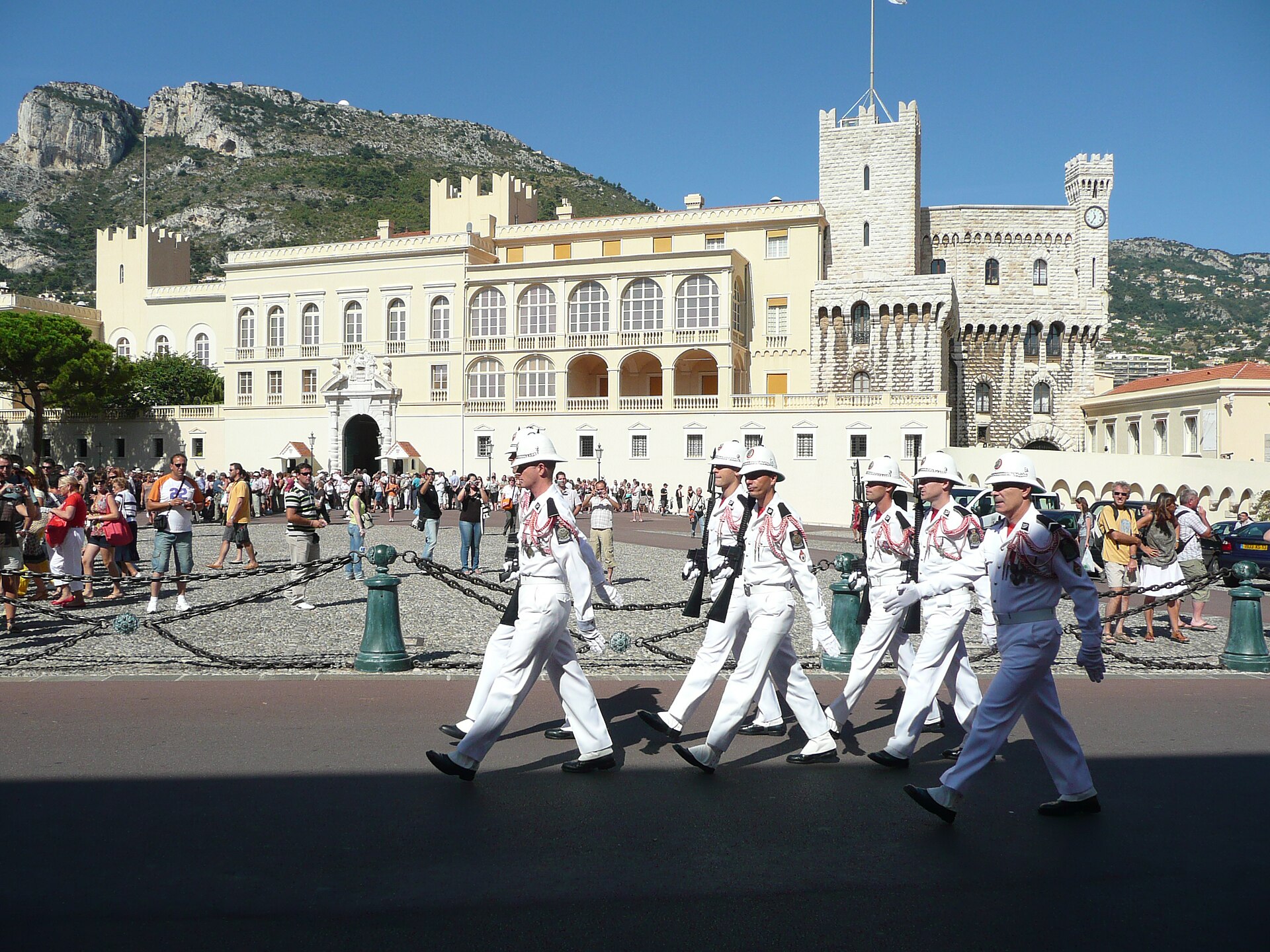
The Prince's Palace of Monaco, located on the Rock of Monaco, serves as the official residence of the Sovereign Prince of Monaco. Originally built as a Genoese fortress in 1191, the site has undergone significant architectural transformations over seven centuries, evolving from a defensive military stronghold into a luxurious royal residence that blends various historical styles.
Today, the palace remains the center of Monegasque political and dynastic life. It features a mix of medieval fortifications, Renaissance-era frescoes, and 19th-century state apartments, reflecting the long-standing influence of the Grimaldi family on the Mediterranean region.
Key Facts
- Materials
- Stone, Marble, Stucco
- Civilization
- Monegasque
- Accessibility
- Limited; state apartments accessible via guided tour
- Date(s)
- 1191 - 19th century
- Condition
- Well-preserved, active royal residence
- Original Function
- Genoese fortress
- Key Figures
- François Grimaldi, Prince Rainier III, Princess Grace
Origins as a Fortress
1191The site was established by the Republic of Genoa as a defensive fortress to control the strategic coastline. The original structure consisted of a series of towers and defensive walls designed to protect the harbor.
The Grimaldi Acquisition
1297François Grimaldi, known as 'Malizia', captured the fortress by disguising himself as a monk. This event marked the beginning of the Grimaldi dynasty's control over the Rock of Monaco, which has continued with few interruptions to the present day.
Architectural Transformation
16th - 17th centuryDuring the Renaissance and Baroque periods, the palace was expanded and renovated to reflect the growing power and prestige of the Princes of Monaco. The defensive walls were softened with elegant courtyards, galleries, and ornate state apartments.
Modern Era
19th century - presentThe palace underwent significant restoration in the 19th and early 20th centuries. Under Prince Rainier III, the palace became a global symbol of the principality's stability and cultural identity, hosting numerous state functions and royal events.
Cultural Significance
The Prince's Palace is the primary symbol of Monegasque sovereignty and the endurance of the Grimaldi dynasty. It represents the unique historical trajectory of Monaco, which transitioned from a strategic military outpost to a sovereign principality.
The daily Changing of the Guard ceremony at the palace gates is a significant cultural tradition that draws visitors and reinforces the connection between the ruling family and the public. The palace also houses the archives of the principality, preserving centuries of Mediterranean diplomatic history.
Interpretive Notes
Scholarly debates and areas of uncertainty
Debates exist regarding the extent of the original 12th-century Genoese foundations versus later modifications. Because the palace has been continuously inhabited and renovated, distinguishing between original medieval masonry and later structural reinforcements remains a focus of architectural historians.
Visiting Information
Entry Rules
The State Apartments are open to the public seasonally (typically April to October). Tickets are required for entry. Visitors must adhere to a dress code and security protocols. The Changing of the Guard occurs daily at 11:55 AM in the Palace Square.
Best Times to Visit
Spring and early autumn offer the most comfortable weather for visiting the Rock of Monaco. Arriving before 11:00 AM allows visitors to secure a good viewing spot for the Changing of the Guard.
Photography
Photography is strictly prohibited inside the State Apartments. Exterior photography of the palace and the square is permitted.
Preservation Notes
The palace is a private residence; visitors must remain within designated tour areas. Touching of historical artifacts, frescoes, and furniture is strictly forbidden to ensure the preservation of the interior collections.
Nearby POIs
4 shownSources & Further Reading
- [1]The Grimaldis of Monaco: Centuries of History — Anne Edwards. HarperCollins (1992)
- [2]Monaco: A History of the Principality — Thomas Fouilleron. Archives du Palais Princier (2010)
Key Facts
- Materials
- Stone, Marble, Stucco
- Civilization
- Monegasque
- Accessibility
- Limited; state apartments accessible via guided tour
- Date(s)
- 1191 - 19th century
- Condition
- Well-preserved, active royal residence
- Original Function
- Genoese fortress
- Key Figures
- François Grimaldi, Prince Rainier III, Princess Grace