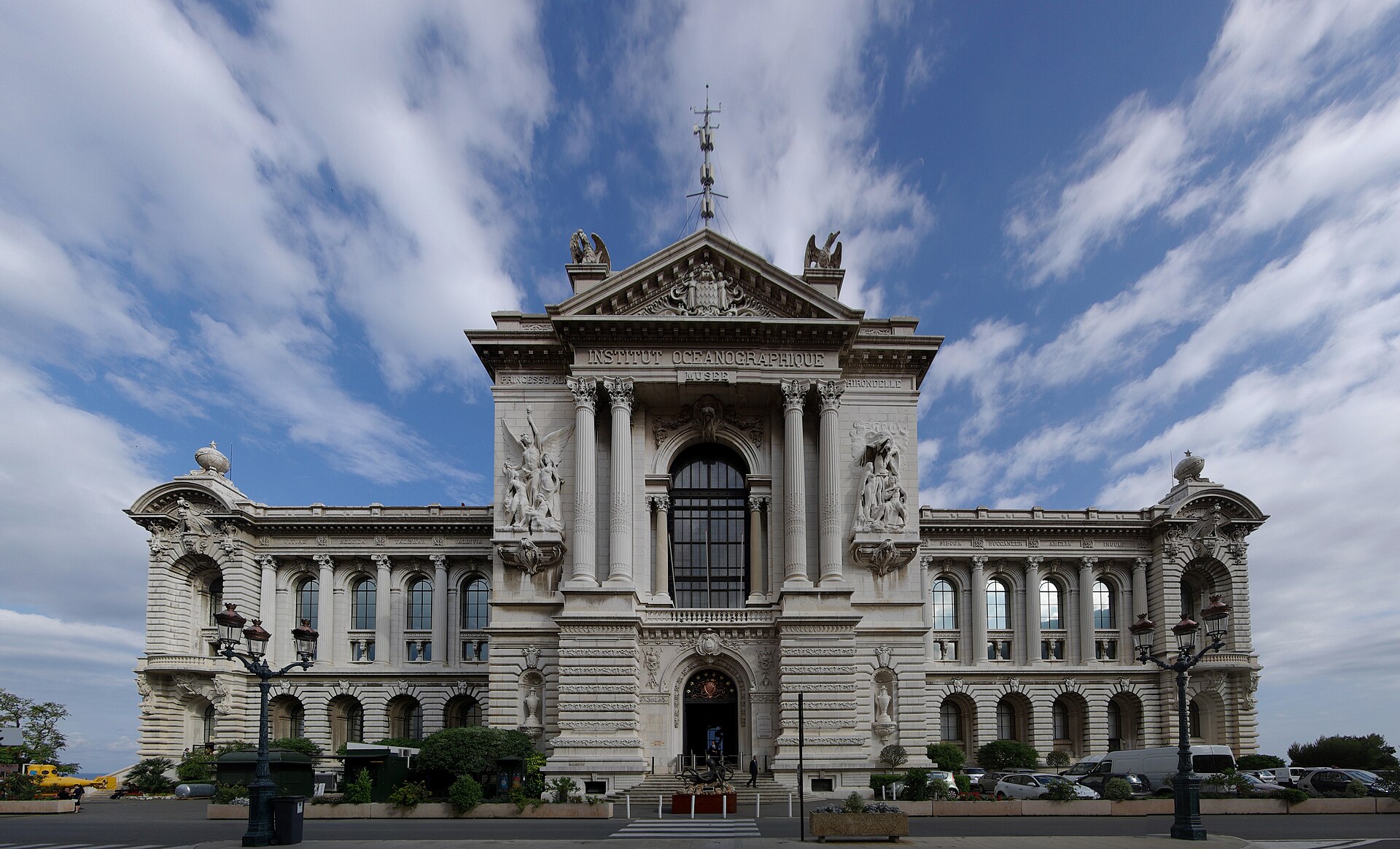
The Oceanographic Museum of Monaco is a landmark institution dedicated to marine science and oceanography, perched on the side of the Rock of Monaco. Founded by Prince Albert I, the museum was inaugurated in 1910 after eleven years of construction. It serves as both a scientific research center and a public aquarium, housing extensive collections of marine fauna, historical scientific instruments, and maritime artifacts.
The building is a masterpiece of monumental architecture, designed to integrate seamlessly into the cliffside. It is renowned for its facade, which features intricate carvings and sculptures representing marine life, and its grand interior halls that reflect the scientific optimism of the early 20th century. Today, it remains a global hub for marine conservation and public education.
Key Facts
- Materials
- Stone, Reinforced concrete
- Civilization
- Monegasque
- Accessibility
- Wheelchair accessible with elevator access to most levels
- Date(s)
- 1899-1910
- Condition
- Well-preserved and active
- Original Function
- Oceanographic research center and museum
- Key Figures
- Prince Albert I of Monaco, Jacques-Yves Cousteau
Founding and Vision
1899-1910Prince Albert I, known as the 'Scholar Prince,' commissioned the museum to promote marine science. He envisioned a space where the results of his extensive oceanographic expeditions could be displayed and studied by the public.
Scientific Leadership
1910-1950The museum quickly became a world-renowned center for marine research. It hosted international conferences and provided a base for the study of deep-sea specimens collected during the Prince's numerous voyages.
The Cousteau Era
1957-1988The museum gained significant international prominence when the famous explorer Jacques-Yves Cousteau was appointed as its director. Under his leadership, the museum expanded its public aquarium facilities and focus on environmental conservation.
Modern Conservation
1989-presentThe institution continues to evolve, focusing on the protection of marine biodiversity and climate change awareness. It remains a key partner in international marine research initiatives and educational outreach.
Cultural Significance
The museum is a symbol of Monaco's long-standing commitment to environmental stewardship and scientific exploration. It represents the intersection of royal patronage and the early 20th-century scientific movement, establishing Monaco as a center for maritime diplomacy and research.
Locally, it is the most iconic structure in Monaco-Ville, defining the skyline of the Rock. It serves as a vital educational resource for the region and a cornerstone of the principality's cultural identity.
Interpretive Notes
Scholarly debates and areas of uncertainty
Discussions often center on the balance between maintaining the museum's historical architectural integrity and the modern requirements of animal welfare in aquarium management. There is ongoing academic discourse regarding the ethics of historical specimen collection versus modern conservation-focused display practices.
Visiting Information
Entry Rules
Open daily except for December 25th and the weekend of the Formula 1 Grand Prix. Tickets can be purchased online or at the entrance. No specific dress code, but respectful attire is expected.
Best Times to Visit
Weekdays during the shoulder seasons (spring and autumn) to avoid peak tourist crowds. Early morning visits allow for a quieter experience in the aquarium galleries.
Photography
Personal photography is permitted without flash. Flash photography is strictly prohibited in the aquarium areas to protect the marine life.
Preservation Notes
The building is a protected historical monument. Visitors are requested to refrain from touching the glass of the aquarium tanks and to follow all posted signage regarding the preservation of the collections.
Nearby POIs
4 shownSources & Further Reading
- [1]The Oceanographic Museum of Monaco: A History — Jacqueline Carpine-Lancre. Institut Océanographique (2010)View
- [2]Prince Albert I of Monaco: The Scholar Prince — Thomas Fouilleron. Archives du Palais Princier (2015)
Key Facts
- Materials
- Stone, Reinforced concrete
- Civilization
- Monegasque
- Accessibility
- Wheelchair accessible with elevator access to most levels
- Date(s)
- 1899-1910
- Condition
- Well-preserved and active
- Original Function
- Oceanographic research center and museum
- Key Figures
- Prince Albert I of Monaco, Jacques-Yves Cousteau