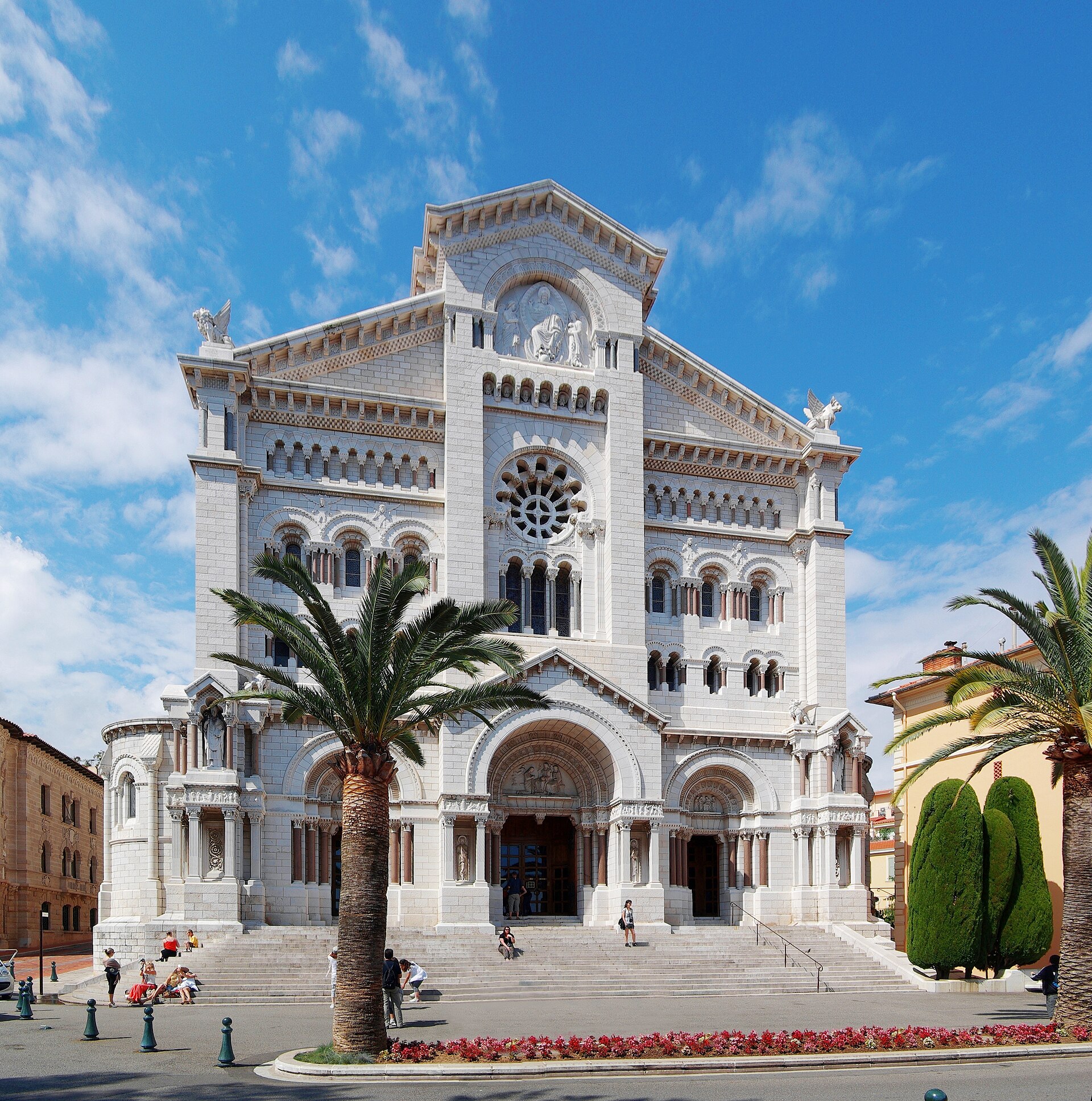
The Cathedral of Our Lady Immaculate, also known as Saint Nicholas Cathedral, serves as the seat of the Roman Catholic Archdiocese of Monaco. Located in the historic Monaco-Ville district, the current structure was built between 1875 and 1903 on the site of a 13th-century church dedicated to Saint Nicholas of Myra, which was demolished in 1874.
Designed by architect Charles Lenormand, the cathedral is constructed from white stone sourced from La Turbie. It is the primary burial site for the Princes of Monaco, including Prince Rainier III and Princess Grace, and remains a central institution in the religious and state life of the Principality.
Key Facts
- Materials
- La Turbie white stone, Carrara marble
- Civilization
- Monégasque
- Accessibility
- Wheelchair accessible via side entrance
- Date(s)
- 1875-1903
- Condition
- Active place of worship
- Original Function
- Cathedral
- Key Figures
- Prince Rainier III, Princess Grace, Charles Lenormand
Predecessor Church
13th centuryThe original church of Saint Nicholas was founded in 1252. It served as the parish church for the residents of Monaco-Ville for over six centuries before being demolished to make way for the current cathedral.
Construction
1875-1903Construction began in 1875 under the direction of architect Charles Lenormand. The building was consecrated in 1911, though it had been in use for services since 1903. The design reflects the Romanesque Revival style popular in late 19th-century Europe.
Modern Era
20th century - presentThe cathedral gained international prominence as the site of the 1956 wedding of Prince Rainier III and Grace Kelly. It continues to host major state ceremonies and remains the final resting place for the Grimaldi dynasty.
Cultural Significance
The cathedral is the spiritual heart of the Principality of Monaco. Beyond its religious function, it serves as a symbol of the Grimaldi family's continuity and history. The presence of the royal tombs makes it a significant site for both local devotion and international visitors interested in the history of the monarchy.
Visiting Information
Entry Rules
Open daily to visitors. Entry is free. Modest dress is required (shoulders and knees covered). Visitors are requested to remain quiet as it is an active place of worship.
Best Times to Visit
Early morning or late afternoon to avoid peak tourist crowds from cruise ships. Sunday mornings are reserved for religious services.
Photography
Photography is permitted without flash. Tripods and professional equipment are prohibited.
Preservation Notes
Maintain silence and respect the sanctity of the burial areas. Do not touch the marble altars or historical artifacts.
Nearby POIs
4 shownSources & Further Reading
- [1]
- [2]The History of the Grimaldi Dynasty — Anne Edwards. HarperCollins (1992)
Key Facts
- Materials
- La Turbie white stone, Carrara marble
- Civilization
- Monégasque
- Accessibility
- Wheelchair accessible via side entrance
- Date(s)
- 1875-1903
- Condition
- Active place of worship
- Original Function
- Cathedral
- Key Figures
- Prince Rainier III, Princess Grace, Charles Lenormand