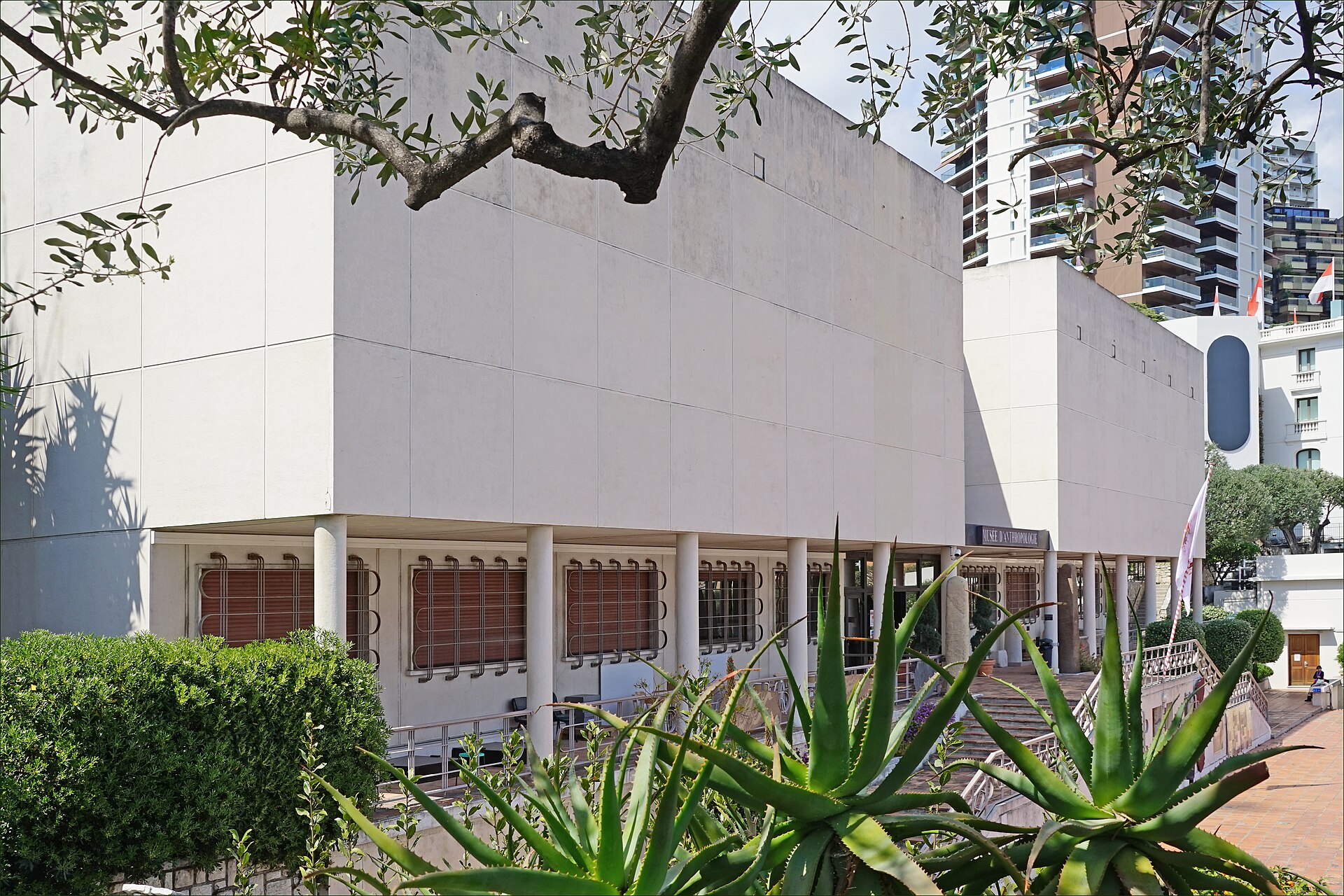
The Museum of Prehistoric Anthropology in Monaco-Ville houses an extensive collection of fossils and artifacts recovered from archaeological excavations within the Principality and the surrounding Ligurian region. Founded by Prince Albert I in 1902, the institution serves as a repository for the region's deep human history, documenting the presence of early hominids and the development of prehistoric cultures along the Mediterranean coast.
The museum's exhibits focus on the evolution of human life, featuring significant findings from local caves such as the Grotte de l'Observatoire. Through its displays of lithic tools, faunal remains, and human skeletal fragments, the museum provides a chronological overview of the environmental and cultural shifts that defined the region from the Lower Paleolithic period through the Neolithic era.
Key Facts
- Materials
- Stone, Bone, Modern exhibition glass and steel
- Civilization
- Prehistoric Mediterranean
- Accessibility
- Wheelchair accessible
- Date(s)
- 1902
- Condition
- Active museum and research center
- Original Function
- Research and exhibition of archaeological findings
- Key Figures
- Prince Albert I of Monaco
Foundation by Prince Albert I
1902The museum was established by Prince Albert I to preserve the archaeological heritage discovered during the construction and exploration of the Principality. It was initially housed in a different location before moving to its current site in the Jardin Exotique.
Scientific Development
20th CenturyThroughout the 20th century, the museum expanded its collection through systematic excavations of local caves, particularly those in the cliffs of Monaco. It became a hub for regional prehistoric research, collaborating with international anthropologists to classify findings.
Modern Integration
PresentToday, the museum continues to function as both a public exhibition space and a scientific research facility. It maintains active partnerships with universities and archaeological institutes to study the human occupation of the French and Italian Riviera.
Cultural Significance
The museum is central to understanding the prehistoric identity of Monaco, shifting the narrative of the Principality from its modern status as a financial hub to its ancient roots as a site of early human habitation. It plays a vital role in local education and the preservation of the regional archaeological record.
Interpretive Notes
Scholarly debates and areas of uncertainty
Debates persist regarding the precise dating of certain hominid remains found in the Ligurian caves and the extent of interaction between different prehistoric groups in the region during the transition from the Paleolithic to the Neolithic.
Visiting Information
Entry Rules
Open daily. Tickets can be purchased at the entrance. The museum is located within the Jardin Exotique complex.
Best Times to Visit
Weekday mornings to avoid tourist groups visiting the adjacent botanical gardens.
Photography
Personal photography is permitted without flash. Professional photography requires prior authorization.
Preservation Notes
Do not touch display cases. Maintain a quiet environment to respect the research nature of the facility.
Nearby POIs
4 shownSources & Further Reading
- [1]Musée d'Anthropologie Préhistorique de Monaco: Official Guide — Government of Monaco. Monaco Cultural Services (2021)View
- [2]Prehistoric Archaeology of the Ligurian Coast — Henry de Lumley. CNRS Editions (2015)
Key Facts
- Materials
- Stone, Bone, Modern exhibition glass and steel
- Civilization
- Prehistoric Mediterranean
- Accessibility
- Wheelchair accessible
- Date(s)
- 1902
- Condition
- Active museum and research center
- Original Function
- Research and exhibition of archaeological findings
- Key Figures
- Prince Albert I of Monaco