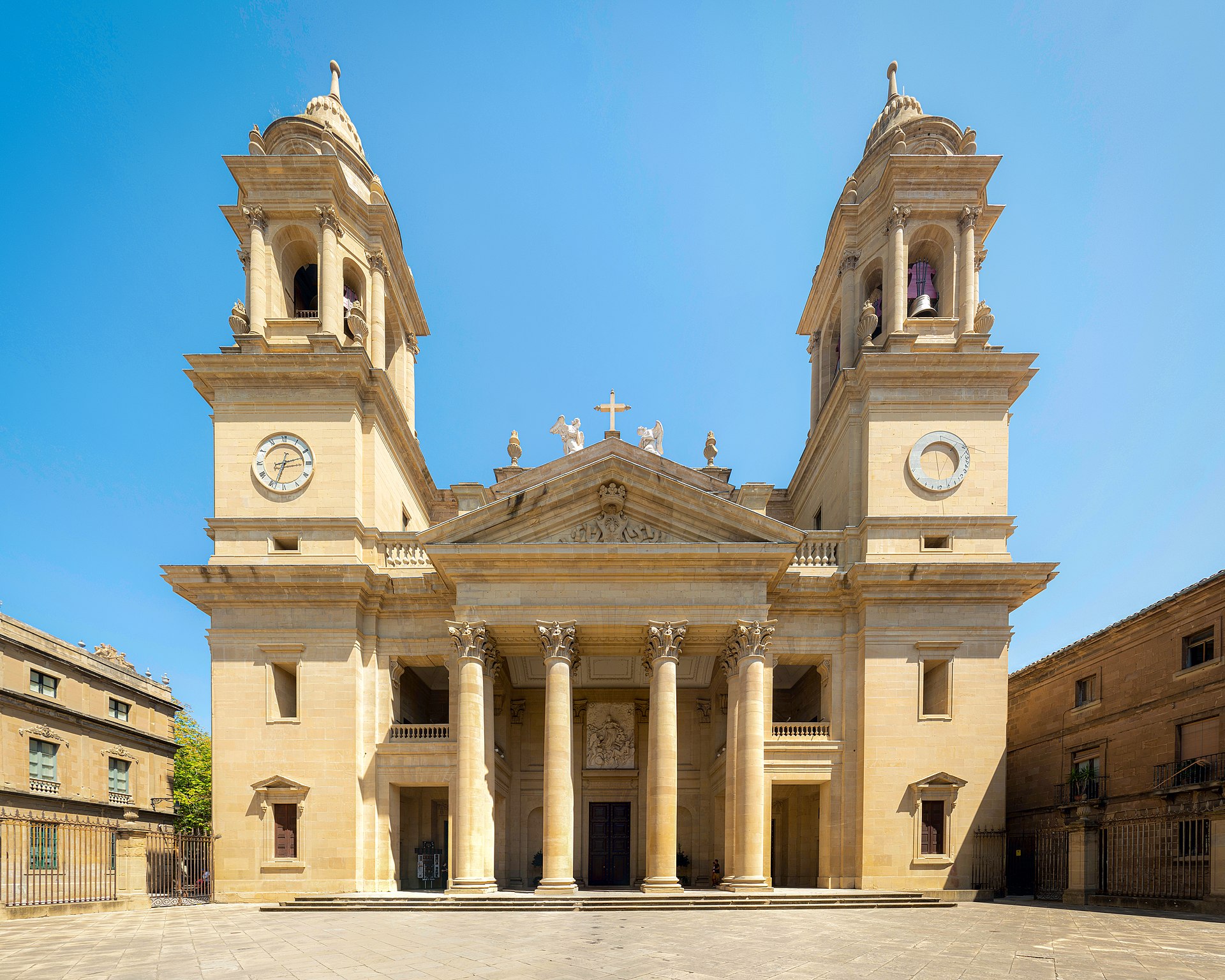
The Cathedral of Santa María la Real in Pamplona is a significant religious and architectural landmark that serves as a synthesis of various historical styles. While its origins trace back to a Romanesque structure built in the 12th century, the current edifice is primarily defined by its grand Gothic nave and cloister, constructed between the 14th and 16th centuries. The facade, however, presents a striking contrast, having been redesigned in the Neoclassical style by Ventura Rodríguez in the late 18th century.
Beyond its architectural complexity, the cathedral functions as a repository of Navarrese history. It houses the royal mausoleum of the Kings of Navarre, including the tomb of Sancho VII the Strong, and preserves the 'Fueros de Navarra,' a foundational medieval legal code that defined the region's unique political autonomy for centuries.
Key Facts
- Materials
- Limestone, Sandstone
- Civilization
- Navarrese
- Accessibility
- Accessible via main entrance; some areas of the cloister have uneven flooring
- Date(s)
- 1394-1501 (Gothic phase)
- Condition
- Well-preserved, active religious site
- Original Function
- Cathedral church
- Key Figures
- Sancho VII of Navarre, Ventura Rodríguez, Charles III of Navarre
Romanesque Origins
12th centuryThe original Romanesque cathedral was consecrated in 1127. While it served as the spiritual center of the Kingdom of Navarre, the structure suffered from structural instability, leading to the eventual collapse of its nave in the late 14th century.
Gothic Reconstruction
1394-1501King Charles III of Navarre commissioned the construction of the current Gothic cathedral. This period saw the creation of the expansive nave, the intricate choir, and the renowned cloister, which is considered one of the finest examples of Gothic cloisters in Europe.
Neoclassical Intervention
1783-1803The original Gothic facade was replaced by a Neoclassical design by architect Ventura Rodríguez. This project was controversial at the time but remains a defining feature of the cathedral's exterior appearance today.
Cultural Significance
The cathedral is the symbolic heart of Navarre, representing the historical continuity of the Navarrese monarchy and its legal traditions. The presence of the royal tombs and the preservation of the Fueros underscore the site's role in maintaining regional identity against the backdrop of broader Spanish history.
Interpretive Notes
Scholarly debates and areas of uncertainty
There is ongoing academic discussion regarding the extent of the original Romanesque foundations that remain beneath the current Gothic structure. Additionally, the 18th-century decision to replace the Gothic facade with a Neoclassical one remains a subject of debate among architectural historians regarding the preservation of stylistic integrity.
Visiting Information
Entry Rules
Open to the public for tourism and worship. Tickets are required for the cathedral museum and cloister tour. Modest dress is expected as it is an active place of worship.
Best Times to Visit
Morning hours are best for viewing the light in the Gothic cloister. The cathedral is particularly significant during the festivities of San Fermín in July, though crowds are significantly larger.
Photography
Photography is permitted for personal use without flash. Tripods and professional equipment require prior authorization from the cathedral administration.
Preservation Notes
The cathedral is subject to ongoing maintenance due to the age of the limestone masonry. Visitors are requested to remain on marked paths and avoid touching the historical tombs and sculptures.
Nearby POIs
2 shownSources & Further Reading
- [1]La Catedral de Pamplona — VV.AA.. Caja de Ahorros de Navarra (1994)
- [2]Arquitectura Gótica en Navarra — Javier Martínez de Aguirre. Gobierno de Navarra (2002)
Key Facts
- Materials
- Limestone, Sandstone
- Civilization
- Navarrese
- Accessibility
- Accessible via main entrance; some areas of the cloister have uneven flooring
- Date(s)
- 1394-1501 (Gothic phase)
- Condition
- Well-preserved, active religious site
- Original Function
- Cathedral church
- Key Figures
- Sancho VII of Navarre, Ventura Rodríguez, Charles III of Navarre