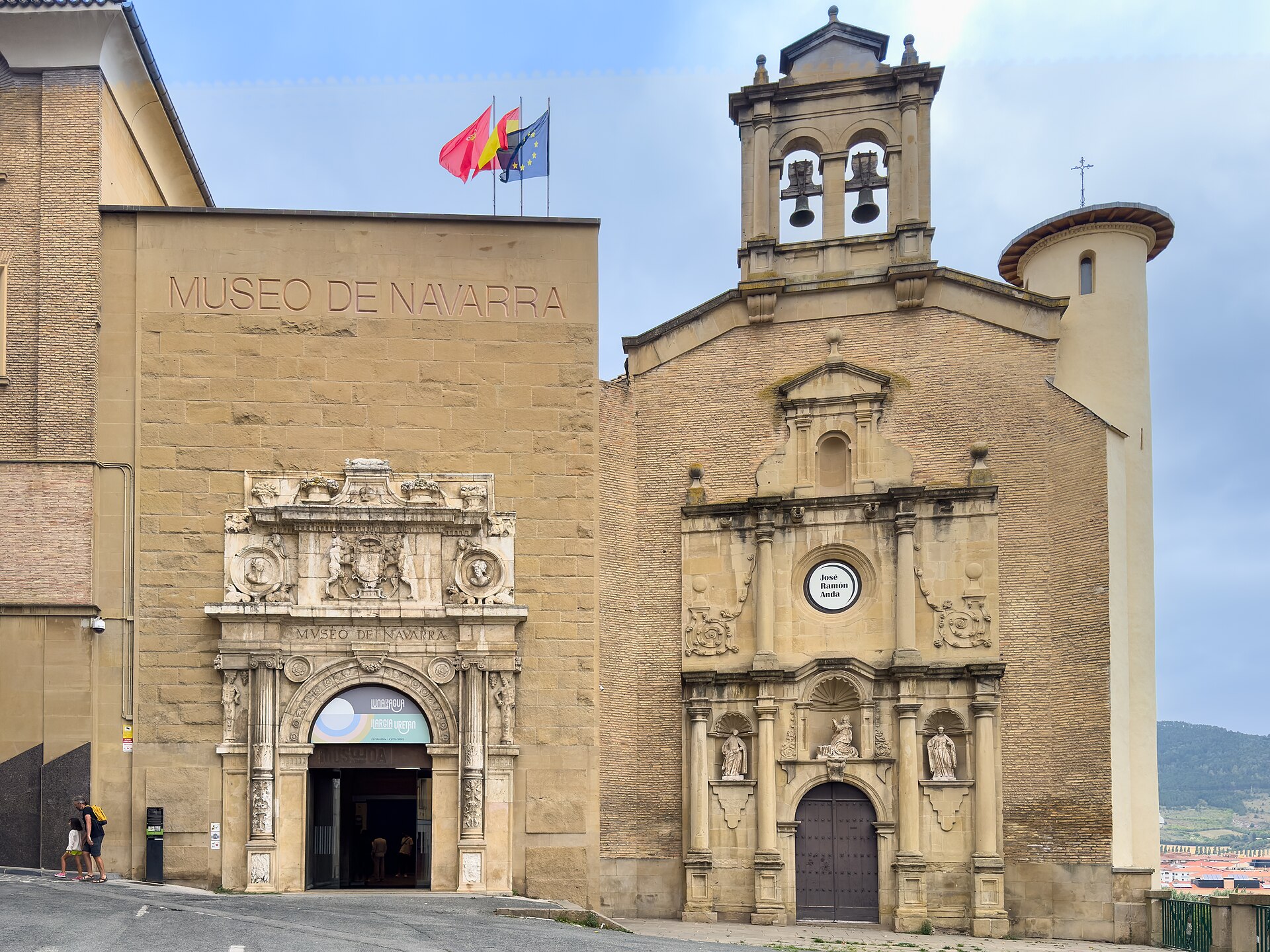
The Museo de Navarra is the primary institution dedicated to the preservation and exhibition of the cultural heritage of the Navarre region. Housed within the former Hospital of Our Lady of Mercy, a 16th-century building that retains its original Renaissance facade, the museum offers a comprehensive chronological narrative of the region's history.
The collection comprises over 12,000 artifacts, ranging from prehistoric archaeological finds to contemporary art. It is particularly noted for its significant holdings of Romanesque and Gothic religious art, including the 12th-century Altar of San Miguel, and the famous map of Abauntz, which is considered one of the oldest cartographic representations in Europe.
Key Facts
- Materials
- Stone, Brick, Glass
- Civilization
- Navarrese
- Accessibility
- Fully accessible with elevators and ramps
- Date(s)
- 1556 (Hospital building)
- Condition
- Well-preserved, active museum
- Original Function
- Hospital of Our Lady of Mercy
- Key Figures
- Juan de Villarreal
Foundation as a Hospital
16th centuryThe building was originally constructed as the Hospital of Our Lady of Mercy. The most notable architectural feature remaining from this period is the ornate Renaissance facade, which was relocated from the original site to the current museum structure.
Establishment of the Museum
1956The museum was officially inaugurated in 1956 to consolidate various collections of Navarrese art and archaeology that had previously been scattered across different ecclesiastical and private locations.
Modern Renovation
1986-1990A major architectural intervention was carried out by architects Jordi Garcés and Enric Sòria. This project modernized the interior spaces, integrated the historic facade, and improved the circulation and display areas for the permanent collection.
Cultural Significance
The museum serves as the primary repository for the identity of Navarre, bridging the gap between the region's ancient archaeological roots and its modern artistic expression. It plays a critical role in the study of the Romanesque period in Northern Spain, particularly through its collection of capitals and liturgical objects salvaged from destroyed or repurposed churches.
Interpretive Notes
Scholarly debates and areas of uncertainty
There is ongoing academic discussion regarding the interpretation of the 'Map of Abauntz,' specifically concerning whether the engravings represent a deliberate cartographic effort or a symbolic ritualistic depiction of the landscape.
Visiting Information
Entry Rules
Open Tuesday to Sunday. General admission is required, with reduced rates for students and seniors. Free entry is available on specific days and times as posted on the official website.
Best Times to Visit
Weekday mornings are generally quieter, allowing for a more focused viewing of the Romanesque and Gothic galleries.
Photography
Non-commercial photography is permitted without flash or tripods. Professional photography requires prior authorization from the museum administration.
Preservation Notes
Maintain a respectful distance from all artifacts. Flash photography is strictly prohibited to prevent light damage to sensitive textiles and pigments.
Nearby POIs
2 shownKey Facts
- Materials
- Stone, Brick, Glass
- Civilization
- Navarrese
- Accessibility
- Fully accessible with elevators and ramps
- Date(s)
- 1556 (Hospital building)
- Condition
- Well-preserved, active museum
- Original Function
- Hospital of Our Lady of Mercy
- Key Figures
- Juan de Villarreal