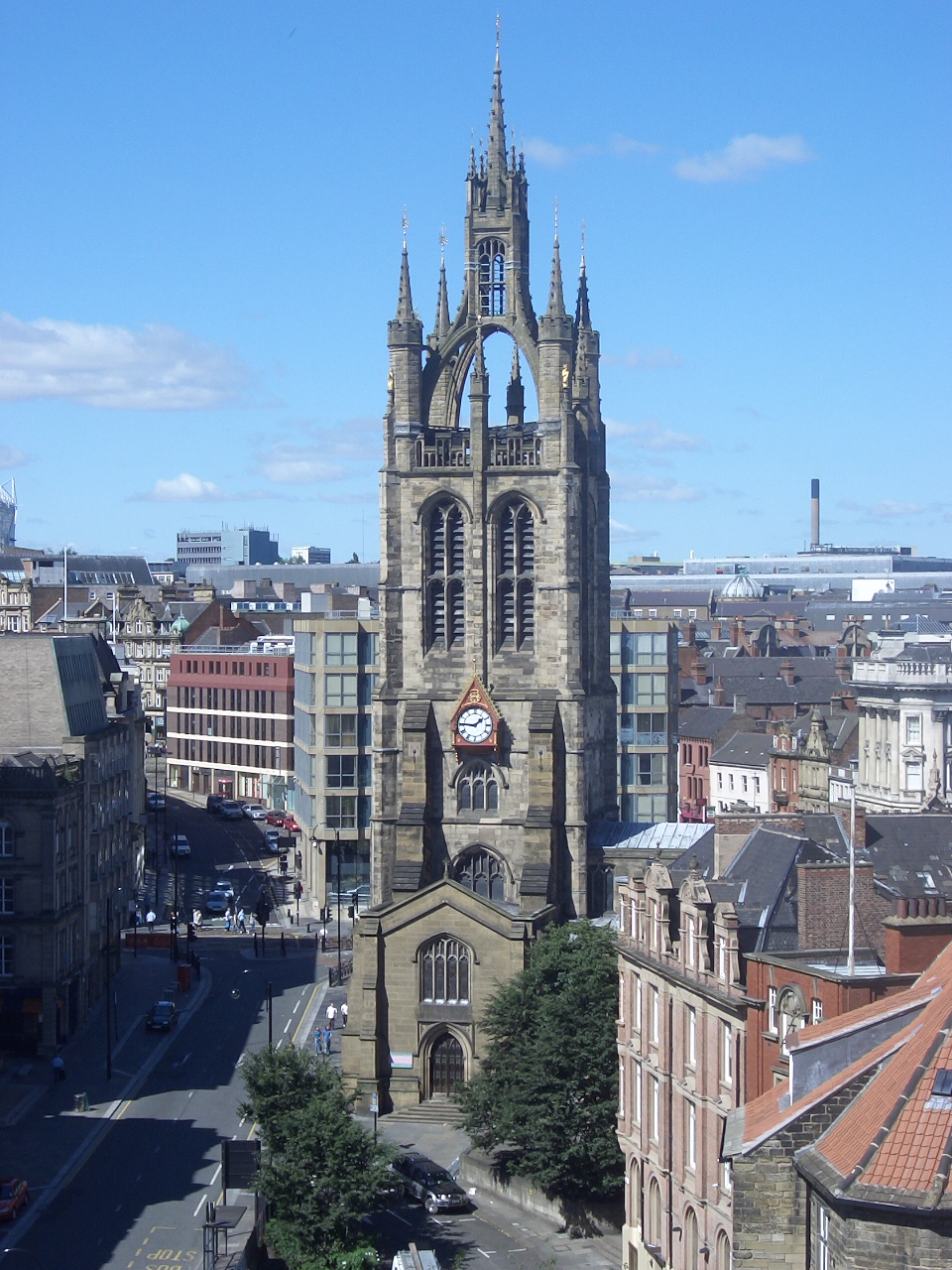
Newcastle Cathedral, formally the Cathedral Church of St Nicholas, is the primary Anglican place of worship in Newcastle upon Tyne. The current structure primarily dates from the 14th and 15th centuries, though it stands on the site of a church founded in 1091. It served as a parish church for most of its history before being elevated to cathedral status in 1882 upon the creation of the Diocese of Newcastle.
The building is most famous for its 15th-century lantern tower, a distinctive architectural feature that has served as a landmark for mariners on the River Tyne for centuries. The interior contains a mix of medieval stonework, Victorian-era renovations, and modern liturgical furnishings, reflecting the city's evolution from a medieval trading hub to an industrial center.
Key Facts
- Materials
- Sandstone, Lead, Stained glass
- Civilization
- English
- Accessibility
- Fully accessible with ramped entrances
- Date(s)
- 1350-1450
- Condition
- Active cathedral
- Original Function
- Parish Church
- Key Figures
- Henry de Newcastle, Bishop Ernest Wilberforce
Foundation and Early History
1091-1300The first church on the site was established by Osmund, Bishop of Salisbury, in 1091. This original Norman structure was destroyed by fire in 1216 and subsequently rebuilt during the 13th century.
Medieval Expansion
1350-1500The majority of the current building was constructed during this period. The iconic lantern tower, which features a unique crown-like spire supported by flying buttresses, was completed around 1448.
Cathedral Status
1882Following the rapid population growth of Newcastle during the Industrial Revolution, the Diocese of Newcastle was formed. St Nicholas' Church was elevated to cathedral status, necessitating internal reordering to accommodate its new role.
Modern Restoration
2020-2021The cathedral underwent a major project titled 'Common Ground in Sacred Space,' which involved re-landscaping the churchyard and improving internal accessibility and visitor facilities.
Cultural Significance
The cathedral is a symbol of Newcastle's civic and religious identity. Its lantern tower is historically significant as a navigational aid for ships entering the River Tyne, and the building remains a focal point for major civic ceremonies and commemorations in the North East of England.
Interpretive Notes
Scholarly debates and areas of uncertainty
There is ongoing discussion among architectural historians regarding the structural integrity and influence of the lantern tower design, specifically its relationship to other 'crown spires' found in Scotland and England, such as St Giles' Cathedral in Edinburgh.
Visiting Information
Entry Rules
Open daily to the public. Admission is free, though donations are encouraged. Visitors are asked to respect ongoing services and maintain a quiet atmosphere.
Best Times to Visit
Weekday mornings are generally quieter. The cathedral often hosts concerts and events which may restrict access to certain areas.
Photography
Personal photography is permitted without flash. Commercial photography requires prior permission from the Cathedral Office.
Preservation Notes
The building is a Grade I listed structure. Visitors are requested not to touch the medieval stonework or monuments.
Nearby POIs
6 shownKey Facts
- Materials
- Sandstone, Lead, Stained glass
- Civilization
- English
- Accessibility
- Fully accessible with ramped entrances
- Date(s)
- 1350-1450
- Condition
- Active cathedral
- Original Function
- Parish Church
- Key Figures
- Henry de Newcastle, Bishop Ernest Wilberforce