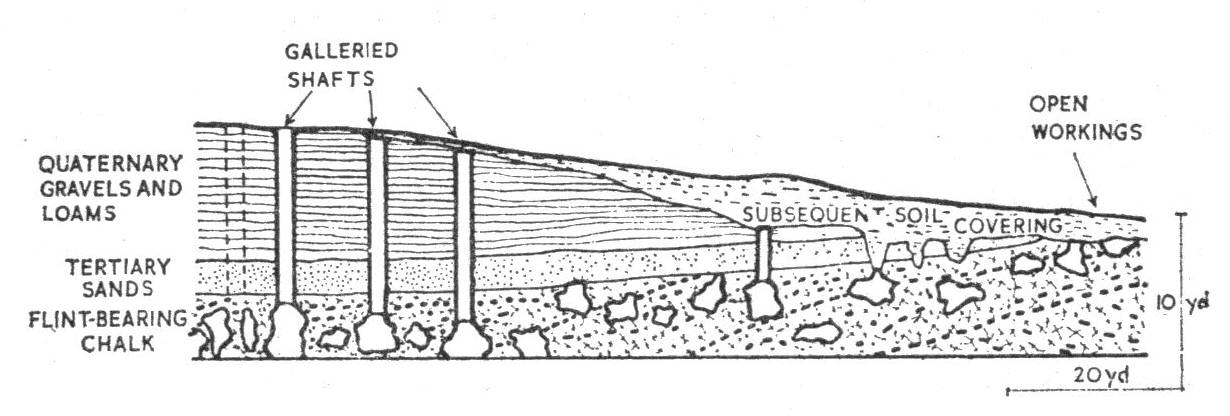
The Neolithic Flint Mines of Spiennes, located near Mons, Belgium, represent one of the largest and earliest centers of prehistoric flint extraction in Europe. Spanning over 100 hectares, the site features a complex network of underground galleries and surface mining pits that were utilized for approximately 2,000 years during the Neolithic period.
The site is significant for its well-preserved evidence of prehistoric mining technology, including the use of antler picks and stone tools to extract high-quality flint nodules from the chalk subsoil. The scale of the operation and the sophisticated techniques employed provide critical insights into the socio-economic organization and technological capabilities of early agricultural societies in Northwestern Europe.
Key Facts
- Materials
- Flint, Chalk, Antler
- Civilization
- Michelsberg culture
- Accessibility
- Guided tours only; requires descent into underground shafts
- Date(s)
- c. 4300–2200 BCE
- Condition
- Archaeological site with preserved underground galleries
- Original Function
- Flint extraction and tool production
- Key Figures
- François-Joseph Fétis
Discovery and Early Exploration
19th centuryThe site was brought to international attention in 1867 during the construction of the railway line between Mons and Brussels. Subsequent excavations revealed the vast extent of the mining network, leading to early academic interest in prehistoric industrial activity.
Neolithic Extraction
4300–2200 BCEDuring the Neolithic, the site served as a major industrial hub. Miners excavated shafts up to 16 meters deep to reach high-quality flint layers. The extracted material was processed on-site into tools, such as axes, which were then traded across a wide region.
Modern Preservation
2000–presentThe site was inscribed as a UNESCO World Heritage site in 2000. Ongoing research and conservation efforts, including the development of a visitor center, allow for controlled public access while ensuring the structural integrity of the fragile underground galleries.
Cultural Significance
The Spiennes mines are a testament to the technological ingenuity of Neolithic communities. They demonstrate a highly organized labor system and a sophisticated understanding of geology, marking a pivotal moment in the transition toward specialized resource management in prehistoric Europe.
Interpretive Notes
Scholarly debates and areas of uncertainty
Debate persists regarding the exact social structure of the mining communities. Scholars continue to investigate whether the mines were operated by specialized professional groups or by seasonal agricultural workers, as well as the extent of the trade networks that distributed the finished flint tools.
Visiting Information
Entry Rules
Access is strictly limited to guided tours organized by the SILEX's visitor center. Visitors must be physically capable of descending into the underground shafts. Advance booking is mandatory.
Best Times to Visit
Spring and summer months are preferred for better accessibility and weather conditions for surface exploration.
Photography
Photography is permitted in the visitor center and on the surface, but may be restricted inside the underground galleries to protect the site and ensure visitor safety.
Preservation Notes
The site is extremely fragile. Visitors must follow all guide instructions, stay on designated paths, and refrain from touching the chalk walls or flint deposits.
Nearby POIs
2 shownKey Facts
- Materials
- Flint, Chalk, Antler
- Civilization
- Michelsberg culture
- Accessibility
- Guided tours only; requires descent into underground shafts
- Date(s)
- c. 4300–2200 BCE
- Condition
- Archaeological site with preserved underground galleries
- Original Function
- Flint extraction and tool production
- Key Figures
- François-Joseph Fétis