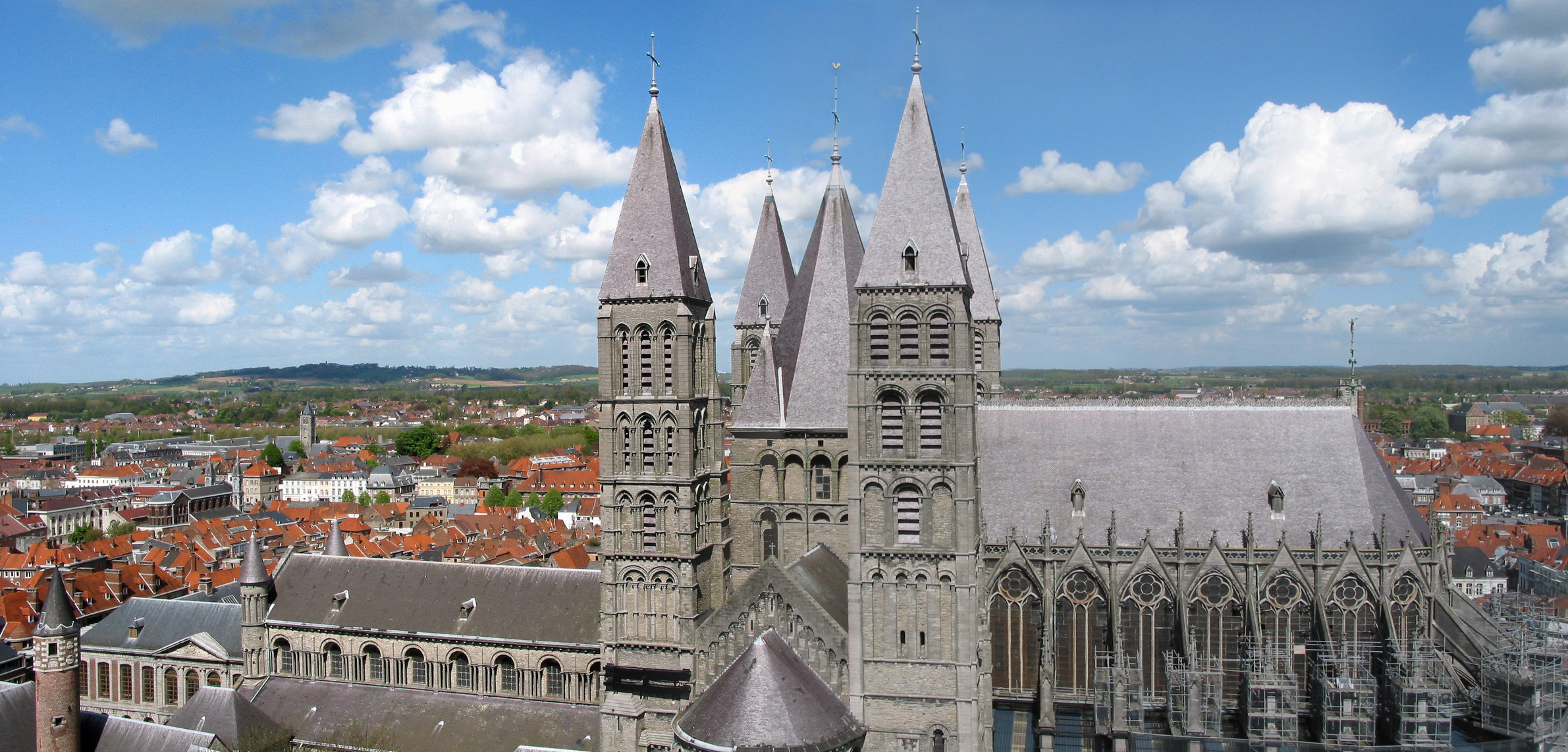
The Cathedral of Notre-Dame in Tournai is a significant religious structure that exemplifies the transition between Romanesque and Gothic architectural styles. Its most striking feature is the ensemble of five massive towers, which dominate the city skyline and represent a unique achievement in medieval engineering.
The cathedral's nave, constructed in the 12th century, is a prime example of Romanesque architecture, characterized by its heavy masonry and rhythmic arcades. In contrast, the choir, rebuilt in the 13th century, showcases the light-filled, soaring proportions of the Gothic style. This juxtaposition of styles reflects the evolving liturgical and aesthetic priorities of the Middle Ages in the Low Countries.
Key Facts
- Materials
- Tournai stone, Limestone
- Civilization
- Medieval European
- Accessibility
- Ground level accessible, some areas restricted
- Date(s)
- 1110 - 1325 CE
- Condition
- Active religious site, ongoing restoration
- Original Function
- Cathedral
- Key Figures
- Bishop Baudouin, Bishop Gautier de Marvis
Romanesque Foundations
1110-1191Following a fire that destroyed the previous structure, the current nave and transept were built in the Romanesque style. The massive proportions and the five-tower configuration were established during this phase.
Gothic Expansion
1243-1325Bishop Gautier de Marvis ordered the demolition of the original Romanesque choir to replace it with a larger, more ambitious Gothic choir, reflecting the architectural trends of the era.
UNESCO Recognition and Restoration
2000-PresentThe cathedral was inscribed as a UNESCO World Heritage site in 2000. It has since undergone extensive structural restoration to address stability issues caused by its age and the weight of the massive towers.
Cultural Significance
Tournai Cathedral serves as a testament to the historical importance of Tournai as a religious and administrative center in the medieval period. It remains a focal point for the local community and a symbol of the architectural evolution of the Scheldt valley region.
Beyond its religious function, the cathedral is a critical site for the study of medieval construction techniques. Its preservation is a matter of national importance in Belgium, highlighting the ongoing dialogue between historical conservation and modern engineering.
Interpretive Notes
Scholarly debates and areas of uncertainty
The exact sequence of the construction of the five towers remains a subject of architectural analysis, particularly regarding how the builders managed the structural load of the central tower over the crossing.
Visiting Information
Entry Rules
Open daily to the public. Entry is free, though donations are encouraged for maintenance. Visitors are expected to maintain a respectful demeanor as it is an active place of worship.
Best Times to Visit
Weekday mornings are generally quieter for visitors. The cathedral is best viewed in daylight to appreciate the contrast between the Romanesque and Gothic stonework.
Photography
Photography is permitted for personal use without flash. Tripods and professional equipment require prior authorization from the cathedral administration.
Preservation Notes
Due to ongoing restoration work, certain sections of the interior or exterior may be inaccessible or obscured by scaffolding. Please respect all safety barriers.
Nearby POIs
9 shownSources & Further Reading
- [1]
- [2]The Romanesque Cathedral of Tournai — J. Dumoulin. Archaeologia Belgica (1985)
Key Facts
- Materials
- Tournai stone, Limestone
- Civilization
- Medieval European
- Accessibility
- Ground level accessible, some areas restricted
- Date(s)
- 1110 - 1325 CE
- Condition
- Active religious site, ongoing restoration
- Original Function
- Cathedral
- Key Figures
- Bishop Baudouin, Bishop Gautier de Marvis