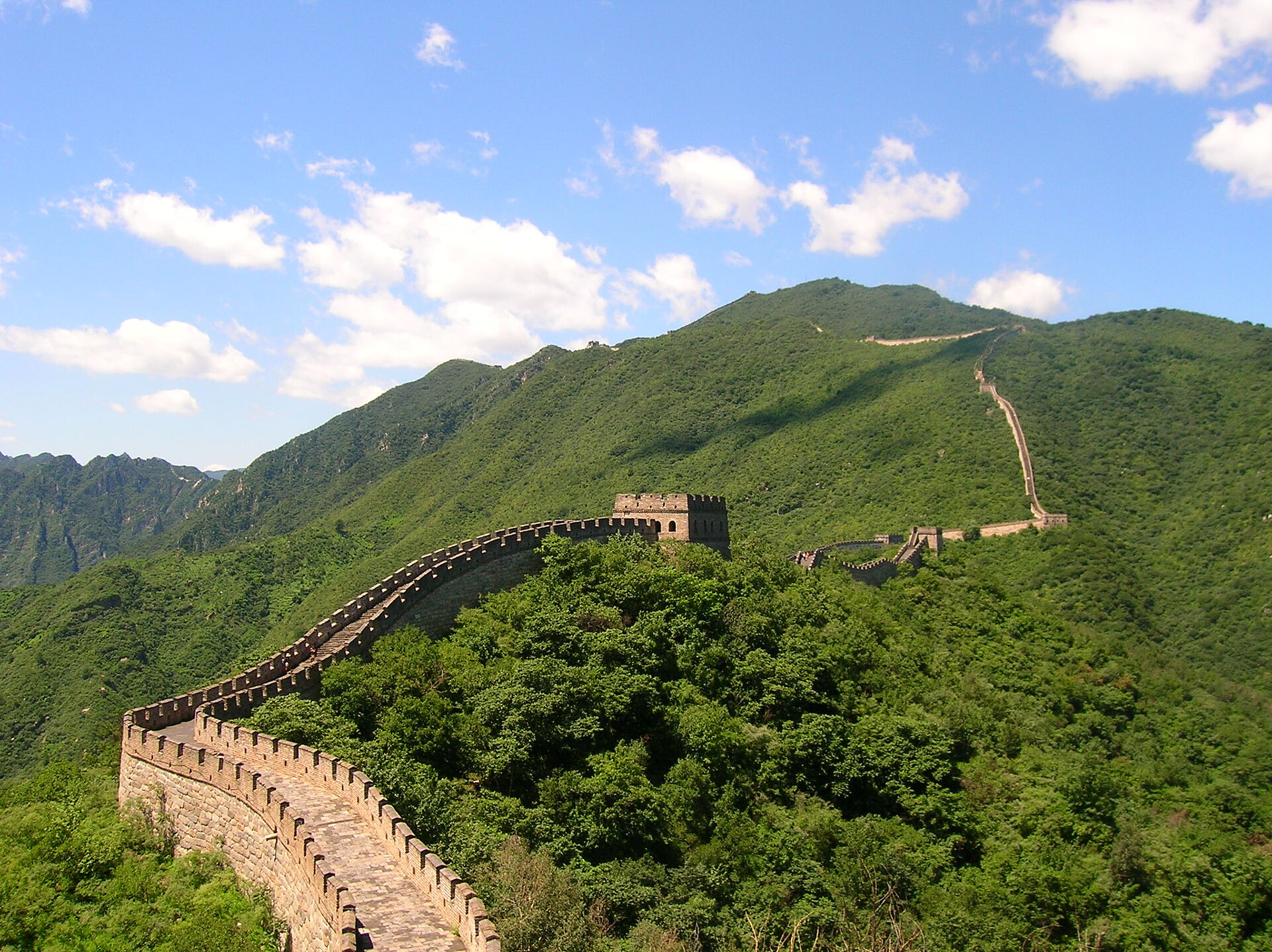
The Mutianyu section of the Great Wall of China is a well-preserved segment located approximately 70 km northeast of Beijing. Constructed mainly during the Ming Dynasty (mid-16th century), it served as a strategic military defense line to protect northern China from invasions. Mutianyu is known for its densely spaced watchtowers, steep stone steps, and scenic mountain surroundings. Unlike some other sections, it has been restored for tourism while retaining significant historical authenticity.
Key Facts
- Length
- Approximately 2.5 km restored for visitors
- Location
- Huairou District, Beijing, China
- Materials
- Granite, Large stone blocks, Brick
- Civilization
- Ming Dynasty
- Major Features
- Watchtowers, Fortified parapets, Stone ramparts
- Date(s)
- Mid-16th century
- Condition
- Well preserved and restored for public access
Initial Construction
5th-3rd century BCEEarly fortifications existed along the site during the Warring States period, though the current structure primarily dates to the Ming Dynasty.
Ming Dynasty Reinforcement
Mid-16th centuryMutianyu was rebuilt with stronger stone walls, watchtowers, and parapets to enhance northern defenses during the height of the Ming Dynasty. The layout was optimized for both defense and signaling.
Modern Restoration
1980s-presentRestoration projects stabilized and partially reconstructed the wall for tourism. The section now includes cable cars, chairlifts, and sled descents while preserving original features for cultural and historical interpretation.
Cultural Significance
The Great Wall at Mutianyu exemplifies Chinese military engineering and serves as a symbol of national strength, unity, and historical continuity. It illustrates the Ming Dynasty's approach to defense and communication across vast distances. Mutianyu also plays a key role in modern cultural tourism, promoting awareness of Chinese history and architectural heritage.
Interpretive Notes
Scholarly debates and areas of uncertainty
Scholarly discussion focuses on the extent of authenticity versus restoration, the original design and logistics of construction, and the wall's efficacy in actual military defense. The Mutianyu section is often studied as an example of Ming-era military architecture.
Visiting Information
Entry Rules
Ticketed entry required. Cable car and chairlift options available. Visitors must stay on marked paths. No overnight camping allowed.
Best Times to Visit
Spring and autumn for mild weather and clear views. Early morning weekdays for fewer tourists.
Photography
Photography permitted. Tripods may be restricted in crowded areas. Drones require special permits.
Preservation Notes
Do not climb on walls outside designated walkways. Follow staff instructions and respect restoration areas.
Nearby POIs
5 shownSources & Further Reading
- [1]
- [2]The Great Wall of China — William Lindesay. Da Capo Press (2007)
Key Facts
- Length
- Approximately 2.5 km restored for visitors
- Location
- Huairou District, Beijing, China
- Materials
- Granite, Large stone blocks, Brick
- Civilization
- Ming Dynasty
- Major Features
- Watchtowers, Fortified parapets, Stone ramparts
- Date(s)
- Mid-16th century
- Condition
- Well preserved and restored for public access