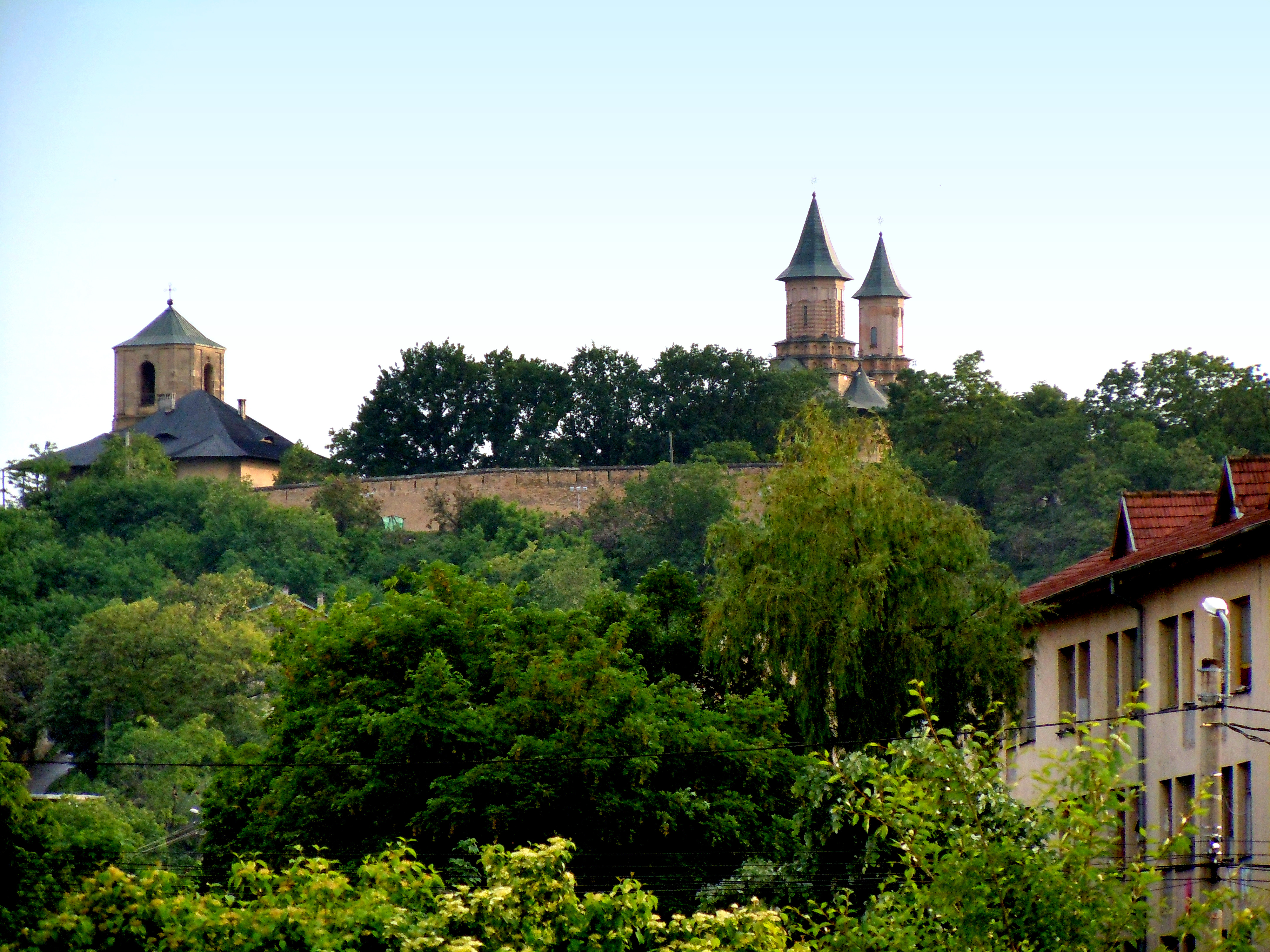
The Galata Monastery is a fortified religious complex located on the Galata Hill in Iași, Romania. Founded by Prince Petru Șchiopul between 1582 and 1584, the monastery was designed to serve both as a place of worship and a defensive stronghold overlooking the city. Its architecture is a quintessential example of the Moldavian style, characterized by a triconch plan, a high tower above the nave, and a distinct blend of Gothic and Byzantine influences.
The complex is enclosed by thick stone walls featuring corner towers, reflecting its historical function as a refuge during times of conflict. The main church, dedicated to the Ascension of the Lord, is noted for its intricate stone carvings on the exterior facades and its well-preserved interior frescoes, which represent a significant period in Romanian ecclesiastical art.
Key Facts
- Materials
- Stone, Brick
- Civilization
- Principality of Moldavia
- Accessibility
- Accessible by road; limited interior accessibility for mobility aids
- Date(s)
- 1582-1584
- Condition
- Restored and active
- Original Function
- Monastery and defensive fortress
- Key Figures
- Petru Șchiopul
Foundation and Construction
1582-1584The monastery was commissioned by Prince Petru Șchiopul of Moldavia. It was built on the site of an older wooden church, intended to serve as a royal necropolis and a strategic defensive point for the capital city of Iași.
Defensive Role
17th-18th centuryDue to its elevated position and fortified walls, the monastery played a crucial role in the defense of Iași. It frequently served as a residence for visiting dignitaries and as a stronghold during various regional conflicts.
Restoration and Modern Era
19th century - presentFollowing periods of neglect and damage, the monastery underwent extensive restoration efforts in the 19th and 20th centuries. Today, it functions as an active religious site and a museum, preserving the cultural heritage of the Moldavian region.
Cultural Significance
The Galata Monastery is a landmark of Moldavian architectural identity. It represents the synthesis of local building traditions with foreign influences, particularly the influence of the Mount Athos monasteries. It remains a symbol of the historical and spiritual continuity of the Iași region.
Beyond its religious importance, the site is recognized for its contribution to the development of Romanian art and literature, having served as a center for printing and manuscript copying during the late medieval period.
Interpretive Notes
Scholarly debates and areas of uncertainty
There is ongoing academic discussion regarding the extent of the influence of Wallachian architectural styles on the specific stone carving techniques found at Galata, as well as the exact original layout of the monastic living quarters before the 19th-century modifications.
Visiting Information
Entry Rules
Open daily to the public. Visitors are expected to dress modestly, covering shoulders and knees. Photography is generally permitted in the courtyard, but may be restricted inside the church.
Best Times to Visit
Spring and autumn offer the best weather for walking the hill path to the monastery. Early mornings are recommended for a quieter experience.
Photography
No flash photography inside the church. Commercial photography requires prior approval from the monastery administration.
Preservation Notes
The site is a protected historical monument. Visitors are requested to remain on marked paths and refrain from touching the exterior stone carvings or interior frescoes.
Nearby POIs
11 shownSources & Further Reading
- [1]The Architecture of the Moldavian Monasteries — Corina Nicolescu. Editura Meridiane (1971)
- [2]Monuments of Iași: A Historical Guide — Sorin Iftimi. Palatul Culturii Publishing (2010)
Key Facts
- Materials
- Stone, Brick
- Civilization
- Principality of Moldavia
- Accessibility
- Accessible by road; limited interior accessibility for mobility aids
- Date(s)
- 1582-1584
- Condition
- Restored and active
- Original Function
- Monastery and defensive fortress
- Key Figures
- Petru Șchiopul