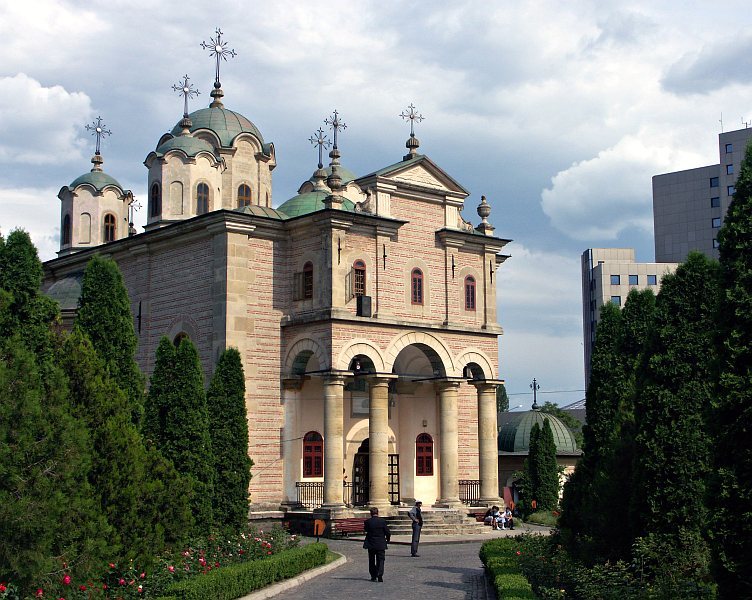
The Bărboi Monastery, located in the heart of Iași, Romania, is a significant religious and architectural landmark dating back to the 18th century. It represents a unique synthesis of traditional Moldavian ecclesiastical architecture and emerging Neoclassical influences, reflecting the cultural transition of the period.
The monastery complex is particularly noted for its intricate stone carvings and its historical role as a center of spiritual and intellectual life in the region. Despite various challenges throughout its history, including seismic activity and urban development, the structure remains a testament to the enduring legacy of Orthodox monastic traditions in Moldavia.
Key Facts
- Materials
- Stone, Brick, Mortar
- Civilization
- Moldavian
- Accessibility
- Ground level access, limited interior mobility
- Date(s)
- 1724-1733
- Condition
- Active religious site
- Original Function
- Orthodox Monastery
- Key Figures
- Ioan Sturdza
Founding and Early Years
1724-1733The monastery was established by the high official Ioan Bărboi on the site of an older wooden church. The construction of the current stone church was completed in the early 18th century, serving as a family foundation and a place of worship.
Architectural Evolution
19th CenturyDuring the 19th century, the monastery underwent significant renovations that introduced Neoclassical elements to the traditional Moldavian structure, creating a distinct hybrid style that distinguishes it from other regional churches.
Modern Preservation
20th Century - PresentFollowing damage from earthquakes and the passage of time, the monastery has undergone several restoration phases to preserve its structural integrity and historical frescoes, ensuring its continued use as an active place of worship.
Cultural Significance
Bărboi Monastery serves as a vital link to the historical and religious identity of Iași. It stands as a physical record of the architectural dialogue between local Moldavian building techniques and the broader European Neoclassical movement, marking a period of modernization in Romanian ecclesiastical art.
Interpretive Notes
Scholarly debates and areas of uncertainty
There is ongoing academic discussion regarding the extent of the influence of Greek architectural styles on the monastery's design, given the historical presence of Greek clergy in the region during the 18th and 19th centuries.
Visiting Information
Entry Rules
Open daily for visitors. Modest dress is required. Please remain respectful during ongoing religious services.
Best Times to Visit
Morning hours are recommended for a quieter experience. The monastery grounds are particularly accessible during the spring and autumn months.
Photography
Photography is permitted in the courtyard; flash photography is prohibited inside the church sanctuary.
Preservation Notes
Please refrain from touching the frescoes or historical stone carvings. Stay within designated visitor areas to protect the site's structural integrity.
Nearby POIs
11 shownSources & Further Reading
- [1]Monuments of Iași: A Historical Guide — Sorin Iftimi. Palatul Culturii Publishing (2010)
- [2]The Architecture of Moldavian Monasteries — Virgil Vătășianu. Editura Academiei Române (1959)
Key Facts
- Materials
- Stone, Brick, Mortar
- Civilization
- Moldavian
- Accessibility
- Ground level access, limited interior mobility
- Date(s)
- 1724-1733
- Condition
- Active religious site
- Original Function
- Orthodox Monastery
- Key Figures
- Ioan Sturdza