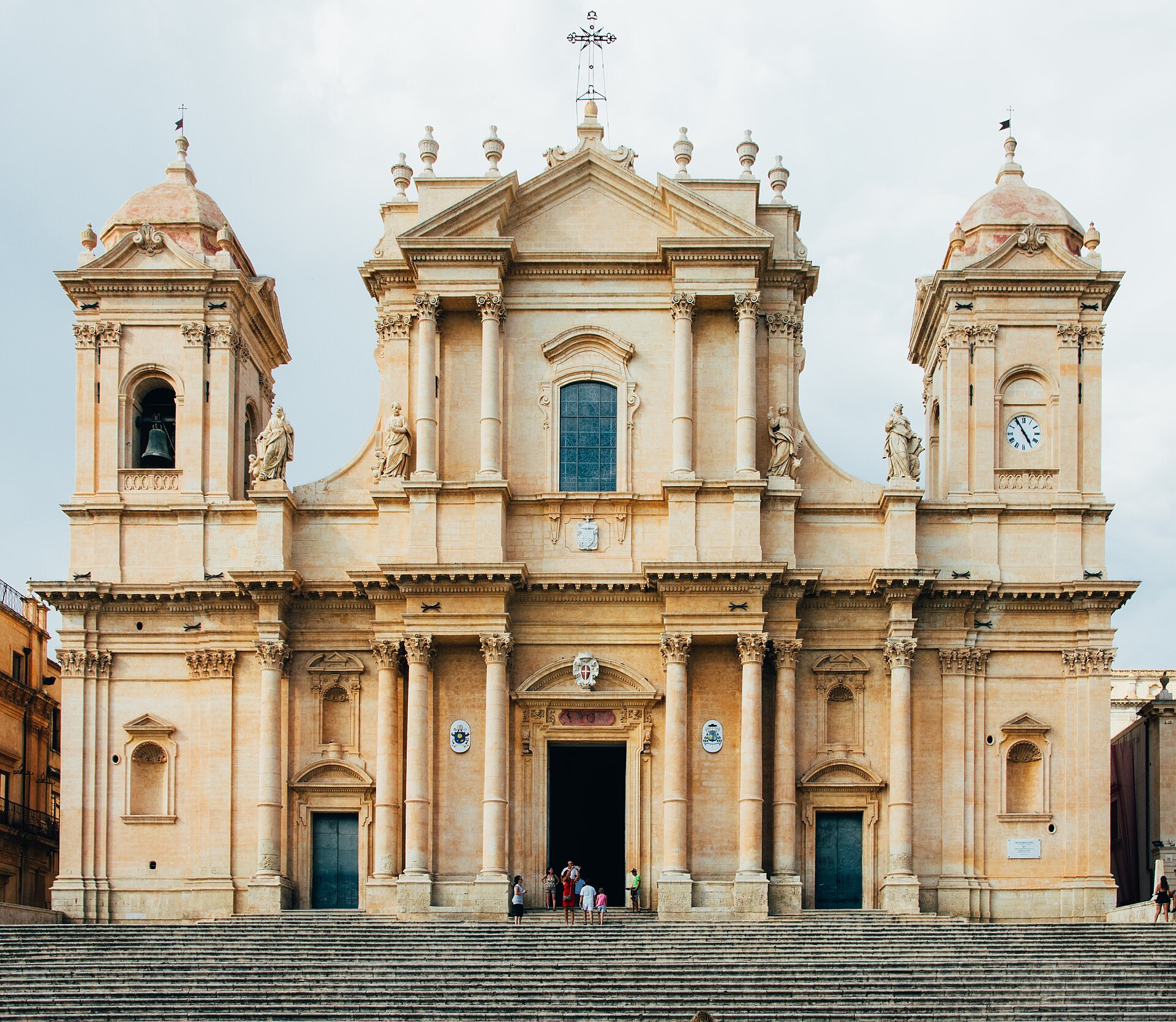
The Cattedrale di San Nicolò, located in the heart of Noto, Sicily, is a quintessential example of Sicilian Baroque architecture. Construction began in the early 18th century following the devastating 1693 earthquake that leveled the original medieval town. The cathedral serves as the seat of the Bishop of Noto and is renowned for its dramatic staircase and honey-colored limestone facade, which glows under the Mediterranean sun.
The interior features a blend of neoclassical and baroque elements, housing significant religious art and relics. Despite suffering a major structural collapse of its dome and nave in 1996 due to architectural flaws and seismic stress, the cathedral underwent an extensive decade-long restoration. It was reopened to the public in 2007, successfully preserving its historical aesthetic while integrating modern structural reinforcements.
Key Facts
- Materials
- Local limestone, Marble, Stucco
- Civilization
- Sicilian
- Accessibility
- Ground level accessible, stairs at main entrance
- Date(s)
- 1694-1776
- Condition
- Fully restored and active
- Original Function
- Cathedral
- Key Figures
- Rosario Gagliardi, Vincenzo Sinatra
Post-Earthquake Reconstruction
1694-1703Following the 1693 earthquake, the city of Noto was rebuilt on a new site. The cathedral was designed as the focal point of the new urban plan, reflecting the grandeur of the Sicilian Baroque style.
Completion and Refinement
1703-1776The structure was completed in stages throughout the 18th century. The iconic grand staircase, which elevates the cathedral above the piazza, was added in the 18th century to enhance the building's monumental presence.
The 1996 Collapse
1996In March 1996, a significant portion of the cathedral, including the dome and the nave, collapsed. This event was attributed to the failure of pillars installed during 1950s renovations, which could not support the weight of the structure.
Restoration and Reopening
1997-2007A massive international restoration project was launched to rebuild the collapsed sections. Using traditional techniques and original materials, the cathedral was meticulously reconstructed and reopened in 2007, restoring the city's skyline.
Cultural Significance
The Cattedrale di San Nicolò is the symbolic heart of Noto and a cornerstone of the Val di Noto UNESCO World Heritage site. It represents the resilience of the Sicilian people following the 1693 disaster and stands as a testament to the unique 'Noto Baroque' style, characterized by the use of local calcarenite stone that changes color throughout the day.
Interpretive Notes
Scholarly debates and areas of uncertainty
Debates have historically centered on the 1996 collapse, specifically regarding the responsibility of 20th-century architectural interventions versus the inherent structural challenges of the original 18th-century design.
Visiting Information
Entry Rules
Open daily to the public. Entry is free, though donations are encouraged. Modest dress is required as it is an active place of worship.
Best Times to Visit
Late afternoon, when the setting sun hits the limestone facade, creating a vibrant golden hue.
Photography
Photography is permitted for personal use. Flash and tripods are prohibited inside the cathedral.
Preservation Notes
The site is a protected monument. Visitors are requested to remain within designated areas and avoid touching the restored frescoes and altarpieces.
Nearby POIs
2 shownSources & Further Reading
- [1]The Baroque Architecture of Sicily — Stephen Tobriner. University of California Press (1982)
- [2]
Key Facts
- Materials
- Local limestone, Marble, Stucco
- Civilization
- Sicilian
- Accessibility
- Ground level accessible, stairs at main entrance
- Date(s)
- 1694-1776
- Condition
- Fully restored and active
- Original Function
- Cathedral
- Key Figures
- Rosario Gagliardi, Vincenzo Sinatra