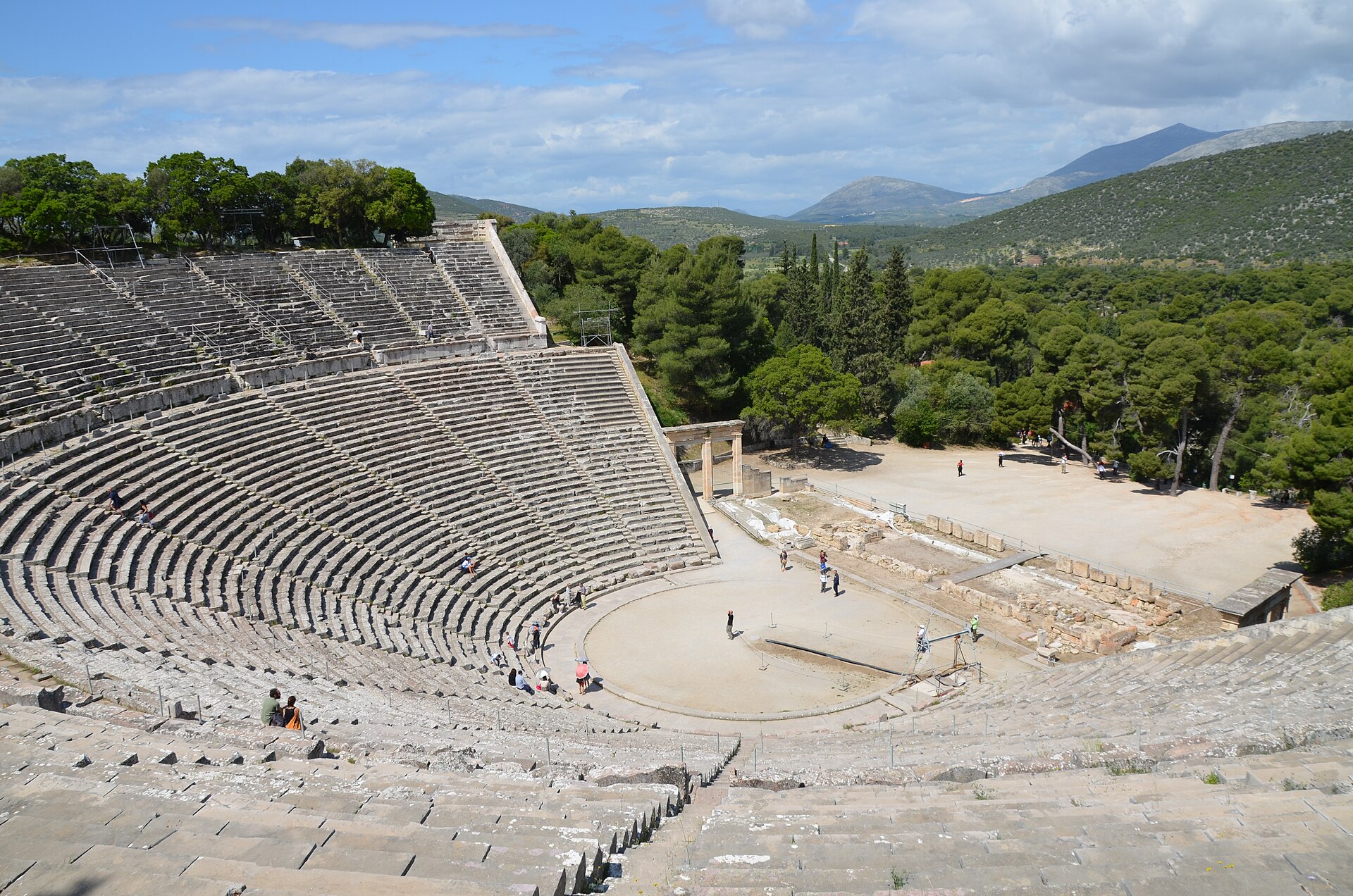
The Ancient Theatre of Epidaurus is a 4th-century BCE Greek theatre located within the sanctuary of Asclepius. Designed by the architect Polykleitos the Younger, it is widely considered the most perfect ancient Greek theatre in terms of its architectural symmetry and acoustic properties.
The structure consists of a circular orchestra and a tiered cavea divided into two sections by a diazoma. Its exceptional acoustics allow for clear transmission of sound from the stage to the highest rows of seating, a feature attributed to the precise limestone geometry and the slope of the hillside. It was originally built to host musical, singing, and dramatic competitions as part of the Asclepeia festival.
Key Facts
- Materials
- Limestone
- Civilization
- Ancient Greek
- Accessibility
- Partially accessible; steep terrain
- Date(s)
- 4th century BCE
- Condition
- Well-preserved, used for modern performances
- Original Function
- Performance space for religious and dramatic festivals
- Key Figures
- Polykleitos the Younger
Construction and Design
4th century BCEThe theatre was commissioned to serve the sanctuary of Asclepius. Polykleitos the Younger designed the structure, utilizing the natural slope of the hillside to support the seating, which could accommodate approximately 12,000 to 14,000 spectators.
Hellenistic Expansion
2nd century BCEDuring the Hellenistic period, the theatre underwent modifications, including the addition of an upper tier of seating, which increased the total capacity and refined the visual symmetry of the cavea.
Rediscovery and Restoration
19th-20th centuryFollowing centuries of abandonment and burial, the theatre was identified and excavated in the late 19th century. Extensive restoration efforts in the 20th century stabilized the structure, allowing it to host the Epidaurus Festival starting in 1954.
Cultural Significance
The theatre is a cornerstone of Greek cultural heritage, representing the pinnacle of ancient theatrical architecture. It remains a symbol of the integration of art, medicine, and religion in the ancient world, as it was part of the healing sanctuary of Asclepius.
Today, it serves as the primary venue for the Athens and Epidaurus Festival, where ancient Greek dramas are performed annually. Its continued use as a performance space bridges the gap between ancient ritual and modern artistic expression.
Interpretive Notes
Scholarly debates and areas of uncertainty
The exact mechanism behind the theatre's legendary acoustics remains a subject of academic study. While popular theory often cites the limestone seats as a sound filter, recent research suggests the geometry of the rows and the specific angle of the cavea are the primary factors in suppressing low-frequency background noise while amplifying high-frequency speech.
Visiting Information
Entry Rules
Open daily. Tickets are required for entry to the archaeological site. Visitors must adhere to designated paths and are prohibited from climbing on the ancient seating tiers.
Best Times to Visit
Early morning or late afternoon to avoid peak heat and large tour groups. The summer months coincide with the Epidaurus Festival performances.
Photography
Personal photography is permitted. Professional photography or filming requires prior authorization from the Hellenic Ministry of Culture.
Preservation Notes
Do not sit on the ancient stone seats; use the designated wooden benches where provided. Stay within marked areas to prevent erosion of the limestone surfaces.
Nearby POIs
3 shownKey Facts
- Materials
- Limestone
- Civilization
- Ancient Greek
- Accessibility
- Partially accessible; steep terrain
- Date(s)
- 4th century BCE
- Condition
- Well-preserved, used for modern performances
- Original Function
- Performance space for religious and dramatic festivals
- Key Figures
- Polykleitos the Younger