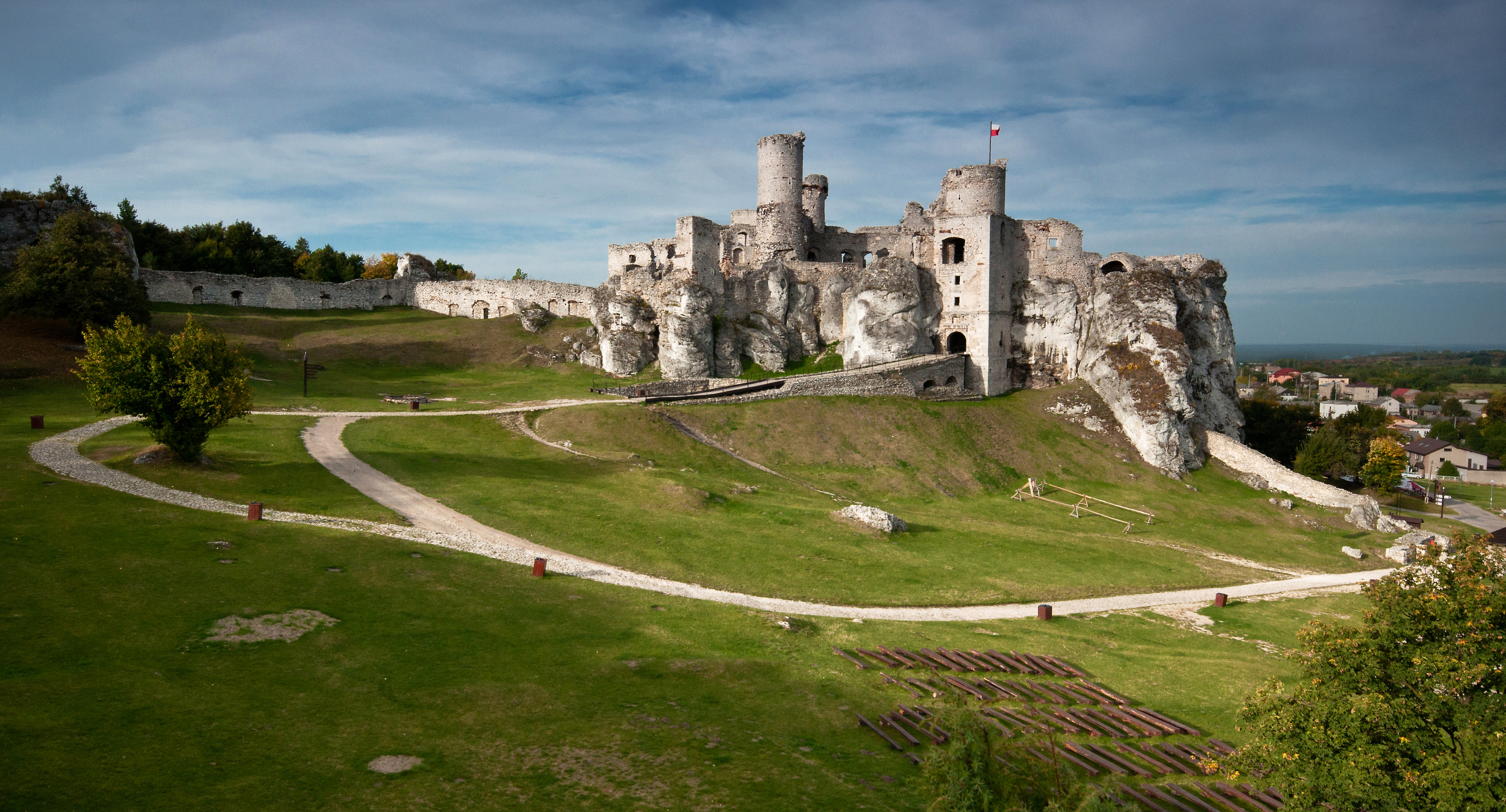
Ogrodzieniec Castle is a 14th-century fortification situated on the highest hill of the Kraków-Częstochowa Upland in Poland. Built during the reign of King Casimir the Great, the castle is renowned for its unique integration of natural limestone rock formations directly into its defensive walls, creating a seamless transition between the geological landscape and human architecture.
Originally a Gothic stronghold, the castle underwent significant expansion during the Renaissance, transforming into a grand residence for the Boner and Firlej families. Although it suffered extensive damage during the Swedish Deluge in the 17th century and subsequent fires, the ruins remain one of the most significant examples of the 'Eagles' Nests' trail, a series of medieval fortifications protecting the southern borders of the Polish Kingdom.
Key Facts
- Materials
- Limestone, Brick
- Civilization
- Polish
- Accessibility
- Partial access; some areas involve uneven terrain and stairs
- Date(s)
- 14th century
- Condition
- Conserved ruins
- Original Function
- Defensive fortress
- Key Figures
- Casimir the Great, Seweryn Boner, Jan Firlej
Origins and Gothic Period
14th centuryThe first stone castle was commissioned by King Casimir the Great. It served as a strategic defensive point along the border of the Kingdom of Poland, utilizing the natural rock outcrops to enhance its defensive capabilities.
Renaissance Expansion
16th centuryUnder the ownership of the Boner family, the castle was rebuilt into a luxurious Renaissance residence. The structure was modernized with decorative elements, arcaded courtyards, and improved living quarters, reflecting the wealth and status of its owners.
Decline and Abandonment
17th-19th centuryThe castle was severely damaged by Swedish forces during the Deluge in 1655. Subsequent fires and the lack of funds for reconstruction led to its gradual abandonment. By the 19th century, it had fallen into a state of ruin.
Modern Preservation
20th century - presentFollowing World War I, the ruins were secured and opened to the public. Today, the site is managed as a tourist attraction and serves as a venue for cultural events, historical reenactments, and film productions.
Cultural Significance
Ogrodzieniec Castle is a symbol of the Kraków-Częstochowa Upland and a key landmark on the Trail of the Eagles' Nests. It represents the evolution of Polish defensive architecture from medieval military utility to Renaissance residential splendor.
In contemporary culture, the site is widely recognized as a popular filming location, most notably for its appearance in the Netflix series 'The Witcher', which has significantly boosted its profile as a destination for international travelers and pop-culture enthusiasts.
Interpretive Notes
Scholarly debates and areas of uncertainty
There is ongoing discussion among architectural historians regarding the extent of the original 14th-century Gothic layout versus the modifications introduced during the 16th-century Renaissance expansion. The exact methods used to integrate the limestone rock formations into the masonry remain a subject of interest for structural archaeologists.
Visiting Information
Entry Rules
Open daily during the tourist season (April to October). Tickets are required for entry. Visitors are advised to wear sturdy footwear due to the uneven ground within the ruins.
Best Times to Visit
Late spring and early autumn offer the best weather for exploring the outdoor ruins. Weekdays are recommended to avoid heavy weekend crowds.
Photography
Personal photography is permitted. Commercial filming or professional photography sessions require prior authorization from the castle administration.
Preservation Notes
Visitors must stay within marked paths. Climbing on the limestone rock formations or the remaining walls is strictly prohibited to ensure both visitor safety and the preservation of the structure.
Nearby POIs
5 shownSources & Further Reading
- [1]The Eagles' Nests Trail: A Guide to the Castles of the Kraków-Częstochowa Upland — Jacek Cielątkowski. Regional Tourism Board (2018)
- [2]Castles of Poland: Architecture and History — Leszek Kajzer. Wydawnictwo Naukowe PWN (2012)
Key Facts
- Materials
- Limestone, Brick
- Civilization
- Polish
- Accessibility
- Partial access; some areas involve uneven terrain and stairs
- Date(s)
- 14th century
- Condition
- Conserved ruins
- Original Function
- Defensive fortress
- Key Figures
- Casimir the Great, Seweryn Boner, Jan Firlej