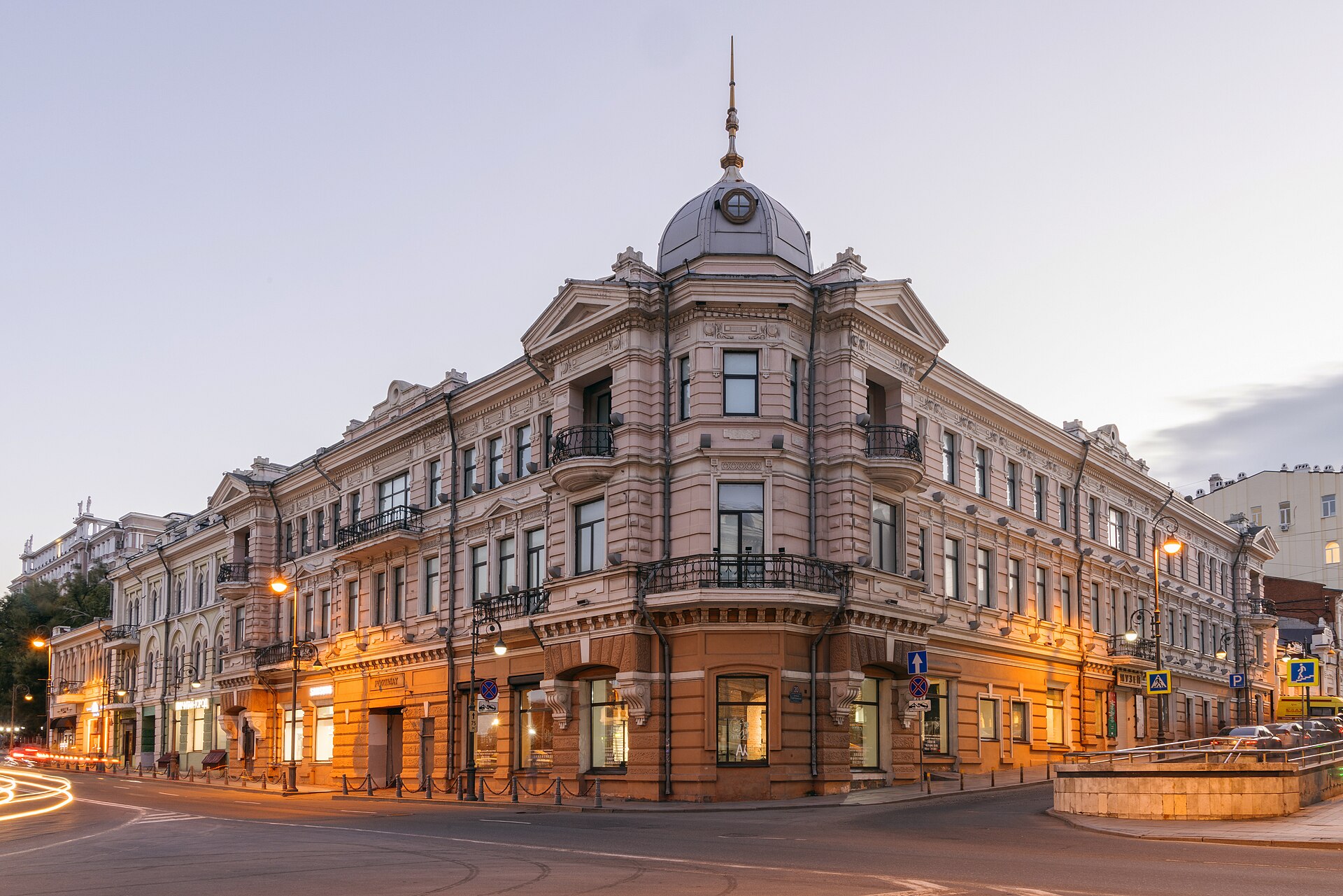
Vladimir K. Arseniev Museum of Far East History
The Vladimir K. Arseniev Museum of Far East History is the oldest museum in the Primorsky Krai region, located in the city of Vladivostok. It serves as a primary repository for the cultural, historical, and natural heritage of the Russian Far East, documenting the region's development from indigenous cultures to its role as a strategic Pacific port.
The museum is named after the explorer, writer, and ethnographer Vladimir Arseniev, who conducted extensive expeditions throughout the Ussuri region in the early 20th century. Its collections include significant ethnographic artifacts, archaeological finds, and personal archives detailing the exploration and settlement of the Russian Pacific coast.
Key Facts
- Materials
- Brick, Stone, Concrete
- Civilization
- Russian
- Accessibility
- Wheelchair accessible
- Date(s)
- 1884
- Condition
- Active, well-maintained
- Original Function
- Regional museum and research center
- Key Figures
- Vladimir Arseniev, Nikolai Matveyev
Foundation and Early Years
1884-1917The museum was established by the Society for the Study of the Amur Region. It began as a small collection of natural history specimens and ethnographic items gathered by local researchers and explorers interested in the geography of the Russian Far East.
The Arseniev Era
1900-1930Vladimir Arseniev served as a key figure in the museum's development, contributing extensive collections from his expeditions. His work helped define the museum's focus on the intersection of geography, ethnography, and regional history.
Soviet Expansion and Modernization
1930-1991During the Soviet period, the museum expanded its scope to include industrial and political history. It became a central institution for regional studies, incorporating larger exhibits on the development of Vladivostok as a major naval and commercial hub.
Contemporary Status
1991-PresentFollowing the dissolution of the Soviet Union, the museum was renamed in honor of Arseniev. It continues to operate as a major cultural institution, hosting international exhibitions and maintaining extensive research archives on the history of the Pacific coast.
Cultural Significance
The museum is central to the identity of Vladivostok, acting as the primary institution for preserving the memory of the region's diverse ethnic groups, including the Udege and Nanai peoples. It serves as a vital link between the city's colonial history and its modern status as a gateway to the Asia-Pacific region.
Interpretive Notes
Scholarly debates and areas of uncertainty
Debates exist regarding the interpretation of the colonial period in the Russian Far East and the extent to which the museum's historical narratives should emphasize the indigenous perspective versus the state-led expansionist narrative.
Visiting Information
Entry Rules
Open Tuesday through Sunday. Tickets can be purchased at the entrance or via the official website. Photography is permitted for personal use.
Best Times to Visit
Weekdays during the morning hours to avoid weekend crowds. Summer months offer better access to temporary outdoor exhibits.
Photography
Flash photography is prohibited in galleries containing light-sensitive artifacts. Tripods require prior authorization.
Preservation Notes
Maintain distance from display cases. Some areas of the historic building are subject to ongoing maintenance.
Nearby POIs
2 shownSources & Further Reading
- [1]The Russian Far East: A History — John J. Stephan. Stanford University Press (1994)
- [2]Vladimir Arseniev and the Exploration of the Ussuri Region — Sergey Krivshenko. Far Eastern University Press (2005)
Key Facts
- Materials
- Brick, Stone, Concrete
- Civilization
- Russian
- Accessibility
- Wheelchair accessible
- Date(s)
- 1884
- Condition
- Active, well-maintained
- Original Function
- Regional museum and research center
- Key Figures
- Vladimir Arseniev, Nikolai Matveyev