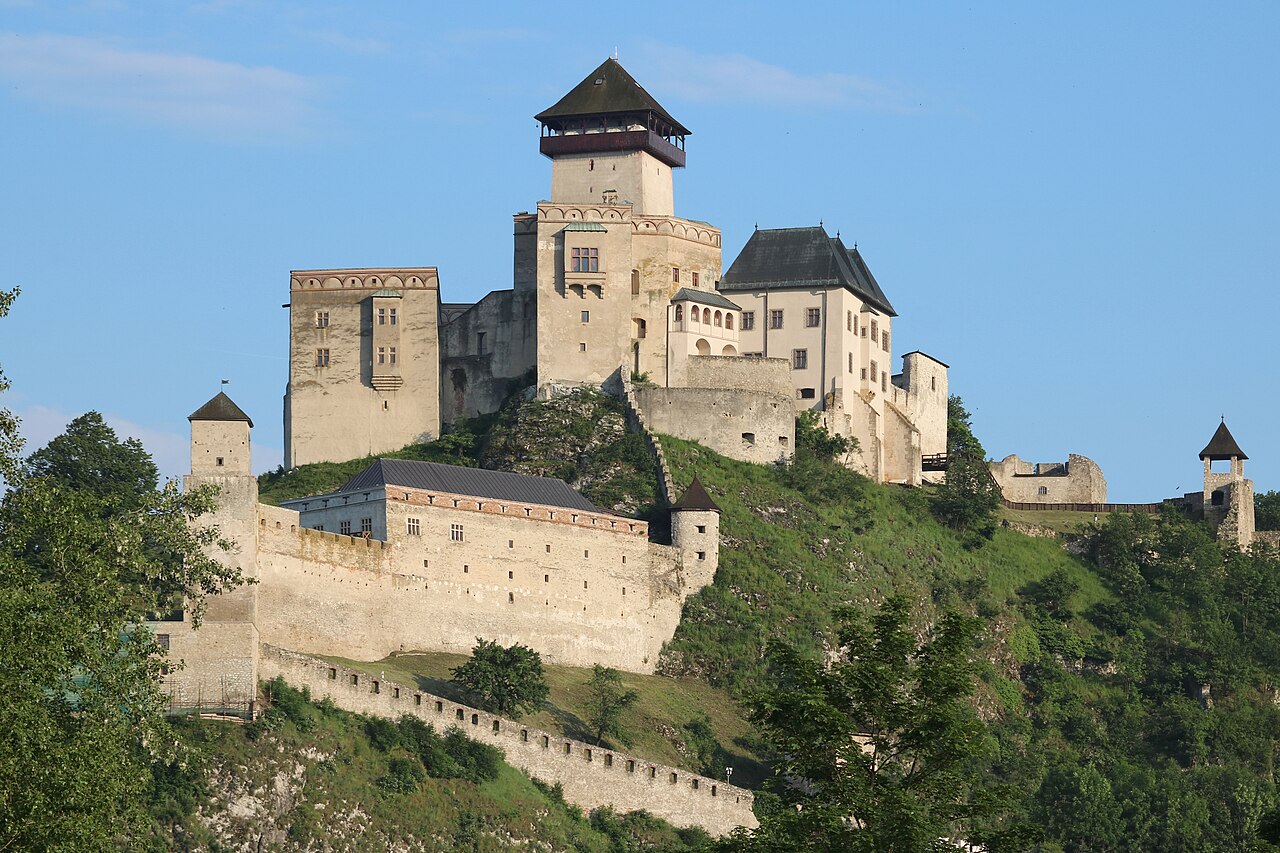
Trenčín Castle is a prominent medieval fortification situated on a steep limestone cliff overlooking the city of Trenčín in western Slovakia. The site has been inhabited since the Bronze Age, but the current stone structure began to take shape in the 11th century, serving as a strategic border fortress for the Kingdom of Hungary.
The castle complex is dominated by the Matúš Tower, named after the 14th-century magnate Matúš Čák, who controlled much of present-day Slovakia from this stronghold. Over the centuries, the castle evolved from a Romanesque fortification into a sprawling Gothic and Renaissance palace, surviving numerous sieges and a devastating fire in 1790 before undergoing extensive restoration in the 20th century.
Key Facts
- Materials
- Limestone, Brick, Timber
- Civilization
- Kingdom of Hungary
- Accessibility
- Steep pedestrian access, limited mobility access in upper levels
- Date(s)
- 11th century - 17th century
- Condition
- Restored, houses the Trenčín Museum
- Original Function
- Border fortress and royal residence
- Key Figures
- Matúš Čák, Stephen Zápolya, Sigismund of Luxembourg
Early Foundations
11th centuryThe earliest stone structure was a Romanesque rotunda, serving as a religious and defensive center. Its location provided a commanding view of the Váh river valley, making it a vital military outpost.
The Era of Matúš Čák
14th centuryUnder the control of the powerful oligarch Matúš Čák, the castle was significantly expanded. It became the administrative center of his vast domains, earning him the title 'Lord of the Váh and the Tatras'.
Gothic and Renaissance Expansion
15th - 16th centuryThe Zápolya family transformed the fortress into a luxurious late-Gothic and Renaissance residence. They added the Barbara Palace and fortified the outer walls to withstand modern artillery.
Decline and Restoration
18th century - presentFollowing a major fire in 1790, the castle fell into disrepair. Systematic preservation efforts began in the early 20th century, eventually leading to its current status as a protected national cultural monument.
Cultural Significance
Trenčín Castle is a symbol of Slovak national history and the medieval power dynamics of the Považie region. It is famously associated with the Roman inscription on the castle cliff, which dates to 179 CE and marks the northernmost presence of Roman legions in Central Europe, linking the site to ancient imperial history.
Today, the castle serves as the primary cultural hub for the city, hosting historical reenactments, exhibitions, and festivals that celebrate the region's medieval heritage and the legacy of the various noble families who held the fortress.
Interpretive Notes
Scholarly debates and areas of uncertainty
The exact extent of the Roman military presence at the site remains a subject of discussion. While the Laugaricio inscription is definitive, the nature of the Roman interaction with the local Germanic tribes at this specific location continues to be analyzed through ongoing archaeological excavations.
Visiting Information
Entry Rules
Open daily. Tickets are required for entry to the interior palace and tower exhibitions. Guided tours are available in multiple languages. Visitors are advised to wear comfortable walking shoes due to the steep terrain.
Best Times to Visit
Late spring and early autumn offer the best weather for exploring the outdoor courtyards. Weekdays are recommended to avoid weekend crowds during the peak summer tourist season.
Photography
Personal photography is permitted in all outdoor areas and most exhibition halls. Flash photography is prohibited inside the museum galleries to protect sensitive artifacts.
Preservation Notes
The site is subject to ongoing structural monitoring. Visitors must remain on designated paths, as the cliffside environment is fragile and prone to erosion.
Nearby POIs
2 shownSources & Further Reading
- [1]Trenčiansky hrad: Dejiny a architektúra — Miroslav Plaček. Slovart (2010)
- [2]The Roman Inscription at Trenčín — Ján Rajtár. Archaeological Institute of the Slovak Academy of Sciences (2015)
Key Facts
- Materials
- Limestone, Brick, Timber
- Civilization
- Kingdom of Hungary
- Accessibility
- Steep pedestrian access, limited mobility access in upper levels
- Date(s)
- 11th century - 17th century
- Condition
- Restored, houses the Trenčín Museum
- Original Function
- Border fortress and royal residence
- Key Figures
- Matúš Čák, Stephen Zápolya, Sigismund of Luxembourg