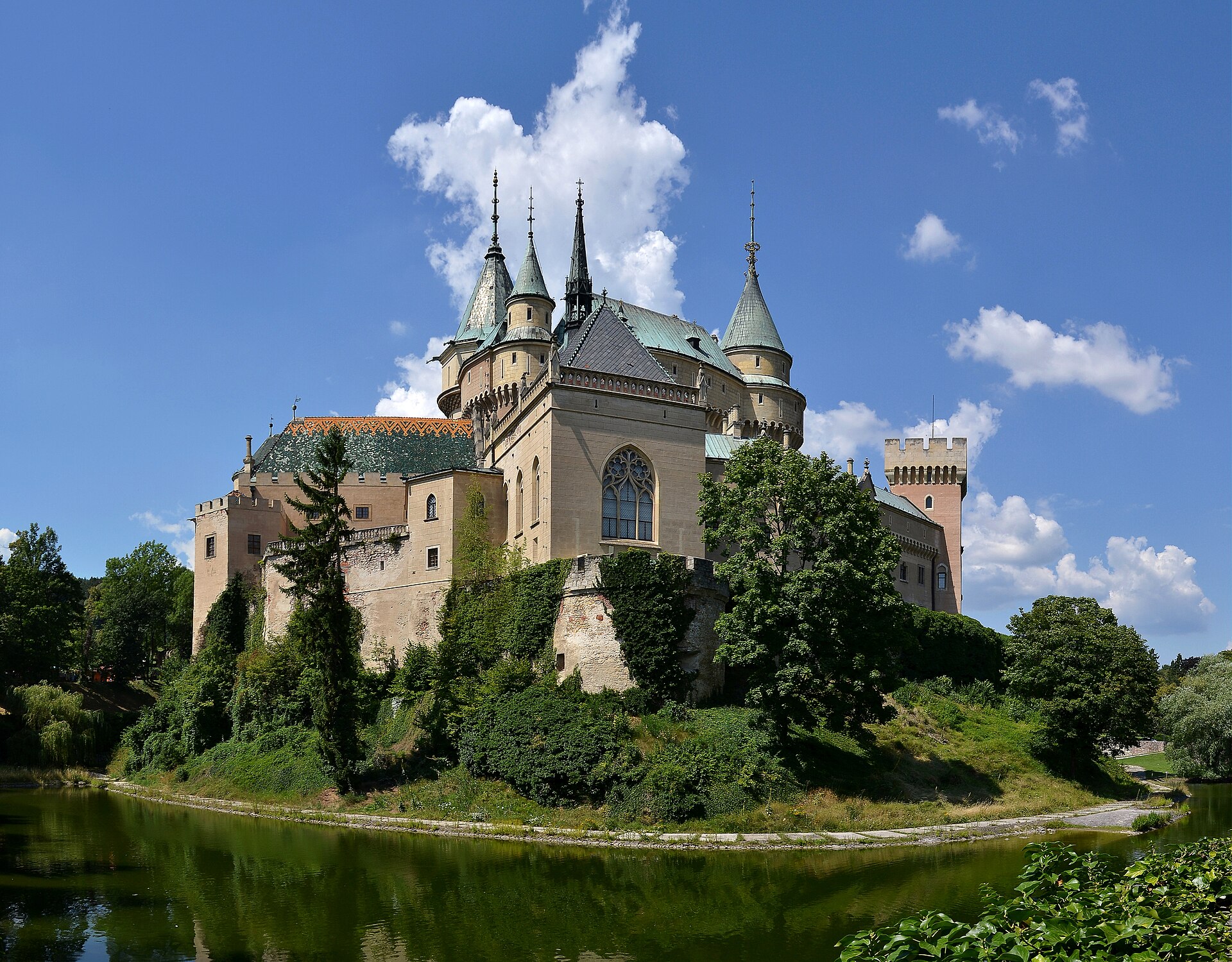
Bojnice Castle is a medieval castle in Bojnice, Slovakia, originally built in the 12th century as a wooden fort before being reconstructed into a stone structure. It is widely recognized for its romantic architecture, characterized by steep roofs, sharp towers, and a picturesque silhouette that has made it a popular filming location for fairy-tale movies.
The castle sits on a travertine mound and features a unique natural cave system located directly beneath the structure. Following a major reconstruction in the late 19th century led by Count János Pálffy, the castle adopted its current Neo-Gothic appearance, inspired by French châteaux of the Loire Valley, and now houses an extensive collection of art and historical artifacts.
Key Facts
- Materials
- Travertine, Stone, Wood
- Civilization
- Hungarian Kingdom
- Accessibility
- Partial accessibility; some areas involve stairs
- Date(s)
- 12th century (original), 1889-1910 (current form)
- Condition
- Well-preserved, functions as a museum
- Original Function
- Fortified residence
- Key Figures
- János Pálffy, Matthias Corvinus
Origins and Medieval Period
12th centuryThe site was first mentioned in written records in 1113 as a wooden castle. By the 13th century, it was transformed into a stone fortress, serving as a strategic defensive point in the Upper Nitra region.
Renaissance Expansion
16th centuryDuring the Renaissance, the castle underwent significant modifications to improve living conditions and defensive capabilities, transitioning from a purely military structure to a more comfortable noble residence.
Romantic Reconstruction
1889-1910Count János Pálffy initiated a massive reconstruction project based on his own designs. He sought to emulate the romantic style of French Gothic castles, resulting in the iconic towers and ornate interiors seen today.
Modern Era
1950-presentFollowing a fire in 1950, the castle was restored by the state and opened as a museum. It currently serves as one of the most visited cultural sites in Slovakia, hosting various festivals and exhibitions.
Cultural Significance
Bojnice Castle is a cornerstone of Slovak national heritage and a symbol of the country's romantic architectural history. It plays a significant role in local tourism and cultural education, serving as a venue for the International Festival of Ghosts and Spirits, which draws thousands of visitors annually.
The castle's association with Count Pálffy, a passionate art collector, has left a lasting legacy in the form of a vast collection of paintings, tapestries, and period furniture that provides insight into the aristocratic lifestyle of the Austro-Hungarian Empire.
Interpretive Notes
Scholarly debates and areas of uncertainty
There is ongoing discussion regarding the extent to which the 19th-century reconstruction obscured the original medieval floor plan. While the current aesthetic is highly valued, some architectural historians debate the balance between preserving authentic medieval foundations and the 'romanticized' additions imposed by Pálffy.
Visiting Information
Entry Rules
Open daily for guided tours. Tickets can be purchased at the entrance or online. Photography is permitted in most areas, though some special exhibitions may have restrictions.
Best Times to Visit
Spring and autumn offer the most pleasant weather for exploring the castle grounds. The summer months are peak season, often resulting in larger crowds.
Photography
Personal photography is allowed. Professional or commercial photography requires prior authorization from the museum administration.
Preservation Notes
Visitors are requested to follow marked paths and avoid touching historical artifacts or wall surfaces. The castle is an active site of ongoing maintenance due to its age and the nature of the travertine mound.
Nearby POIs
3 shownSources & Further Reading
- [1]
- [2]The Castles of Slovakia — Peter Kresánek. Vydavateľstvo Slovart (2009)
Key Facts
- Materials
- Travertine, Stone, Wood
- Civilization
- Hungarian Kingdom
- Accessibility
- Partial accessibility; some areas involve stairs
- Date(s)
- 12th century (original), 1889-1910 (current form)
- Condition
- Well-preserved, functions as a museum
- Original Function
- Fortified residence
- Key Figures
- János Pálffy, Matthias Corvinus